 Bilatzailea


The jackal expands in Europe at the expense of the wolf’s decline
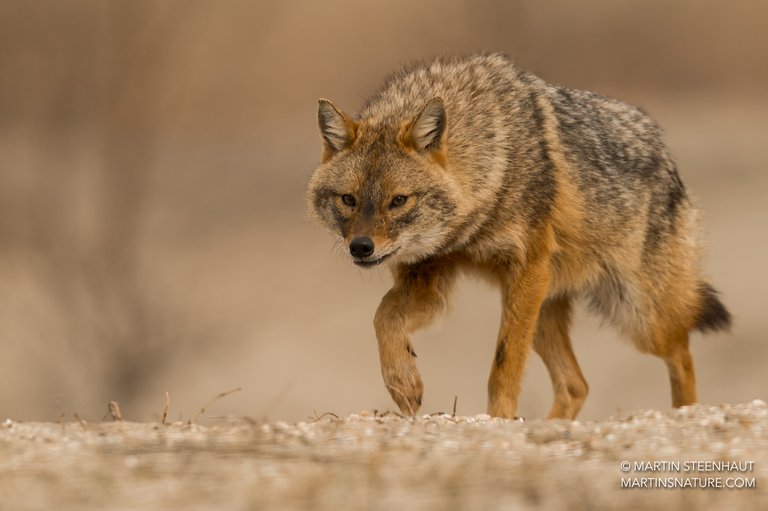
The jackal is expanding in Europe and a new study finds that the decline of the wolf is its main consequence. It is also predicted that this trend will continue and it is estimated that the jackals could reach 75% of the continent, six times more than the current area.
The wolves, the direct competitors of the jackals, were once very widespread throughout the continent, but human persecution and the increase of human populations have drastically reduced the area of distribution of wolves. Studies in North America have shown that human-driven wolf deprivation is beneficial for coyotes. In fact, the coyotes are very similar to the jackals, both in size and ecology. But it was not clear whether the same dynamic could occur in Europe.
Precisely in an attempt to clarify this, researchers have analyzed the data of the Txakal-Ulus collected between 2001 and 2017 in 8,991 places in 13 European countries. And they have seen that the presence of the jackals is related to the short duration of the snow cover, the intermediate forest cover and the proximity to the water. But, above all these factors, it is the presence of the wolf that most conditions that of the jackals: where there is no wolf there is the greatest probability of the presence of the jackals and the least where there are stable groups of wolves.
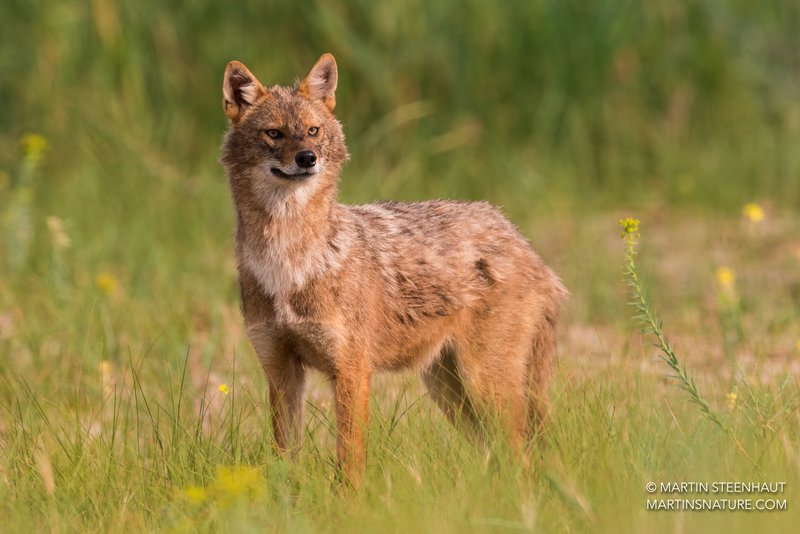
Ed: Martin Steenhaut martin.steenhaut@gmail.com
In addition, the study highlights that the human presence protects the jackals from the wolves. This is the concept of a “human shield” where some animals stay close to humans as their predators or competitors avoid these areas. In fact, jackals tend to avoid areas close to man in regions where there are no wolves; but in regions where there are wolves, they are more likely to occur close to man.
Today, the jackals are mostly found in south-eastern and central Europe, although few have appeared in the very west (one was found in Álava in 2023, dead on the road) and in the very north (in the Arctic). Researchers say that 75% of the continent’s total area could be suitable for this species. And while the recovery of the wolf in Europe may reduce the areas suitable for jackals, it is likely that this “human shield” effect, along with climate change and land-use change, will continue to facilitate its spread.
Buletina
Bidali zure helbide elektronikoa eta jaso asteroko buletina zure sarrera-ontzian