 Bilatzailea

To make rail travel even safer
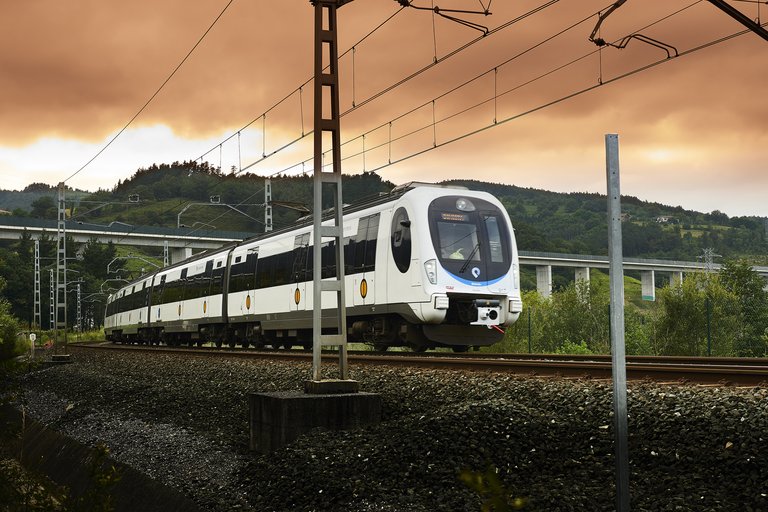
The train is the safest mode of transport after the aircraft. There is always room for improvement, however, and BRTA alliance researchers are constantly striving to improve the rail system and train elements to ensure passenger safety.
For example, the CEIT technology centre has been working in the railway sector for years. He is dedicated to the digitalization of trains, communication systems, material analysis, railway dynamics and network monitoring, among others. Jaizki Mendizabal Samper, director of the Department of Transport and Sustainable Mobility, said: “Our intention is to give inspection vehicles new and better capabilities: the more functions, the more safety.”
One of the bases is the characterization of cracks or fissures in the railway. Currently, the monitoring of railway cracks is carried out on a regular basis by going to the site. With the monitoring system being developed at CEIT, control will be remote, automatic and continuous.
“It can be said that railway safety is the result of the dialogue between trains and infrastructure,” says Mendizabal. He anticipates that one of the main characteristics of this future inspection vehicle will be autonomy, that is, it will perform inspection tasks without human intervention.
On the other hand, in the Mechanical Testing Laboratory of Tecnalia, the components of the trains are analyzed mechanically before their commercialization to confirm their safety. Félix Astorkia Salegi, head of the laboratory, explains that its mission is to predict the stresses, deformations and forces to which the elements of the train are subjected, through simulations and in a controlled way: “For example, high-speed trains undergo pressure changes at the tunnel entrances and exits or when crossing with another train. Passengers do not perceive them, but these forces affect the pieces.”
In fact, the train elements undergo thousands of cycles of use during their useful life. And sometimes surprises also happen. These pieces are therefore responsible for predicting how they will respond in all cases in the laboratory. “This information is essential for designers,” says Astorkia.
Fire is one of the most critical risks to train safety. Tecnalia’s fire safety laboratory studies the reaction of materials to a fire in large furnaces.
According to its manager, Pablo Garmendia Altuna, new and light materials help to reduce the energy consumption of the train, but in case of fire they must guarantee a certain behavior. He insists that this balance is key: “In a fire, it is essential that the fire is confined for as long as possible.”
Finally, Ikerlan develops the “brain” of the train in collaboration with manufacturers: the embedded system. Researcher Ibai Ibarguren Jauregi explains that “this embedded system or brain receives information from the outside and tells the driver how fast he has to go, how far he can drive. If the driver does not comply with the order that has been sent to him, then our brain intervenes”.
The train receives the railway information by means of beacons. At the same time, it reports on its activities to the network control centre. There, they continuously monitor the status of the entire network. “The flow of information in a reliable way is essential,” warns Jauregi.
The development is continuous. The next step will be cooperative perception. That is, the train will share information with the infrastructure, which will allow it to be able to perceive what is outside its field of vision. “Today, this is the main challenge: integrating artificial intelligence into these systems and being able to make decisions,” says Jauregi. So that passengers can travel even more safely in the future.
Buletina
Bidali zure helbide elektronikoa eta jaso asteroko buletina zure sarrera-ontzian