 Bilatzailea


Should I be or should I be?
The Basque scientist does not have a bad job. In addition to the problems faced by scientists from all over the world (the need to seek funding, the inability to get a stable job, the complications of science itself...), it has to endure endless terminological discussions. Environment or environment? Carnivore or carnivore? Snail or snail? Diversity or diversity? Tiger mosquito or tiger mosquito? The literary tradition, the instinct of the old speakers, the internal structure of the language, the international extension of terms... Talk to any scientist and he will tell you how many hours he has spent arguing about the new terms. How the correctors comb our simplest text.
You will tell me that in other languages there are also terminological debates, and yes, that is true. Articles in English discuss how to write acknowledgements: acknowledgments or acknowledgements? I'm sorry, but next to ours, those look like flower games. On another level, the Carlists and Isabelinos of the Royal Spanish Academy are fighting. But, without underestimating anyone, the charges of cavalry of some and the discharges of artillery of others are nothing compared to the philological jihad that the Basque xii and the Sunias carry with weapons of mass destruction.
Many believe that these problems were reinforced in the era of the unified Basque language. What a discussion! What schisms! Remember the h? It’s funny, he had no problem reading the hour in Spanish, he couldn’t read it there without suffering a cataplegia. But the problem came much earlier. even at the beginning of the 20th century, what a controversy between the remotest and the phone or the world and the ludia!
Recently, however, Irulegi’s hand has given a new dimension to the subject.
First, the hand shows us that the chain work that Mondragon Unibertsitatea teaches in advanced manufacturing in the 21st century was not invented by Henry Ford, at least 2,000 years ago by the Vascones. In fact, the handprints of Irulegi were made between at least three people. The first drew three guidelines to mark where to place the letters that would be written later. Then another (and it had to be another, because in the rest he would use those guidelines), without paying attention to the guidelines, wrote some letters by means of scripts. And finally, a third one, making points with a nail, went over the letters, correcting the text of the second.
Oh, yeah. Yeah. The second person wrote sorieneke:
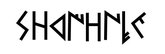
And on this, the third corrected the text to sorioneku:

Nor here can we agree on the proper form of that happy word, which is in accordance with tradition or with the natural structure of language. I can imagine these two of the time in the debate:

Both arguing whether it should be sorioneke or sorioneku.
This is, therefore, three of our characteristics in a single object: industrial excellence, terminological discussions and corrective texts. Will anyone doubt that they are Japanese?
1If you can't read these names, you can find the baskonic alphabet here: https://alea.eus/komunitatea/asier-gabikagojeazkoa/1669640704824-irulegi-eskua-garrantzia-zalantzak
DP. I'm supposed to have finished the text. Now it's in the hands of the ruthless corrector.
Buletina
Bidali zure helbide elektronikoa eta jaso asteroko buletina zure sarrera-ontzian
Bizitza

Doitasuna hegan egiteko
Garraioak
Aernnova: Diseinutik zerura
Garraioak
Motor aeronautikoak laborategian
Garraioak