 Bilatzailea


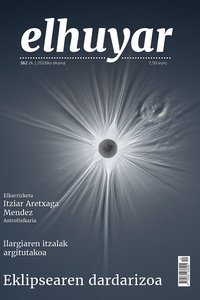
Tremor of the Eclipse I
I Trapped by the fascination of the solar eclipse
II Animal Disturbance
III The response of the flyers
IV Citizen science
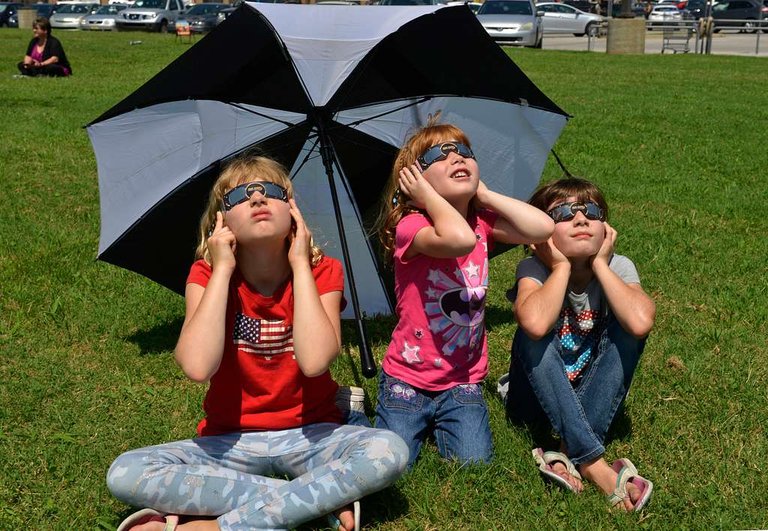
The astrophysicist Javier Armentia Fructuoso talks about contagious emotions in the solar eclipse of August 12. “Beware: the probability that a person will see an eclipse in the place where he lives is less than 25%.” This makes it clear that this is a truly exceptional event. It is not surprising, then, that it has a significant impact on us. However, we are not the only species to notice the eclipse. Tremor is also observed in birds, bats and other living beings.
“The eclipse is much more than just an astronomical phenomenon. It is, of course, attractive to scientists in our field, although it does not have its historical importance as a natural laboratory. From a scientific point of view, it is not as productive as before; that is true. But turning the day into the night and then lighting up again is exciting in itself. And that emotion has something special; it's like it's out of our minds. In fact, it’s not so long before we can accurately predict eclipses.” It's Armentia's words. He does not hide his fascination with eclipses, although he knows perfectly the scientific explanation.
“The probability that a person will see an eclipse in the place where he lives is less than 25%.”
Or maybe even that. In fact, it is surprising that it happens by chance. There is no reasonable explanation for why the Moon is 400 times smaller than the Sun, and at the same time, 400 times closer to Earth. And so that the movements of both are aligned, once in a while. If the explanation is not known, the disappearance of the Sun for a while would seem miraculous or terrifying. Therefore, when they were unable to understand the phenomenon scientifically, they explained it through myths.
Every culture and every era has its myth. For example, in Chinese mythology, it is said that a dragon ate the Sun. To repel the dragon and recover the Sun, they beat the drums and threw arrows into the sky. The Aztecs also believed that the sun disappeared by ingestion, but it was not eaten by a dragon, but by a jaguar. In the Scandinavian myth, two wolves try to hunt the Sun and the Moon; when they are caught, an eclipse occurs that announces the end of the world. For the Hindus it was a demon that ate the Sun, for the Egyptians it was a snake
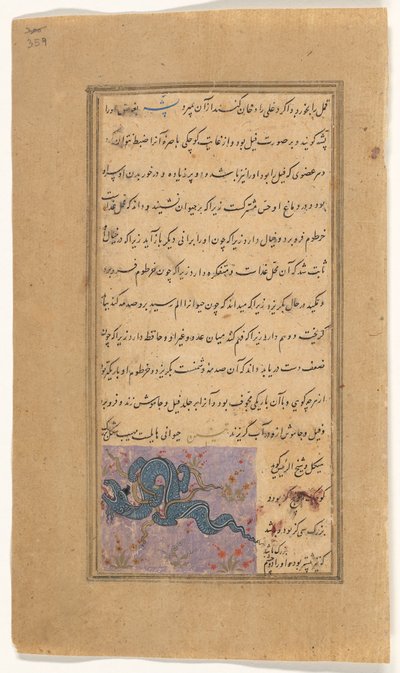
Dragon of the Eclipse (tinnîn), f. 359. 1540-1545 Annual/Public Domain Public Domain
Armentia also recounts them in the talks and informative actions that he has been giving here and there since the beginning of the year. “I am very focused on this, because I would like everyone to be aware that they will have the opportunity to experience an extremely special phenomenon,” he confesses. Remember that before there was someone who lived the arrival of an eclipse in his own way: “For example, the scientists of romanticism and later, and the rich people around them. They organized expeditions that crossed Europe to live and document the eclipse. They were also inspiring to make art and created wonderful paintings and writings. It is also clear that the attraction it generates is above scientific interest.”
In the Basque Country, the expectation generated by the solar eclipses of 1860 and 1905 has also been reflected in the media of the time. Nowadays, social networks are a good forum to look at the opinion or impression that a phenomenon has generated. For the example, Armentia cites a study on the footprint left by the 2017 eclipse on the social network Twitter. This study was conducted by psychologist Sean Goldy of the University of California. He analyzed the reactions to the tweets of nearly three million users and confirmed that they had been significantly affected by the eclipse: messages of surprise, gratitude and affection increased, and people more often used the pseudonym we instead of me. Of course, that pleasant atmosphere lasted only 24 hours.
“It is clear that the attraction it generates is above scientific interest.”
even during the eclipse of 2024, researchers observed a similar trend. Social media echoed a collective joy that was filled with photos that showed people in a group, united and happy. “All this shows that living an eclipse is transformative,” concludes Armentia.
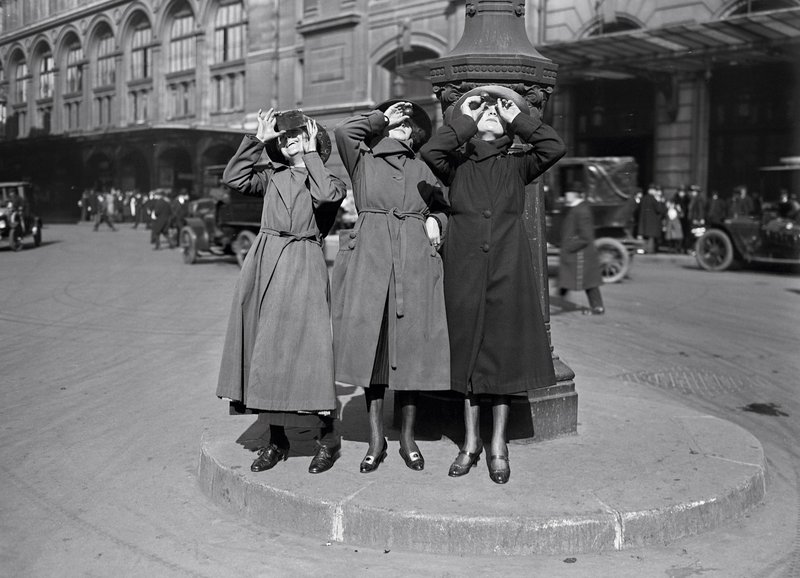
Three women, watching the eclipse of April 8, 1921, in Paris/Agency of Roles/Public Domain
In his lectures he gives advice on how to prepare the experience, what they will see, where they will see it best, how to observe it. “Just in case, we will repeat it, right? The eyes should be well protected with appropriate filters to avoid damage. Alternatively, indirect observation can be performed by looking at the shade with a perforated paper, or with a screen. It can also be seen in the shade of the leaves of the trees. There are also quite simple programs to convert light waves into sound waves and follow the eclipse by ear.”
Changes are not only noticeable in the light, but also in the wind. These changes are called eclipse winds. In Europe, they were investigated, for example, during the eclipse of 1999. Studies from that time show that for hundreds of kilometers, as the sunlight disappeared and the temperature decreased, the wind changed, even in places covered by clouds. For example, in Reading (England) it was cloudy and when the temperature dropped, a kind of cyclone was formed. After the eclipse, the wind returned to its original state. There were also changes in atmospheric pressure that lasted longer.
Astronomical, personal and social phenomenon
It's about living the eclipse. “We have to admit that total solar eclipses make us feel small and remind us that we need others. The phenomenon is astronomical, but the experience is not only personal but social.” Proof of this is how different the solar eclipses of 1961 and 1999 lived in Belgrade. Armentia explains the difference: “In 1961, with the help of information properly provided by the Yugoslav authorities, curiosity prevailed. On the other hand, in 1999, in that post-communist Serbia, terror broke out in the streets.”
In many places, certain superstitions associated with eclipses remain true, such as the fact that they pose a danger to pregnant women, or the fact that women in general do not have to leave their homes, whatever happens. And, of course, they are also an incentive for all kinds of civilationist ideas. Faced with this, Armentia believes that journalism and dissemination can do a valuable job.
“The messages of surprise, gratitude and affection increased, and people used our pseudonym more often.”
However, it is also possible that scientists, at some point, spread erroneous beliefs. Apparently, this has happened with a study that confirmed that conifers can predict the eclipse. The study was published in 2025 under the title “Bioelectric synchronization of the Picea abies trees during a solar eclipse”. According to him, the trees were able to predict a partial solar eclipse based on electrical signals. Later, however, it was rejected by other scientists, who showed that the changes the researchers detected in the electrical signals could be explained by common reasons.
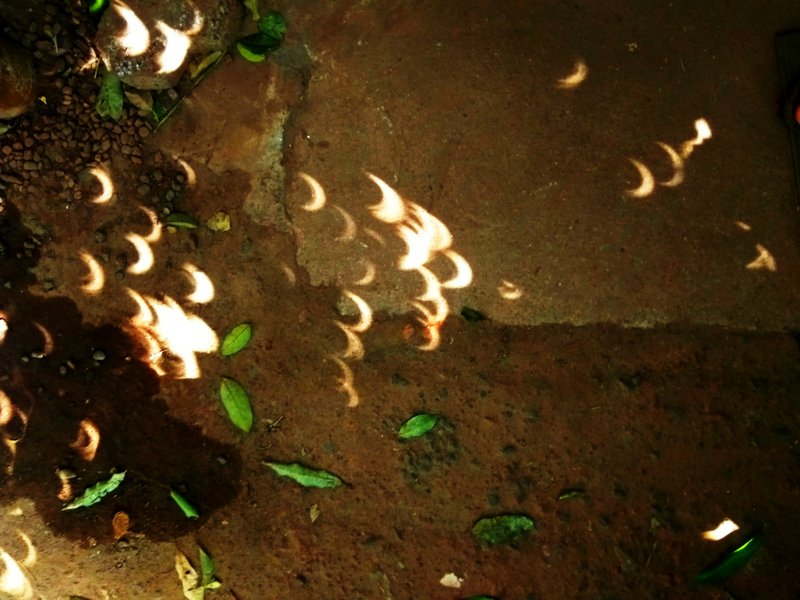
shadows created by the eclipse of December 26, 2019, in Kerala Thrissur/PRABHAKARAN1972/CC BY SA
“We don’t need to be so incredulous to realize that a solar eclipse is a shocking phenomenon,” Armentia said. It aims to highlight the effects that anyone can see and feel and, in passing, to spread the scientific culture and warn them to act responsibly. “I am particularly concerned about the fires. On August 12th the area will be dry and a cigarette can cause a huge catastrophe.” Waste management and car travel will be another two aspects to be rigorous. “I would ask everyone for respect and prudence. Always, but especially on that day,” he said. In fact, in other eclipses it has been observed that, once the eclipse is over, car accidents multiply, because everyone goes out to the road at the same time to leave the place where he has decided to observe the eclipse. The eclipse of August 12 is at dusk, so the risk is even greater.
“We are animals, social animals. Therefore, the eclipse affects both individuals and society. We have a great opportunity to live this phenomenon together,” concluded Armentia.
Buletina
Bidali zure helbide elektronikoa eta jaso asteroko buletina zure sarrera-ontzian