 Bilatzailea


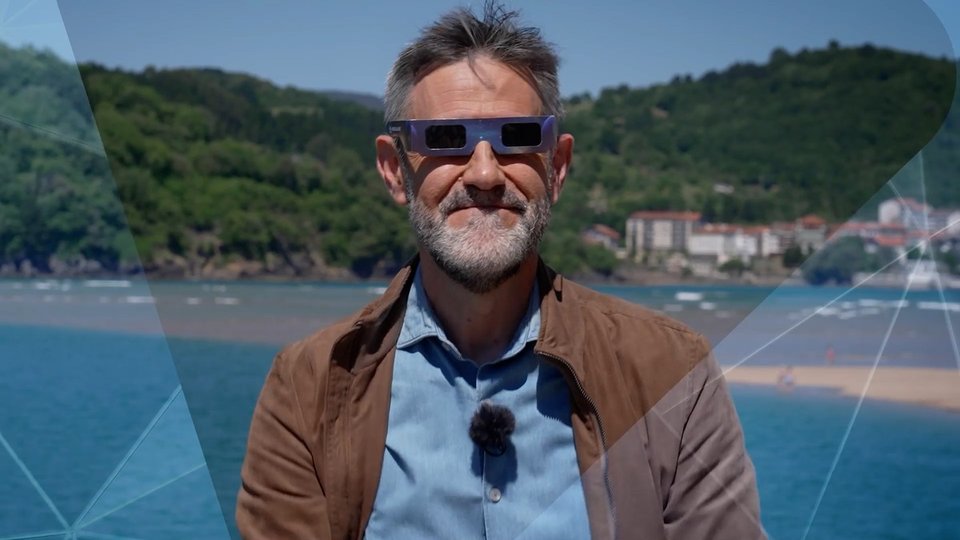
Eclipse from the era
Manu Ortega Santos/CC BY-NC-ND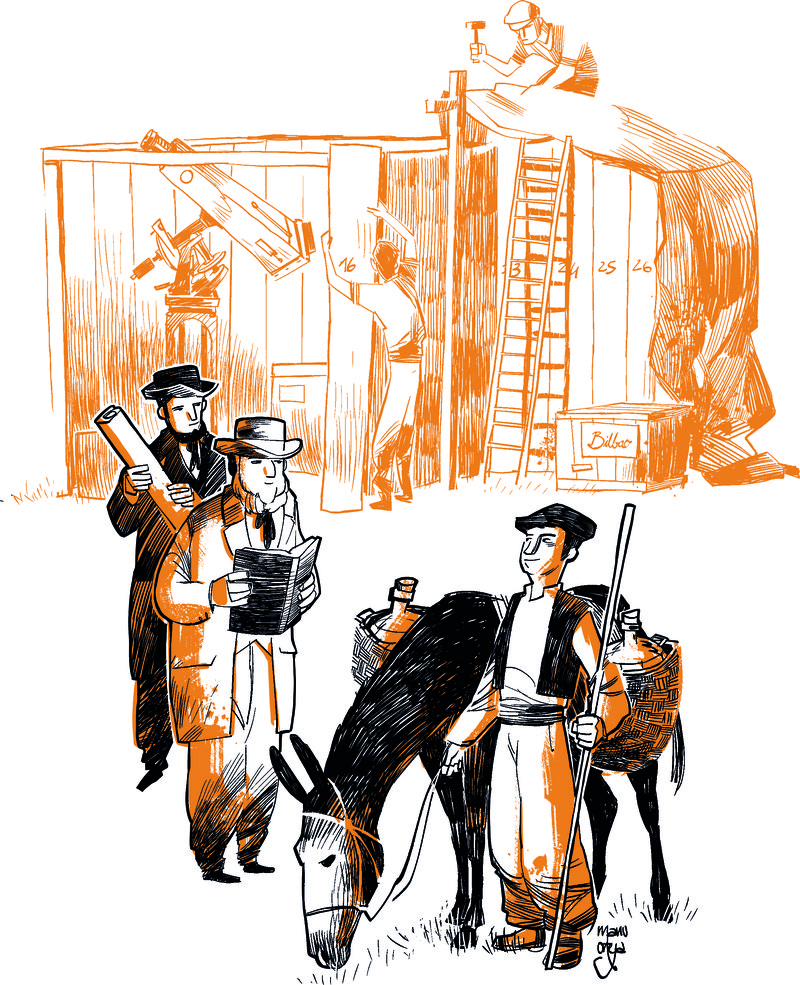
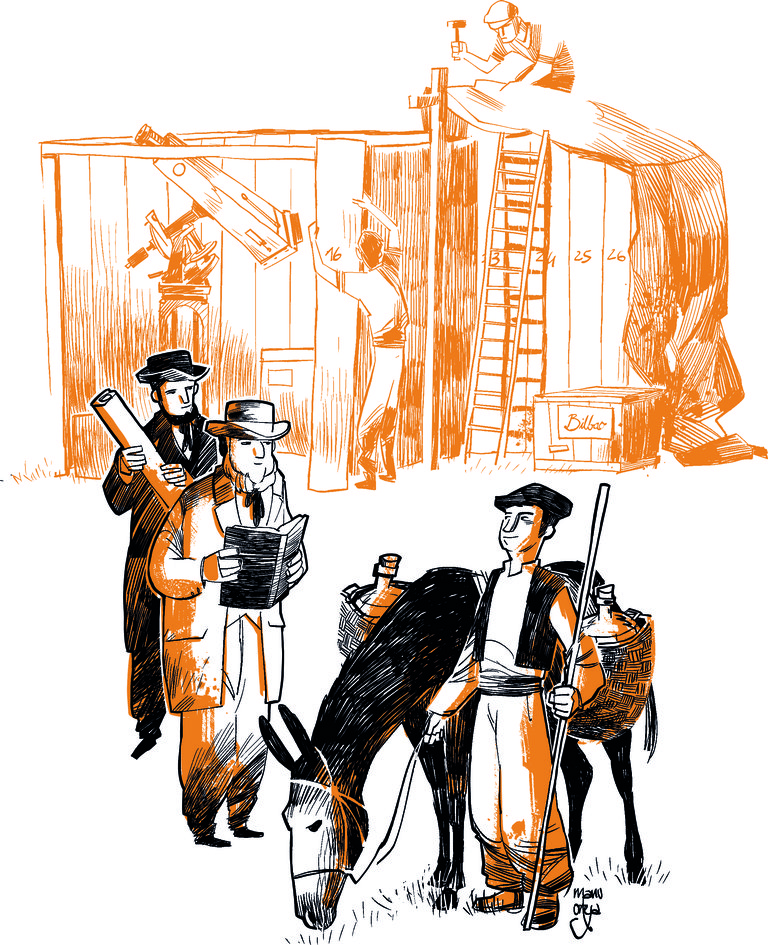
What did this farmer from Ribera Baja think when he was told that some English astronomers wanted to rent his era? He was told that a few days later the sun would be hidden and that astronomers wanted to study and photograph this fact. And not only was the threshing floor, which he used every summer to beat wheat, well placed, but its flat and dense floor was ideal for the placement of his artifacts. The harvest season had just begun, although he had planned to use it the next day, and the use of another era farther away would be a much greater task, he left it to the astronomers and refused to accept any money in return. He seemed to understand that something was important. That era, that summer, would have given a very different harvest.
The next day the threshing floor was full of planks, tarps, pipes and a lot of boxes. The boxes were written with the legend “Instruments for the observation of the eclipse”. All this material, almost two tons, had left four days before, on July 7, 1860, together with about 40 scientists, from the port of Plymouth, aboard the Himalayas.
This was an expedition to observe the total eclipse of the Sun that would take place on July 18. It was not the only one, since Spain was the only European country where the eclipse could be seen in its entirety, and around thirty expeditions from eleven countries were organized to the list where the eclipse could be seen in its entirety. For example, the French Léon Foucault (inventor of the famous pendulum) and Urbain Le Verrier (predictor of Neptune) traveled to Moncayo; the Italian Angelo Secchi to the Desert de les Palmes in Castellón; and Dorpat, Kiel and other central European astronomers occupied the summit of Saint Lucia in Vitoria.
One of the scientists who came to the Himalayas was Warren De la Rue, a pioneer in astronomical photography. He designed a very special solar telescope. even though it was only 89 mm in diameter, it had a special shutter that could be photographed with exposure times of milliseconds. Thanks to this photoheliograph, he began photographing the surface of the Sun in 1858 at the astronomical observatory of Kew. And De la Rue was wearing that instrument to photograph the eclipse.
The first Himalayas arrived in Santander. There were scientists there. And from there the ship went to Bilbao. De la Rue's team was there. His first intention was also to establish the observatory in Santander. But his compatriot Charles Vignoles, chief engineer of the railway from Tudela to Bilbao, told him that it was not the right place. He considered that the fog caused by the condensation of sea vapours against the mountains in the area could be a major obstacle to the planning of that expedition. And he advised her to go further south; he advised her of a small and quiet village called Ribabellosa.
De la Rue listened to him and invented it, as he would later write: “It was fortunate that my station moved from Santander to Ribabellosa because the state of the atmosphere prevented the astronomers who chose that first place from observing the eclipse.”
They arrived at the Port of Bilbao on July 9 and left at sunset the next day in a carriage to Ribabellosa. The trip was described by expedition member Walter Beck as follows: “Travelling at night has never been the most enjoyable thing in the world, not even in a first-class train car, but riding a horse, that is certainly not sweet. After ten hours of traveling full of dust to the point of being unbearable, we reached our destination.”
Immediately after arriving at Ribabellosa, they began to study the surroundings to choose the best point for observing the eclipse. In the neighboring town of Quintanilla Ribera Baja, this era was chosen, located on a high. “It was about 20 meters in diameter and it was close to the road, which was very convenient for us, since we had to bring the water we needed from a distance. In addition, the floor was completely flat and incredibly dry and hard.” It also worked perfectly for the construction of the observatory.
In the following days, the era was transformed into an observatory. With numbered boards, as if it were a puzzle, a two-room hut was built in a di-da. One room was equipped with a photoheliograph and the other was a photographic laboratory. “In addition to the roof, we installed another roof, a solid canvas, almost a meter away from the walls and ceiling of the development room. The aim of this was to avoid overheating the photo room, which is very harmful to photography. This cloth was kept wet with water so that evaporation could lower the temperature of the air layer between the canvas and the observatory, perfectly fulfilling its purpose. When the observatory was not used, the canvas was extended to the room where the photoheliograph was located to protect the instrument from the rain.”
The photographic laboratory had everything necessary to reveal the negatives obtained with the photoheliograph: chemical substances, tables, shelves for photographs, a sink and a water tank that was filled from the outside. The water was brought by a citizen, in glass carafes, on a donkey.
On July 14, the first photo of the Sun was taken to ensure that everything worked properly. When the time came, everything had to be ready. “The most important goal for me was to get photographs of all phases of the eclipse through the photoheliograph,” De la Rue wrote.
“On Sunday the 15th, after a wonderful day, we had one of the largest and most terrible thunder storms I have ever seen, and the 16th was cloudy, with hardly any raindrops,” de la Rue said. “The day before the eclipse, the sky was completely covered, except for a short interval of noon, and even then, the Sun was visible behind clouds that were slightly thinner than those covering the rest of the sky. The weather wasn’t ideal, and it improved, and we had to use every stage responsibly to adjust the tools.”
The day of the eclipse was also marked by clouds and the scientists, dismayed, went with little hope to the observatory of the era. Fortunately, around noon, he began to clarify. At twelve and a half the sky was blue, except for some clouds on the horizon, and the Sun was perfectly visible.
“About twenty minutes before the eclipse began, we had an incident that brought almost all of our work to a disastrous end.” De la Rue wanted to give a citizen named Juan, who had worked very well at their service, the opportunity to witness the eclipse. “I smoked a piece of glass with a luciferase.” Then John began to do the same for many other citizens around him. But so many wanted it, that it started to rush and threw the matches without turning them off. The straw on the ground caught fire. “Fortunately, in a few seconds, the sound of the circus and the smell of the burnt straw caught my attention and, as we had access to the water, we dominated the fire before it spread too far.”
“As we were about to begin the observations, there were about two hundred people around our observatory,” De la Rue wrote. This was a problem because the crowd couldn’t hear the ticking of the timer with its sound. “Somewhere, they thought the eclipse could only be seen from our station. We had a hard time convincing them to go to a nearby hill, where they would see it even better, and how it affected the landscape from there.”
After an hour and a half, the sky began to change. The light was strange. The horses of the guards sent by the mayor began to be disturbed. The birds were silent. The sun was hiding behind the moon. The astronomers were working hard, accurately. Photoheliograph, taking pictures: click
“The most notable was the impact that the whole had on the population,” De la Rue recalled. “Until the fullness began, the air was filled with the murmur of the conversation of many; but then, suddenly, all voices were silenced; such an abrupt calm was astonishing. Then the ears caught the sound of the village bells, which dazzled during the eclipse. This made a great contribution to the solemn grandeur of that occasion.”
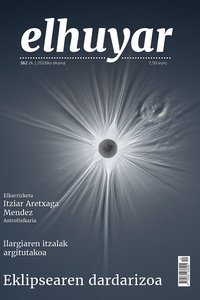
Little by little, the light began to return. The spectators breathed again and nature regained its normal march. A total of 40 photographs of the eclipse were taken, two in full. It was the first time that the entire process of an eclipse was photographed.
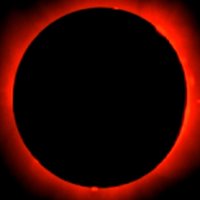
Once the photographic plates were revealed, the fire tongues that protruded from the perimeter edge of the two shaded stars were clearly visible, as was not possible with the naked eye. It was precisely with these photographs that De la Rue was able to prove that these tongues (solar protuberances) belonged to the Sun and not to the Moon.
During the two days following the eclipse, other photographs of the Sun were taken. Then everything was dismantled and packaged.
The observatory became a watchman again. The farmer may not have fully understood what happened there, but he knew it was something important. He also put his grain to get that lush harvest.
Buletina
Bidali zure helbide elektronikoa eta jaso asteroko buletina zure sarrera-ontzian