 Bilatzailea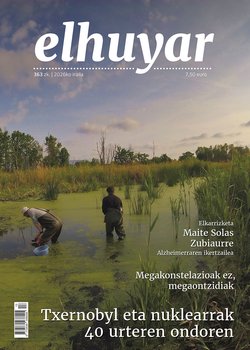


My hypothesis is that Alzheimer's is a metabolic disease

The researcher Maite Solas Zubiaurre (Elgoibar, 1983) has recently received two grants to investigate the effects of metabolism in Alzheimer’s, the ERC Consolidator Grant, granted by the European Union to the most significant scientific studies, and the one granted by the Pasqual Maragall Foundation for the study of Alzheimer’s and other neurodegenerative diseases associated with age. This support demonstrates the importance of Solas’ research. In addition to research, Solas spoke about treatments, diagnosis, prevention and gender.
How did you get into Alzheimer’s research?
I came straight in, actually. From the beginning I had a passion for research and I liked chemistry, biology and so on. So I chose the pharmacy, and within it, I liked pharmacology the most. Then, when I went to the pharmacology department to ask them to do the thesis, they told me that everyone in the department was dedicated to neuroscience. And Alzheimer’s always attracts us, because it is one of the most serious problems we have in society. So I decided to go in there, and I haven't been out since.
Since you started, has the scientific approach to Alzheimer’s changed a lot?
Yeah, it's changed a lot. It was first written in 1906 by neurologist Alois Alzheimer’s, who already said that two rare proteins accumulate in the brain and that neurons die. Today we know what these proteins are and we see that neurons die, but in all this time the question has been: what makes these two proteins start to fold in this strange way? When I started doing the thesis, we were already looking for this cause. And that's still an unanswered question.
But there have been changes. in the 1990s there was a very strong current that put all the focus on these proteins. The one who drove this current still lives and continues to support his thesis. But others believe that there is some other reason above that. My thesis was precisely about risk factors, and I continue to do so.
“We now know that patients with a genetic factor are less than 5%.”
Within the risk factors, in my thesis I investigated the influence of stress, now I have moved to metabolic problems: obesity, diabetes... and I continue in that line.
You talk about stress and metabolism, environmental and even physiological factors. But not genetics.
Yeah, there's been a big change there. In fact, we now know that patients with a genetic factor are less than 5%. This was something they didn’t know before, and it continues to be a false myth in society. Not for scientists, but if you ask my mother, for example, she'll tell you that it's a family disease. And when someone is diagnosed, a lot of people keep thinking about who had it in the family before.
But those of genetic origin are less than 5%, and the mutations that cause these cases are very well defined. If you do a genetic analysis and have any of these mutations, you have a lot of options for developing Alzheimer's. But there are few cases, and they are quite special. They start very early and evolve very quickly.
“At the beginning of the disease, astrocytes seem to become hypermetabolic.”
In 95% of cases, however, the origin is not genetic and neither is the evolution. Patients are diagnosed later and then have a very slow progression. Therefore, patients are sick for years and years, with the burden that this entails, for society and, above all, for themselves and their environment. This is also the greatest burden, that of the people around us, and this is something that we often forget. The motto of last year’s campaign of the Pasqual Maragall Foundation was precisely that: “Who takes care of the caregiver?”
We will talk about the social aspect, but, back to physiopathology, you investigate astrocytes more than neurons.
That's it. There are different types of cells in the brain, and in Alzheimer’s we know that neurons die. But there are also changes in other cells and they have something to say. From a metabolic point of view, the brain consumes a lot of glucose: it weighs about 2% of our body weight and uses, at rest, about 25% of the body's glucose.
Alzheimer’s is usually seen when symptoms are already advanced. If we analyze the patient’s brain at this stage with PET [positron emission tomography], we will see that there is hypometabolism, they spend less glucose. This was explained by the fact that, since these neurons have less activity, this brain spends less glucose.
Seeing this, I wanted to see what would happen if we reduced glucose to brain cells, specifically astrocytes. And there's that serendipity, there's having a point of luck. In fact, in mice, I thought that removing glucose from astrocytes would accelerate Alzheimer's. But the result was the opposite: the mice improved!
That’s why I came up with the idea of studying Alzheimer’s from the perspective of a metabolic disease. Thus, what I propose is that at the beginning of the disease the brain is confused and the astrocytes become hypermetabolic. So to speak, astrocytes begin to notice that there is a problem there, and to combat that problem, they begin to use too much glucose. Then there comes a time when they get tired and then a metabolic break occurs. If we perform PET in patients at this stage, we observe that the brain is hypometabolic.
I looked at the literature and there were some studies that showed this hypermetabolism in the early stages. One of these studies was carried out by a researcher from the Pascual Maragall Foundation.
And now you collaborate with the Pasqual Maragall Foundation, together with the researcher Jordi Duran Castells.
The Pasqual Maragall Foundation has gold, since it has a team of 4,000 people, made up of relatives of Alzheimer’s patients: children, brothers and sisters These relatives don’t know if they have an Alzheimer’s mutation or if they will develop it, but at the time they start participating in the study they are cognitively healthy, do the tests very well and have no problems at all.
These people are monitored on a long-term basis. Some of them are already positive in some indicators, but they are still cognitively healthy, they have no symptoms. But in PET they are hypermetabolic.
On the other hand, Jordi Duran is a great expert in glycogen. It is a form of glucose accumulation that astrocytes have the ability to store. Thus, in the absence of glucose, glycogen can be broken and glucose used. This, outside the brain, is done by the liver.
Jordi investigates Lafora's disease. It is a very rare and serious disease that occurs during adolescence and is manifested by aberrant and excessive accumulation of glycogen in the brain. It causes epilepsy and dementia and has no cure. We met at a congress. We started talking about our research and there, in the cafeteria, we created the project that we have presented to the Pasqual Maragall Foundation.
“The Pasqual Maragall Foundation has gold, as it has a team of 4,000 people.”
We now have five years to carry out this project, and the advantage we have is that we can analyze what happens in these initial phases. It is not the same to investigate with mouse models as with people. Of course, mice are needed to do some research that cannot be done on people, but this use also creates ethical problems. And on the other hand, the mice themselves do not have Alzheimer's disease. So the mice we use are genetically modified, and the Alzheimer's they have is genetic. That is, a type of Alzheimer’s disease that is not very present in people.
Alzheimer’s isn’t the only disease. That is, can there be different variants within the same name and symptom?
That's right, yeah. This is seen with medicines, for example. The first to be approved by the U.S. food and drug agency, the FDA, was Adukanumaba. Beta-amyloid is used to disintegrate plaques, but was beneficial in only 3% of cases. Many researchers campaigned against the decision, and I also supported that campaign, because we do not think that 3% justifies the dismissal. What’s more, three sessions were held with this drug, of which only 3% was given. In others, not even that. It was not approved in Europe and has now ceased to be produced.
“I don’t think the solution will be a single drug, nor will early diagnosis come from a single indicator.”
On the contrary, the European Medicines Agency (EMA) has approved leganemab and donanemab. These also have the function of disintegrating beta-amyloid plaques, but are suitable for only 30% of patients and have significant side effects. It is true that they have awakened hope, but it is important that people know that their use is very limited and that the benefit is not complete either.
It is important to understand this; otherwise, if the doctor does not prescribe it to someone, the patient may think that he denies an opportunity. And it's not that. The problem is that they must be taken in the early stages of the disease, and the diagnosis usually comes very late.
Can another therapeutic route be opened by acting on the metabolism? For example, GLP-1 agonists, previously used for diabetes, are now also used for obesity and are being seen to also affect the brain.
In fact, they are seeing that these drugs like Ozempic can be used to treat Parkinson’s. One session is already in phase III, and I have hope. In fact, these drugs have a direct effect on the brain. Even when they are used to lose weight, their effect is through the brain, since they suppress the appetite.
However, my impression is that the solution will not be a single drug, nor will early diagnosis come from a single indicator. For an early diagnosis, it is likely that several indicators will have to be taken into account and the combination of them will give us an idea of the risk. For example, atherogenic risk is measured by the levels of different types of cholesterol in the blood, triglycerides, heart activity, and other factors. Same for diagnosing Alzheimer’s.
This is the advantage of understanding it as a metabolic disease. They will influence and come from lifestyle, food, stress, inflammation And then the treatment will have to be personalized.
In addition, there is a current that understands that Alzheimer’s is a consequence of changes in brain development, but not in old age, but much earlier. It would be a disorder associated with the development itself.
You mentioned many factors associated with the disease. How important are gender and gender?
Very important. Women are much more at risk of developing Alzheimer’s than men. And there's a sex variable, because you see the effect of hormones. It is known, for example, that a drop in estrogen during menopause increases the risk. However, there is still much to investigate, for example, the consequences of hormone replacement therapy are not clear.
But not everything is sex. It's also a genre. The stress and burden that many women suffer due to their role in society also seems to influence the risk of developing Alzheimer’s.
At the moment, the most effective prevention is to maintain healthy lifestyle habits: food, physical and cognitive exercise
So we can say that Alzheimer’s is actually a public health problem, not an individual disease?
Yes, yes, absolutely. It's clearly public health. That's how we should see it, and that's how we should take it. Education, resources and tools are needed for a healthy lifestyle and a social perspective.
After all, society is aging and Alzheimer’s and neurological diseases are growing. It has a huge financial and emotional impact. And this aspect must also be taken into account. Families are heavily burdened, and this is certainly a public health issue.
“The role of women in society also seems to influence the risk of developing Alzheimer’s.”
If the Elhuyar magazine were to do this interview in ten years, what would you like it to tell you?
Well, I would like to say that we have managed to demonstrate that in those initial phases there is this hypermetabolism. And we may not have the medicine, but I hope we have indicators. And I would like society to see the impact of this disease in a different way.
Buletina
Bidali zure helbide elektronikoa eta jaso asteroko buletina zure sarrera-ontzian