 Bilatzailea


Beyond the appearance, good old age
In many cultures, we associate beauty with youth: smooth, firm, radiant skin... We consider it a sign of health and vitality. However, aging depends on a set of biological mechanisms that determine how well or badly our cells function, and is not as closely related to beauty as we sometimes think. The naked Sator-rat (Heterocephalus glaber) is an excellent example: it seems old to the naked eye – almost without hair, with rough skin and small eyes – but it lives for many years and, more importantly, has a good quality of life during all those years. This case invites us to distinguish two concepts that we often confuse: aesthetic beauty and youth. And instead of insisting on “looking young”, why not focus on “aging better”?
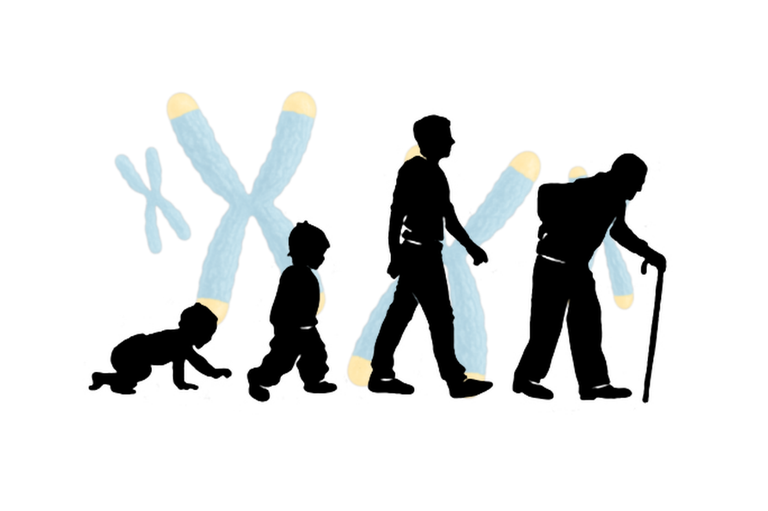
From the moment we are born, we begin to age. Hallmarks of aging are cellular and molecular processes that occur as we age and that, together, explain why our body gradually loses its capacity and functionality to innovate. There are many interrelated mechanisms involved, but three elements are particularly important: telomeres, epigenetics and oxidative stress.
Our body is constantly renewing itself: some cells die and others divide to replace them. However, not all do so at the same pace; intestinal cells, for example, are renewed in a few days, while most neurons or eggs are not replaced. Every time a cell divides, it must double its genetic material (DNA) so that each daughter cell receives a complete copy. However, this process is not perfect: a small amount of DNA is lost in each cell division, which over time leads to progressive cellular damage.
Telomeres, the DNA sequences located at the ends of the chromosomes, play a fundamental role in this. They act as “protective capons”: they are slightly shortened in each cell division, which prevents the loss of important regions of the genome. But this ability is not unlimited. After many splits, the telomeres wear out and become so short that they can no longer adequately perform their protective function. From that moment on, copies of the genetic material are less reliable and the new cells are no longer perfect replicas of the previous ones. As they divide, they can accumulate more and more defects. We could compare it to copying a key over and over again: if each copy is made according to the previous one, there comes a time when the key no longer fits in the lock correctly. In addition, some cells go into a dormant state called "senescence" and do not divide anymore. As a result, the ability to renew fabrics decreases, and the fabrics age. This is why telomeres are said to be similar to a “biological clock.”
Another great protagonist of the aging process is epigenetics. These are chemical changes that dictate how genetic information is read or expressed. If DNA were a book, epigenetics would be the notes in the book (underlines, footnotes or corrections) that guide which parts of the book to read and which do not. This allows the cell, as needed at any given time, to activate or deactivate (silence) certain genes. With age, however, these regulatory systems begin to fail and, for example, genes associated with inflammation become more active. Hence the term inflammaging, a condition of chronic inflammation of low intensity that accompanies aging and is a risk factor for the development of various pathologies.
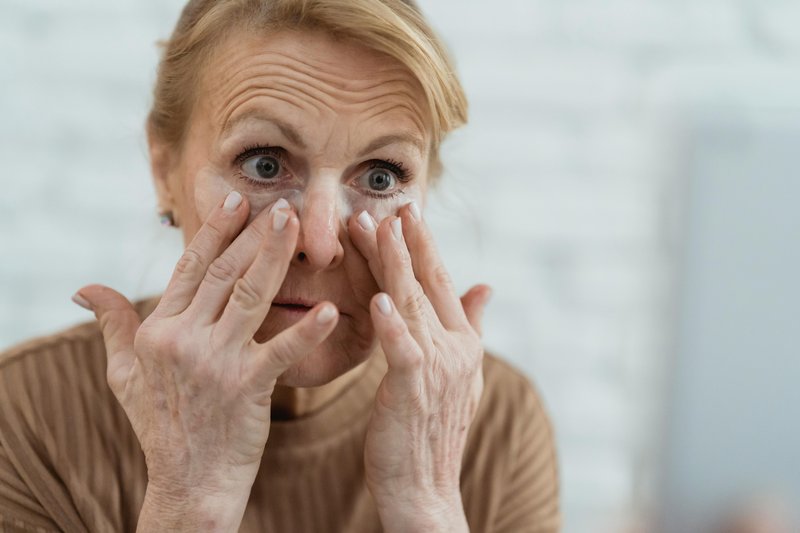
We use spectacular external signs, such as skin quality, to assess the degree of youth and, consequently, the perception of beauty. Ed: Teona Swift / Pexels
Another important element is the mitochondria. They act as power plants, converting oxygen and nutrients into energy for the cell to use. As in any factory, waste is generated. Among them, the ROS (reactive oxygen species) stand out. They are useful in small amounts for cellular signaling and defense, but when overproduced (or when antioxidant systems fail) they cause oxidative stress. Proteins, lipids and DNA are then oxidized and damaged. As they age, this accumulated damage causes the cells to function worse and the tissues gradually lose their ability to maintain and repair.
Why do we unite youth and beauty?
As we have seen, aging is a gradual and progressive process in which various elements of the body gradually deteriorate. In most animals, part of this deterioration is also evident in the external appearance. Our brain uses certain physical characteristics as “signs of youth”, such as smooth, homogeneous, shiny, wrinkle-free skin, white teeth, or abundant hair and eyebrows. Unconsciously, we associate these characteristics with stages of greater fertility and, in general, with better health. Hence the tendency to associate beauty and youth.
This connection is not new. Although it is based on biological signals related to health and fertility, it has been reinforced for centuries by art, religion and social norms. In ancient Egypt, for example, beauty was seen as a visible expression of vitality and order, in accordance with the maat concept (note: the maat represented a cosmic and social equilibrium). In this cultural context, youth was seen as a sign of physical well-being and closeness to the divine, and as a form of renewal of life after death. In classical Greece, proportion, symmetry and youth were considered to be representative of virtue and harmony. This idealization of beauty was associated with the concept kalokagathia, which symbolized the union between beauty and moral/virtuous excellence. In the Renaissance era (XV–XVI. for centuries), beauty continued to be associated with health, harmony and youth. Later, in the Victorian era (19th century. in the century), women’s youth was associated not only with beauty, but also with status and morality. This increased the social pressure on women to maintain their youthful appearance. On the other hand, we must bear in mind that the criteria of beauty are not static, but change with the economy, technology and social values. Nowadays, it seems that globalization and the expansion of the cosmetics and antiaging industry have homogenized some ideals of beauty/youth that are playing an increasingly important role in our daily lives.
Beauty is not always an indicator of longevity
The link between beauty and youth is neither universal nor invariable. Although it is common to associate young appearance with health and longevity, these criteria are not always reliable. A paradigmatic example is the naked rat sator (Heterocephalus glaber), an animal that appears to be very aged with the naked eye. H. Yeah. glaber has almost no hair and has a very rough skin—as opposed to our usual beauty and youth canons. However, as they say, sometimes the appearance can be misleading. In fact, their rough skin and lack of hair are not signs of premature aging. On the contrary, the aging process of this animal is particularly slow. Although domestic mice live only a few years, H. glaber lives for 30 years. But even more interesting than its long life is the quality of life it maintains over time; in fact, it maintains adequate physiological functionality for most of its life. This example forces us to distinguish two concepts that we often confuse: external appearance and biological age; or in other words, beauty and youth.
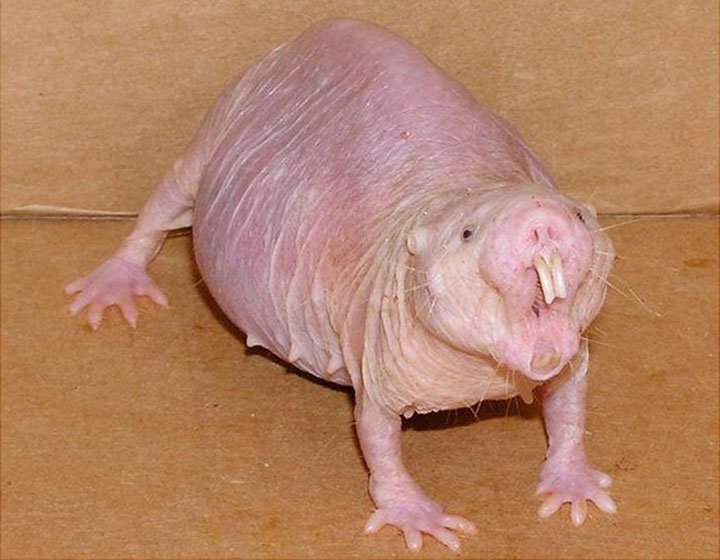
Sator-nude rat (Heterocephalus glaber). Kein keen / CC BY-SA
To understand the appearance of this mouse, it is helpful to study the environment in which it evolved. The naked Sator-rat lives almost all his life underground, in complex, dark and narrow tunnel systems, where friction is constant. In this environment, the presence of flexible skin and practically no hair is a clear advantage, since it facilitates the movement in the galleries and reduces the damage caused by friction. Therefore, its “rough” appearance is not a sign of aging, but an evolutionary adaptation that has improved survival.
What if instead of insisting on “looking young”, we focused on aging better?
In recent decades, the antiaging industry has focused mainly on aesthetics. All of these expensive treatments can change our external appearance, but that doesn’t necessarily mean we are younger or healthier. If we really want to live longer and better, we need a different perspective. According to scientific evidence, the most important factors in achieving healthy aging are not the most expensive treatments, but our lifestyle habits. In addition to a balanced and varied diet, avoiding toxins and resting properly, there are three key factors:
First, stress stands out. Stress is not, in itself, negative, since it is a biological adaptive response that was decisive for our survival. The problem arises when it becomes chronic. It then causes adverse effects such as hypertension, disturbance of metabolism, persistent inflammation, weakening of the immune system and acceleration of the telomere shortening process. Therefore, it is essential to learn how to manage stressful stimuli through meditation, breathing, physical activity and living more calmly to promote a healthier aging.
It is also essential to keep the brain active. As with the muscles, it must be stimulated regularly to maintain its functionality. When not in use, the body itself tends to eliminate neural connections to optimize energy consumption. Therefore, it is essential to constantly stimulate the brain, making it face new tasks and new challenges (for example, learning a language, playing an instrument or starting a new sport).
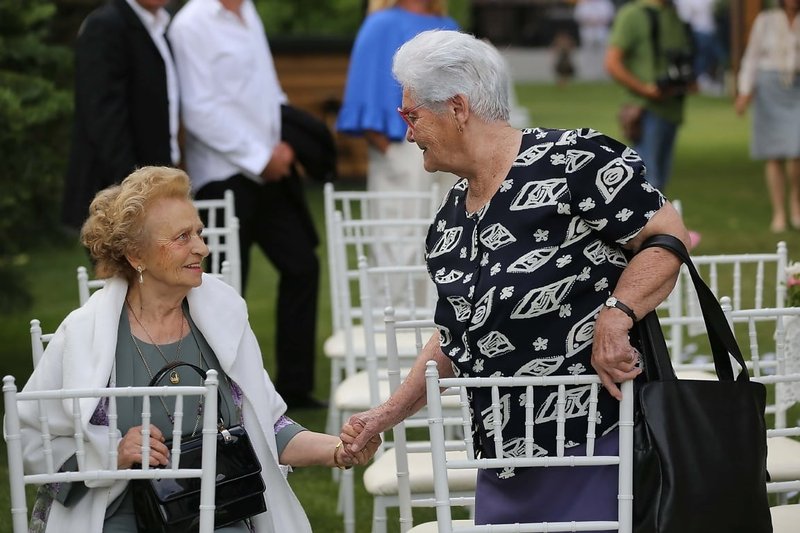
Social relationships and emotional support are essential for healthy aging. Ed: Marko Milivojevic / Pixnio
Finally, we must remember that we are social beings. This means that our organism is biologically prepared to interact with others. The quality of our social relationships greatly influences our emotions, our behavior, and even our hormones. It has been shown that proper socialization and positive relationships (family, friends, social support) help us to better regulate the response to stress. In addition, it has indirect effects on our health, since quality social relationships contribute to healthier lifestyle habits, such as a balanced diet or regular physical exercise. Together, these factors contribute to healthier aging and a better quality of life.
From an evolutionary perspective, aging can be understood as the necessary biological “programmed obsolescence”, a process that facilitates generational change and contributes to the balance of our species. Fighting this process—or trying to hide it—not only is it sterile, but it also takes us away from what is really important. In other words, aging is not a problem that needs to be corrected, but a transformation inherent in life. The challenge, therefore, is not to eliminate the signs of aging, but to prevent them from manifesting themselves in relation to disease, vulnerability or loss of quality of life.
Perhaps the paradigm shift is to stop making so many efforts to restore the apparent youth or beauty lost and begin to build a healthy and dignified old age. Honoring the beauty of aging can be one of the best ways to preserve health. Let's get old!
Bibliography
Aubert G, Lansdorp PM. Telomeres and aging. Physiol Rev. 2008;88(2):557–579. DOI:10.1152/physrev.00026.2007.
Buffenstein R. Negligible senescence in the longest living rodent, the naked mole rat: insights from a successful aging species. J Comp Physiol B. 2008;178:439–445.
Epel ES, Blackburn EH, Lin J, Dhabhar FS, Adler NE, Morrow JD, et al. Accelerated telomere shortening in response to life stress. Proc Natl Acad Sci U S A 2004;101(49):17312–5.
Glover, T.D., Todd, J., & Moyer, L. (2022). Neighborhood Walking and Social Connectedness. Frontiers in sports and active living, 4, 825224. https://doi.org/10.3389/fspor.2022.825224
Guo J, Huang X, Dou L, Yan M, Shen T, Tang W, Li J. [Aging and aging-related diseases: from molecular mechanisms to interventions and treatments]. Signal transduct target ther. 2022;7:391. doi:10.1038/s41392-022-01251-0.
Harvanek, Z.M., Fogelman, N., Xu, K., & Sinha, R. (2021). [Psychological and biological resilience modulates the effects of stress on epigenetic aging]. Translational psychiatry, 11(1), 601. https://doi.org/10.1038/s41398-021-01735-7
López-Otín C, Blasco MA, Partridge L, Serrano M, Kroemer G, et al. Hallmarks of aging: an expanding universe. The Cell. 2023;186:243–278.
Phua QH, Ng SY, Soh BS. Mitochondria: a potential rejuvenation tool against aging. Aging Dis. 2024;15(2):503–516. doi:10.14336/AD.2023.0712
Santos AL, Sinha S, Lindner AB. The good, the bad, and the ugly of ROS: new insights on aging and aging-related diseases from eukaryotic and prokaryotic model organisms. Oxid Med Cell Longev 2018;2018:1941285. doi:10.1155/2018/1941285.
Buletina
Bidali zure helbide elektronikoa eta jaso asteroko buletina zure sarrera-ontzian
Bizitza

Aldizkaria
Kolaboratu
Zure lana argitaratzea nahi duzu?
Gai zientifiko bati buruzko artikulu bat baduzu, bidali eta sarean zein aldizkari inprimatuan argitaratu dezakegu.