
 Bilatzailea


As the environment changes, so do our allergies.
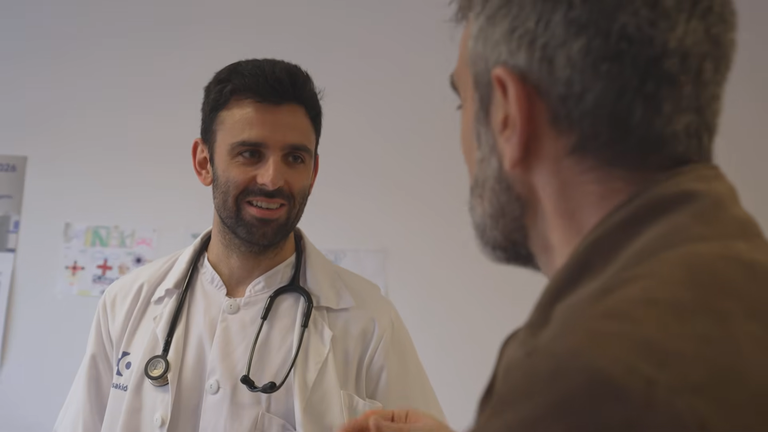
There are many people who suffer from an allergy, more and more, and allergies are increasingly aggressive. The allergist Iñaki Maiz, from the allergology service of the Donostia Hospital, explains the reasons behind these changes.
As we have heard, allergies are on the rise and by 2050 it is estimated that half of the population will suffer from some type of allergy. Why? Why?
These are the estimates of the latest research, yes, and we always mention that there are many causes behind this increase. Depending on the type of allergy, the main cause of respiratory allergies may be, if necessary, pollution and climate change.
In food allergies, on the other hand, you can have weight when eating more and more processed foods. The age at which we start feeding children is also important.
Finally, the hypothesis of excessive cleanliness has gained strength in recent years. Until a few years ago, we had to fight many infections, but in recent years, many of these infections have disappeared. We don’t know very well why, but some people’s immune system goes crazy and starts fighting some compounds.
Those would be the headlines of the conversation. First of all, what is an allergy?
An allergy is an inadequate reaction of the immune system to a substance that, in principle, would not cause any pain in the body, i.e., an allergen.
How does the body respond?
Allergy occurs in two steps. First, the body comes into contact with an allergen for the first time and sensitization occurs. In this sensitization process, antibodies called IGE are generated against this specific allergen. From the second contact, several cells are activated in our body that release substances (histamine is perhaps the most popular) that cause allergy symptoms.
Are we born with allergies or do they arise as we move forward in life?
Allergies happen, yes. We are not born with allergies, we can create an allergy to what we are in contact with.
Does this mean that they are variable?
Allergies are very variable, yes, so it is very important to keep track of patients. The change may be in intensity, for example. A patient may initially experience mild reactions, with increasing reactions throughout his or her life, or vice versa.
The change can also occur in the allergen itself. A patient may be allergic to a food or a family of foods, which may change over the years.
You mentioned allergies to the environment. Maybe these are the most common allergies?
When we talk about environmental allergies, we think about spring pollen allergy. But the reality is that we have many other allergies. In the Basque Country, there are also allergies to some trees or plants; in the Alava area, allergy to fungi is also quite common; and near the coast there are many allergies to mites. The latter also suffer throughout the year.
In the case of food allergies, which are the most common?
In the early years of life, the most common allergies are allergies to eggs and milk. In older adults, nuts are also important, and in adulthood, allergies to fruits, fish and seafood are more common.
Food allergies and intolerances are different.
Are they completely different things?
Yes, they are completely different, and one difference is the mechanism of creation.
In the case of allergies, I mentioned earlier that it is an immunological mechanism. In the case of intolerances, the cause may be an enzyme deficit or a problem of food absorption, among others. Another difference is the symptoms. In an allergy, the symptoms can be very severe and in intolerances, in principle, they are not serious, although they are often very uncomfortable.
In the case of food, would it help the child to have this contact with certain foods as soon as possible to avoid the appearance of allergies?
Yes, several studies have shown that the early administration of these allergenic foods to children reduces the risk of allergy to these foods. Therefore, this instruction is usually given today.
However, the question is more complex than when to introduce food. There are many factors that influence the appearance of an allergy, right?
Yes, as I mentioned at the beginning, there are many reasons behind the proliferation of allergies. It is believed that eating more and more processed foods, as well as microbiota, also influences, and there are several studies underway to understand these processes.
What is the most serious risk of an allergy?
Having an anaphylaxis. In an allergic reaction, a reaction may occur in a part of the body other than the skin, such as the airways. In this case, you may have cough, shortness of breath, vomiting, or dizziness. Severe anaphylaxis is called anaphylactic shock and can lead to death.
What can be done to avoid this risk?
We have treatments at different levels. For example, when a patient is allergic to a food, the first level is logically to avoid that food and that food family. The next step is symptomatic treatment, for which we use drugs such as oral antihistamines or self-injectable adrenaline. The third step would be to go to the source of this allergy to try to fix it. This treatment is called immunotherapy and consists of the administration of gradually higher doses of allergens, always in a controlled manner and under medical supervision. The purpose of this treatment is to allow the patient to tolerate this food.
What is the weirdest allergy you’ve ever treated?
This question is quite common with family or friends. I would mention the allergy to LTP. This allergen is found on the side of peaches, nectarines, paraguayans and similar fruits, and the peculiarity of the allergy to this compound is that the cofactors are very important. A person who is allergic to LTP can eat a peach with the skin and not react if he is calm. If, on the other hand, you are sick, menstruating, eating peach and going to exercise, you may have a serious reaction.
It is also common to have an allergy to medicines, such as penicillins. These allergies are a double problem, right?
Yes, it is a serious problem, but in the case of penicillins there is a relevant fact. It is now known that 90% of patients who have historically been diagnosed with penicillin allergy are not actually allergic to penicillins. Therefore, these people have avoided an important group of drugs when in fact they should not have avoided it.
I mean, it's a misdiagnosis and it can have serious consequences, right?
Yeah, that's it. Sometimes, incorrect diagnoses are made in the case of allergies, and other times, this diagnosis may not have been made. Returning to the case of penicillins, if they are not used, other antibiotics are often used that are less effective, have more side effects, are more expensive, can create more resistance, etc.
Do you think that new allergies will appear in the short to medium term?
Sure. Sure. Today we have allergies that were not known a few years ago, and surely in the future other allergies will arise. After all, we become allergic to what we are in contact with, and as our environment is changing, so will allergies.
So there's probably still a lot to investigate.
Awful. Awful. It is a very large area, also relatively young, so there is still a lot of space for research. There is no shortage of allergies and no research.
Buletina
Bidali zure helbide elektronikoa eta jaso asteroko buletina zure sarrera-ontzian