 Bilatzailea


Today, conciliation is possible as a veterinarian for farm animals
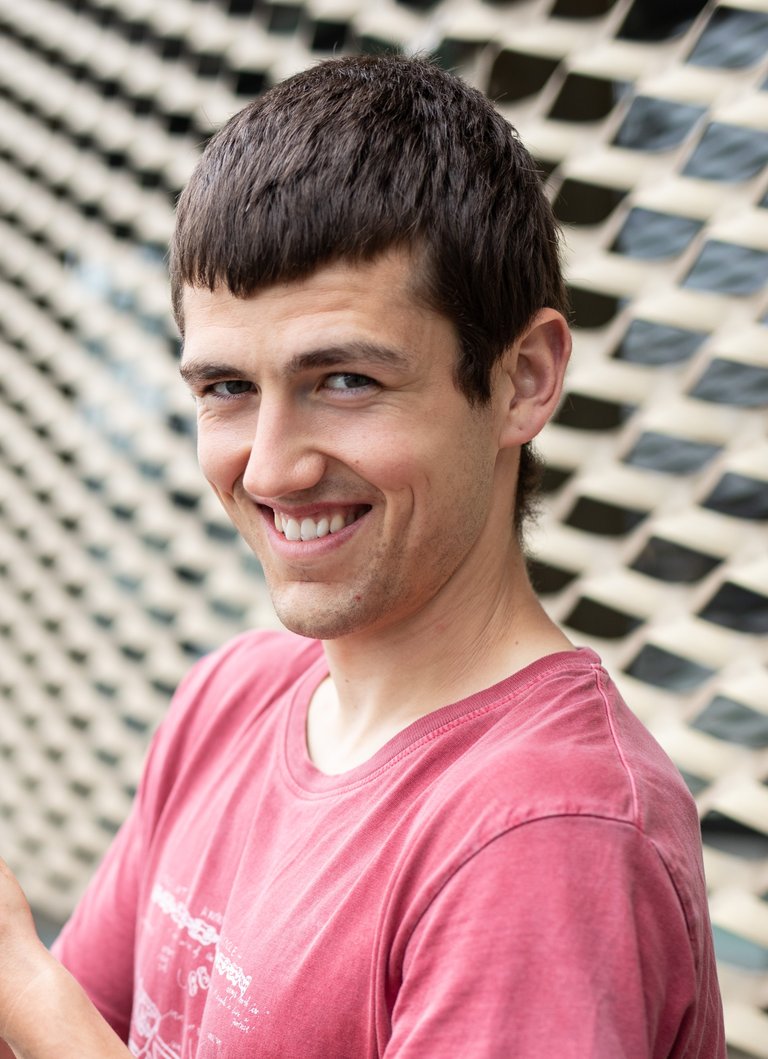
Asier Albite is a veterinarian and livestock farmer who knows both worlds from the inside. It explains the daily life of current farm veterinarians and reflects on the modern life of farm veterinarians.
How is the work of farm veterinarians today?
It is a sacrificial and vocational work. To begin with, you have to study for five years to be able to dedicate yourself to this work. It's very grateful, yes. It’s a job with a lot of diversity, it’s not boring at all, it’s done outdoors, you have contact with people It's a very nice job, but it can be unpleasant at times.
There was a time when in each valley there was a veterinarian who worked for all the baserritarras of the valley. He used to be a trusted professional of the farmers, and he always went to that same veterinarian, regardless of any day, any time or any kind of notice. When you needed a veterinarian, he showed up right away. Since there were many animals and farmers, a veterinarian could live without moving from that valley. This, of course, had advantages such as proximity, spontaneity, and that this veterinarian knew the stable very well. It was a very personal work, which could be enriching, but it had and still has the drawback that it is a very linked work.
How has the profession changed? What is it like to be a farm animal veterinarian today?
I work in a company called Albaikide. Our headquarters are located in Irurtzun and Elizondo, with a total of twenty veterinarians. Today we work all over the Basque Country, but we are divided into four groups and each group works in a specific area.
Every two weeks we have rest and then we work two weeks. In one of the two weeks in which we work, we have a standard schedule: from seven in the morning to four or five in the afternoon, approximately. The following week, that is, one week a month, we are on call. In the guards, in addition to these standard working hours, we must be attentive to the phone all day to be able to attend to it in case of emergency.
The meeting between veterinarians has allowed us to improve the life of the veterinarian, since we have more free time to be with family or friends, and also to be able to invest in training. Being autonomous, it is very difficult to achieve this. At Albaicide we have people who work in the office, who respond to notices and know at all times where each veterinarian is and what work he is doing. Therefore, they can lead much faster to the veterinarian who is most suitable to work at the moment.
The only difficulty that the system can have is that there are many older farmers, and some find it difficult to understand how to work. They're used to working the way they used to. But I believe that such a form of organization is necessary today.
Are nineteen veterinarians many or few for the whole Basque Country?
In addition to our company, there are other companies that offer the service, autonomous veterinarians and associations. In recent years, the number of livestock farmers has decreased and has been considerably reduced, but the number of cows has been maintained. That is, as farmers have retired or left their jobs, the remaining farmers have taken more animals, exploited more land and, in search of profitability, have felt obliged to increase. The current market leads us to this. Because the bigger the stable, you're usually more efficient.
Is it very different for you veterinarians to work for a large block or a small one?
Actually, no. Fortunately, we have small and large customers, and they are all necessary. It’s different for everyone, that is. Normally, large farmers are able to perform certain tasks or basic tasks themselves and only call us when they have a serious problem. Other tasks with large blocks are usually scheduled and are more related to the management of the block than to the treatment of a specific animal, such as vaccinations or reproductive work.
On the contrary, the work we do in small stables is more individual and can consist of treating a single cow: that the cow is sad, that it does not eat enough...
Therefore, the work with small farmers is more related to the clinic, while with large farmers we mainly collaborate in the management or viability of the block.
In order to answer these eleven questions, it is first necessary to know what each animal has. What is the diagnostic process like?
The bad thing about working with animals is that they don’t talk to us and they don’t tell us what they have. Therefore, the first step is to ask the farmer about the history of this animal, its behavior, if it has eaten, if it is sad, since when it has been like this This process is called anamnesis. Then, of course, we observe the cow well and try to capture all the clinical signs. With all this information, we form a puzzle.
One of the differences you may have with doctors is the availability and complexity of work equipment, right?
Yes, of course. There are advanced equipments, but less available. There are also hospitals, but they are usually for pets or horses to ride on. It is mostly a matter of money, that is, how much the owner wants to spend or invest in the welfare of this animal.
In the case of productive animals, such as certain farm animals, profitability is sought and, although animal welfare is taken into account, farmers cannot afford the costs of using the most advanced equipment. However, we have equipment that can be transported in the car, such as a small portable radiograph and an ultrasound. They are not as advanced as we would like, but they can be very useful for some functions.
Do you have blood tests?
Oh, yeah. Yeah. It is useful for diagnosing certain diseases. We take blood samples and send them to a nearby laboratory. They analyze them there and send us the results in two to three or four days at most.
Therefore, your main areas of work are animal health and stable management. But what happens when there is a public health problem caused by livestock?
The diagnostic process is as described above. Then, if the veterinarian concludes that the disease suffered by the animal can be dangerous for humans or spread very quickly among other animals, an official notification is made to the public administration.
From there, the administration decides; sometimes the production of the stable is stopped or isolated. On the other hand, studies are carried out to determine the presence of this or similar disease in the animals of the stable or nearby blocks. If all the studies show that it is a dangerous disease, appropriate measures are taken. If there is no risk, this is the process.
Would you say that this type of disease is controlled? Do new illnesses occur often?
Diseases that can pass into humans are highly controlled; brucellosis and tuberculosis are two examples of common diseases of this type. The news can appear from time to time, of course, this cannot be known, but the control over the known ones is very strict. Every year there is a team of official veterinarians who carry out reviews on all farms and ensure that none of these diseases are present.
Does each veterinarian of Albaikide have his/her own skills? Do you specialize in a specific animal or in a specific field?
We specialize, yes, and that is one of the benefits of being part of a team. There are veterinarians who specialize in food, others in podiatry, others in reproductive tasks, etc.
Therefore, when we receive a notice, we try to send a veterinarian who specializes in this necessary field. If you are busy, another veterinarian does the job, but contacts the specialist and asks for advice.
Cows, sheep, horses, pigs... will be the animals you treat the most. Have you got any other animals?
We have touched everything: dogs, chickens, ducks But we would say that 95% of our work is done with cows. We have received warnings to attend to animals in which we are not specialized, but we do not like to enter them. In special cases, we could do something, but most of the time we give them the phone number of another veterinarian who specializes in this animal.
Returning to the cows, is there a big difference between the different breeds of cows? Is the treatment very different from one to another?
Yes, there are many variations between cows, both by geography and by production. We could divide them into three main groups: dairy cows, beef cows and wild cows. Betizu, for example, is a wild breed. I am very fond of this breed and try to attend to the warnings related to it.
In fact, although there are significant differences between cows of one breed or another, the important thing is which of the three groups mentioned is one. The pathologies and symptoms are very different in dairy cows or meat cows. That’s why veterinarians also specialize in one type of cow or another. However, we have all had to take care of cows and we are all capable of providing a dignified service.
You say that the number of farmers is decreasing year after year. Is the trend the same with veterinarians?
Yes, the number of veterinarians is also falling, not as much as that of farmers, but we lack people. The reason for this, however, is not related to living conditions, in my opinion. I think that the fondness for livestock has been lost, and that is why there are fewer veterinarians of farm animals. Today, the majority of society is urban, which means that it has less contact with animals, and even less with farm animals.
Many people study veterinary medicine, but many specialize in pets because they have had more contact with them or become administration veterinarians because the schedule is better and you do not have to do guards.
So, is conciliation possible today as a veterinarian for farm animals?
Fortunately, yes, it is possible. Being autonomous is more complicated and can be more similar to the life of the veterinarian of yesteryear. But working in a company is easier. It allows you to have a professional relationship with the farmers, a good relationship, but it also allows you to disconnect.
I would therefore like to encourage young people in the Basque Country to study veterinary medicine and specialise in the veterinary practice of farm animals. It is a very beautiful work that today also allows you to reconcile well with your personal life.
We see you talking a lot in the media about your work. Do you do it because you like it or do you have another goal?
I like communication, but I do it because I think there is a need. I miss the connection between the countryside and the city, and I think that gap is getting bigger and bigger. I like to do that bridge work so that the field remains connected to the city and the city is connected to the field.
Buletina
Bidali zure helbide elektronikoa eta jaso asteroko buletina zure sarrera-ontzian
Bizitza

Doitasuna hegan egiteko
Garraioak
Aernnova: Diseinutik zerura
Garraioak
Motor aeronautikoak laborategian
Garraioak