 Bilatzailea


Scientists have ruled out the best and worst climate scenario
Given the trajectory of renewable energies and the current economic cost, they point out that they no longer see the reality of exceeding the most extreme limit of 5.7°C for 2,100 years. However, the smallest increase of 1.9°C is not possible.
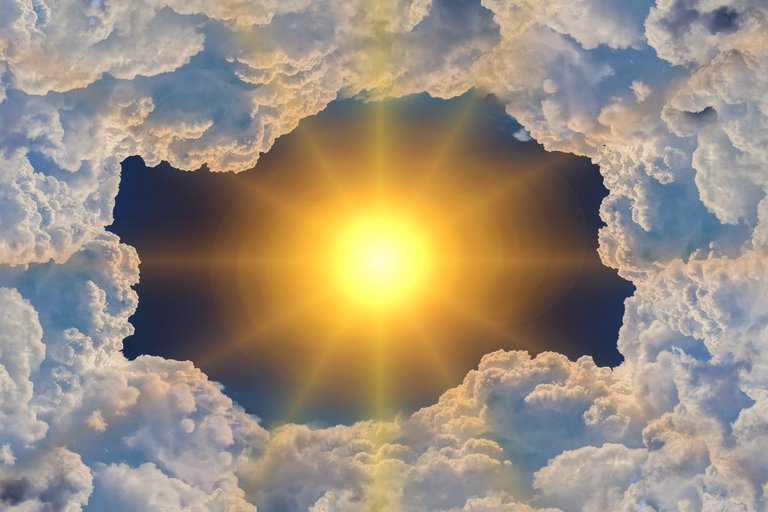
The global temperature increase has almost reached 1.5°C, and scientists are fully anticipating possible climate scenarios for the year 2,100. The international climate model assessment initiative has reconsidered its projections for the future. the revision of the previous ones (CMIP6) began in 2023 and the new projections (CMIP7) reflect the impact of the measures taken so far to address climate change. The investigation has left bittersweet news:
The sweet news: scientists believe that the international expansion of renewable energies, and the consequent fact that they are already cheaper than fossil fuels, makes the direction taken by renewables irreversible. This is what has left the first results: it is no longer realistic to see the most extreme climate projection imagined so far occur, reaching 5.7°C. They are an indicator of the capacity of society to influence the energy transition.
Salty news: Given the slow rates of transformation of climate policies, scientists find it impossible to stay even in the best projection of the increase of 1.9°C. They remember that to get out of the emergency that is still a long way away, it is essential to take more drastic measures.
The research has also led to other reflections. So far, most climate scenarios have been projected until the end of the century, but researchers believe that it is also necessary to study the evolution beyond the 21st century. This has two main objectives. On the one hand, to understand the dynamics that Earth’s systems would adopt if the concentration of CO2 in the atmosphere were to be stabilized at a certain level, and to assess whether there is a risk of irreversible change if inflection points are exceeded. On the other hand, to investigate whether achieving long-term negative emissions in one decade or another would affect the ability to achieve reversible climate change. Therefore, climate science continues to face significant challenges.
Buletina
Bidali zure helbide elektronikoa eta jaso asteroko buletina zure sarrera-ontzian