
 Bilatzailea


Polluted air, polluted brain?
[Relationship between air pollution and mental health]
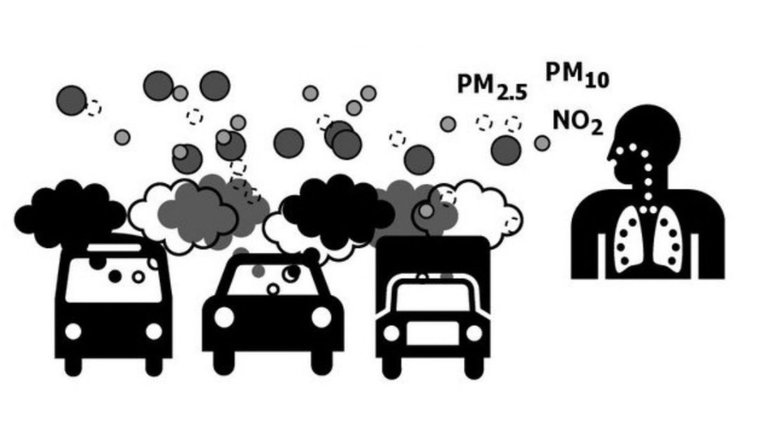
When we talk about air pollution, most of the time the lungs and heart come to mind. It has long been known that the inhalation of polluted air causes damage to the respiratory and circulatory system and is associated with the risk of premature death. In recent years, however, a new question has been emerging with increasing intensity: what is the impact of air pollution on our brain and mental health?
Depression and anxiety are two of the most common mental health problems today. They affect hundreds of millions of people worldwide and are increasingly present in modern societies. Biological, social and psychological factors play an important role, but lately particular attention is being paid to environmental factors, particularly air pollution.
What is air pollution and why can it be a problem for the brain?
Air pollution is caused by a complex mixture of particles and gases. The most common in urban areas are fine particles (PM2.5 and PM10), nitrogen dioxide (NO2) and black carbon, most of which come from the combustion of fossil fuels, mainly from road traffic.

Characteristics of the main air pollutants in cities.
The smaller particles, called PM2.5, are of particular concern due to their greater ability to cross pulmonary barriers and access blood circulation. From there, studies have suggested that through different mechanisms, inflammation, oxidative stress and imbalance of neurotransmitters can occur in the brain. These mechanisms are precisely related to depression and anxiety. Other contaminants, such as PM10 particles or NO2 and other gases, can also act beyond the lungs through other mechanisms.

[Impact of air pollution in cities on people's health].
Scattered evidence, many questions
Over the past decade, numerous studies have been published examining the relationship between air pollution and mental health. Some have found a higher risk of depression or anxiety in areas with higher pollution, while others have shown more modest or uncertain results. In addition, these studies have been very diverse: populations, pollutants, exposure times and measurement methods have been varied. For this reason, it was necessary to have a global vision that would analyze all the evidence together.

Characteristics to be taken into account to understand the impact of air pollution in cities on people's health.
81 results of the research, solving the puzzle
A systematic review and meta-analysis conducted in recent years has compiled 81 studies published up to March 2025 to examine the association between air pollution and depression and anxiety in the adult population. These studies have taken into account the main pollutants in cities (PM2.5, PM10, NO2 and black carbon), distinguishing between short-term exposures (of a few days or weeks) and long-term exposures (of months or years).
The results show a fairly consistent picture:
the higher the exposure to air pollution, the higher the risk of depression and anxiety, both in the short and long term. The strongest associations have been observed in long-term exposures. In particular, PM2.5 particles have shown the strongest association with anxiety and both PM2.5 and carbon black with depression. Short-term exposure also has an impact, albeit smaller: data suggest that increases in pollution may exacerbate symptoms of depression and anxiety.

Methodology to investigate the impact of air pollution on people's health.
What do these results (and what not) mean?
It is important to be clear that these studies do not prove causality. That is, it cannot be said that air pollution directly “causes” depression or anxiety. In addition, there is a great heterogeneity among the studies, and in some cases the uncertainty of the evidence is high, especially around black carbon.
However, the direction of the results is very similar in all pollutants and in different types of studies, suggesting that air pollution may be an important environmental risk factor for mental health.
Environmental policy, an ally of mental health?
One of the main conclusions is that air pollution is a variable factor. We can’t change our genes, but we can change traffic patterns, urban planning or energy sources. Measures to improve air quality – reducing polluting vehicles, strengthening public transport, creating greener urban areas – would not only be beneficial for heart and respiratory health: they could also contribute to mental health.
More research, especially long-term follow-up studies, is needed to better understand biological mechanisms and identify the most vulnerable people, but the evidence available today leaves a clear message that the air we breathe may at least partly be related to what we think and feel.
References
Bereciartua, A., Jimeno Romero, A., Subiza-Pérez, M., & Lertxundi, A. (2026). Effects of environmental air pollution on anxiety and depression in adults: an updated systematic review and meta-analysis. Environmental Research 293, 123738. https://doi.org/10.1016/j.envres.2026.123738
Gimeno-Ferrer, F., Porschen, L.T., Matthes, F., Gohlsch, K., & Meissner, A. (2026). Airborne particulates and brain health: The role of PM 2.5 in blood-brain-barrier dysfunction. Journal of Cerebral Blood Flow & Metabolism, 46(5), 1025–1042. https://doi.org/10.1177/0271678x261418925
Exposure to pollution linked to depression, anxiety and other mental health issues. (2026, March 3) Press Releases | European Environment Agency (EEA). https://www.eea.europa.eu/en/newsroom/news/exposure-to-pollution-linked-to-depression-anxiety-and-other-mental-health-issues
Buletina
Bidali zure helbide elektronikoa eta jaso asteroko buletina zure sarrera-ontzian