
 Bilatzailea


China has postponed a mission to explore the hidden water of the Moon
The Chang'e-7 mission intends to study the Moon's frozen water in order to establish manned bases on the Moon.
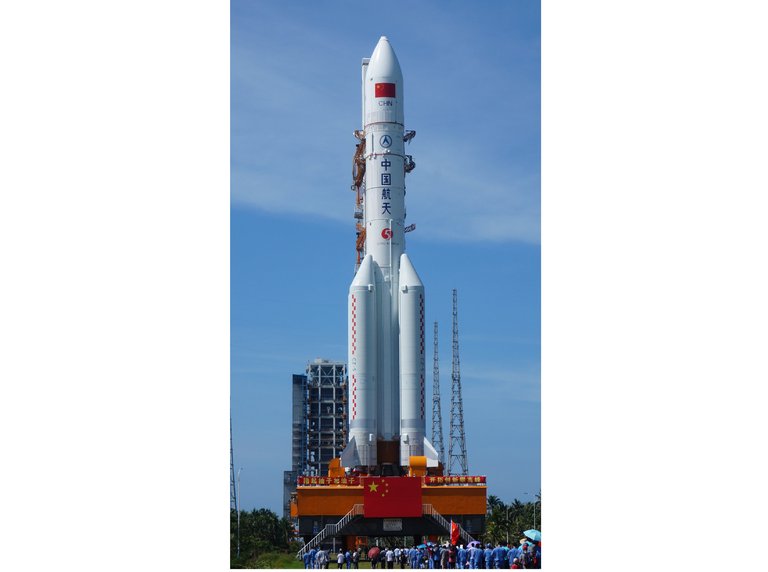
The Chang'e-7 mission probe was scheduled to launch on August 24, but has been unexpectedly delayed until 2027. The rocket was ready a week before the expected launch date on the platform, but on 23 August, a few hours before the mission was launched, the China Manned Space Agency (CMSA) stated that the mission did not meet the launch requirements and therefore could not be carried out within the expected time frame.
“If frozen water were abundant and available, it would make it much easier for humans to establish a stable base on the Moon.”
The Chang'e-7 mission had to be the first to directly study the origin and abundance of frozen water on the Moon. To do this, he had to moon and drill several craters near the South Pole.
Studies to date have included remote observations by probe for the analysis of frozen water. These observations suggest that there may be frozen water permanently in the polar craters in the shadows. If this resource were abundant and available, it could provide breathable oxygen, drinking water and hydrogen that could be used as a rocket fuel, making it much easier for man to establish a stable base on the Moon.
The launch date for the Chang'e-7 mission has not yet been determined, but even if it were scheduled for early next year, it would still be ahead of NASA's autonomous VIPER vehicle, which is expected to be launched by the end of 2027. The European Space Agency and Japan and India are also working together towards the same goal. However, even if these missions found ice water, they would have to follow a thousand steps to establish a base on the Moon.
Buletina
Bidali zure helbide elektronikoa eta jaso asteroko buletina zure sarrera-ontzian