 Bilatzailea


Proposals for the energy transition
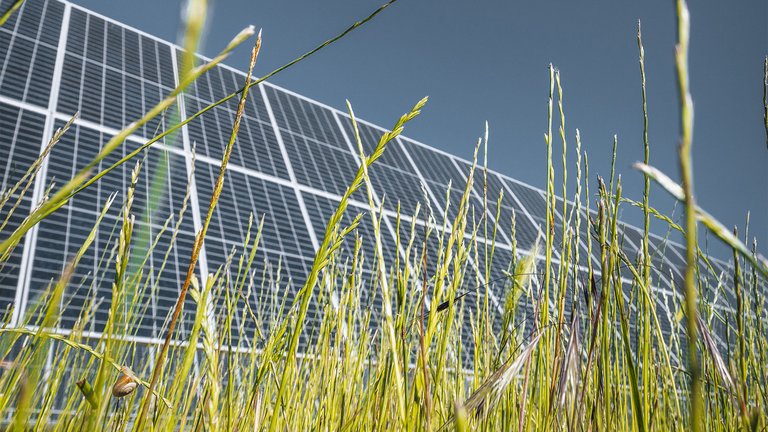
One of the biggest ecosocial challenges today is the energy transition. International and national bodies (not all) have agreed on specific targets for 2030 and 2050. They have also established general strategies. However, its implementation has generated social and ideological debates at the local level.
In the Basque Country, various associations have been formed to resolve these disputes. Among them are the Stop Fossils and the Popular University of Álava (AhU).
The first defines itself as “Stop Fossils is a group that promotes debate and socializes proposals on the consequences of climate change in the world and in the Basque Country and our responsibility as a people, with special attention to the problem of fossil fuels and the energy transition”.
AhU, for its part, is the Alava Association for the Promotion of Culture and Academia, a bottom-up project between different academic and social spheres. So far, AhU has focused on debating from a polyhedral perspective of ecological economics, geography and law, and has been nurturing collaboration between experts and experts. It is currently seeking to share a number of reflections on the intersection between energy transition and spatial planning.
We have asked one member of these two associations to share their vision Gorka Laurnaga Peña of Stop Fosilac, an expert in political ecology, and Unai Pascual García de Azilu of Ahu, environmental economist.
Stop Fossils and NEB 50 proposal
Gorka Laurnaga Peña
Expert in political ecology, member of Stop Fossils
The Basque Country continues in the fossilist 20th century. The energy mix of the Petro People has three main characteristics: (1) High consumption – 1.7 million cars and five airports. (2) Fossil dependence — 80% on gas and oil. And (3) external dependence—nearly 90%. Because of this worrying state of departure, for Life, fossil stops. With the manifesto From fossil fuels to renewables, for a just and rapid transition, we began our group’s journey on 28 January this year, the International Day of Climate Action, to claim that it is time to move from diagnosis to action.
One of our main concerns is the time dimension, because what is at stake is not only to make the energy transition, but to make it on time. In this regard, it should be noted that in the ACBC there have been no renewable parks installed in the last twenty years. Solar and wind energy is the most cost-effective measure currently available under the IPCC and therefore has the greatest potential for rapid and scalable decarbonisation.
To answer the questions about how much transition we have tried to carry out an exercise through the proposal NEB 50 that can be read on our website. We have drawn on the work of the CLEVER Energy Scenario published in Donut Economia and Nature Communications to propose transition targets for 2050. It is based on the Trinomial, Decarbonisation and Emancipation (NEB). In short:
- How many? Public policies of sufficiency and efficiency are proposed to reduce final energy consumption by 45%. To achieve this objective, electrification must go hand in hand with the transformation of the mobility and transport model, the industrial reconversion guided by the principles of the circular economy and the in-depth renovation of the built park.
- How? How? We have proposed 10 principles for a just and rapid transition, including sufficiency, sovereignty, territorial compatibility, minimum impact and democratization. For example, with regard to property, it is proposed that half of the installed area should be public by 2050.
- Where? Where? It is proposed to generate at least 50% of the final energy in the Basque Country. Two scenarios have been modeled, one with 50% sovereignty (we have called it NEB 50) and another more ambitious with 66% (NEB 2/3). Since Navarre has more renewable resources, it is proposed to install almost three times what is proposed there for the CAPV. Finally, it is proposed to prioritise areas of lower sensitivity, for which proper territorial planning is necessary.
The NEB 50 can be considered as a minimum scenario, with a significant drop in consumption, medium sovereignty and, as far as possible, photovoltaic roofing. In this minimum scenario, 5,000 new MW would have to be installed between wind and photovoltaic parks. Currently there are about 2,000 MW, of which 1,500 are wind power in Navarre. For comparison, the Labraza wind project has 40 MW. A photovoltaic installation on the roof of a fronton of 0.1 MW.
In this scenario, we should have about 700 wind turbines throughout the territory—fewer in number than currently, but larger—and 7,200 hectares of photovoltaic power by 2050. In total less than 2% of the territory of the Basque Country.
We need more proposals and they will be welcome, because we are in the time of proposals. And if not here, then where? If not, how much? If not now, when?
Equitable ecosocial transition: Climate change, combining energy-nature and territory
Unai Pascual García de Azilu
Environmental economist and member of AHU
AhU was born more than a year ago to reflect on energy, territory and the fight against climate change. AhU has been offering a diagnosis of the current context of energy transition in the Basque Country, marked by a fragile territorial planning fully consolidated, analyzing the effects of the deployment of energy infrastructures on the territory, the landscape and the spatial organization. AhU emphasizes that a fair energy transition must be addressed as a strategic, collective and territorial sustainability process that goes far beyond the energy sector.
The premise of AhU is that the ecosocial crisis is in us, although it sometimes seems invisible, and is a reflection of the global crisis of biodiversity and climate that is intertwined in it. In view of this, we insist on the need to implement public policies based on the reduction of the use of fossil fuels, nature and the multiple values of Basque society in relation to it.
We also conclude that it is essential that the structural conditions for the transformation of our Basque social metabolism, far from sustainability, be designed and implemented as soon as possible. That is precisely where we place the need for a model based on renewable energies, which always respects the territory and the people and nature that inhabit it.
From the different points of view of Basque territoriality, it is the society itself that must deduce what this energy model that must be fair is. To do this, it is necessary to share data, participatory processes and multiple perspectives and values. That’s why AhU has been created to create and share tools that can help us along this path. The challenge is, without a doubt, complex.
One of the conclusions derived from the reflections of Ahu is that, from a territorial point of view, the Basque Country has important laws of territorial planning and urbanism. In the ACBC, for example, there are the Land Management Act, the Land Management Guidelines, the Partial Territorial Plans and the Sectoral Territorial Plans. However, the foundations of spatial planning are often violated. Therefore, society must be attentive to the control of the actions of the public authorities. It is also important to highlight, of course, the need for joint responses to the risk of imposing on society the lobbying power enjoyed by large private companies such as Solaria. If this is not done, the round theories about the transition become insignificant.
To make the energy transition a reality, the management of the territory must have a fair and democratic treatment: citizens must be allowed to participate, guaranteeing access to information in a transparent and accessible way, taking into account that the territory is a public good that must be protected, regardless of who owns it. For example, spatial planning policy cannot be separate from nature protection and agricultural policy. AhU addresses all these issues with technical rigor and also captures the reflections that emerge from the village.
Buletina
Bidali zure helbide elektronikoa eta jaso asteroko buletina zure sarrera-ontzian