 Bilatzailea


The Spanish Agency for Medicines confirms that homeopathy does not have scientific evidence
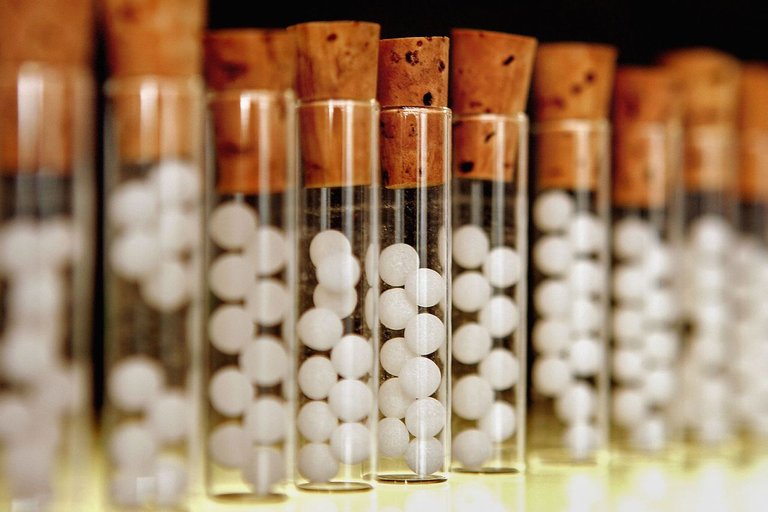
The Spanish Agency for Medicines and Medical Devices (AEMPS) has just published a report based on studies carried out on the efficacy and safety of homeopathic products and on evaluations carried out by institutions of other governments. And he concludes that the evidence is not sufficient to recommend homeopathic treatments in any pathology.
The AEMPS has given two main reasons to reach this conclusion: homeopathic products are not more effective than placebo in studies; or, if not, the methodology of the studies analyzed is not of quality, so they cannot be considered good. The report states that even when differences have been found with placebo, they may be random or due to biases.
“It concludes that the evidence is not sufficient to recommend homeopathic treatments in any pathology.”
The report also explains the principles of homeopathy and highlights that they have no empirical or scientific basis. It asserts, among other things, that the concept of “water memory” is outside rational thought. He also emphasizes that it is striking that there is no homeopathic treatment for acute and serious ailments, and that most of them are for mild and self-healing diseases, or for chronic and recurrent ailments.
The report also summarizes the assessments of other government institutions: From the United Kingdom, Switzerland, Australia, France, Germany and the USA. In general, it is observed that the tendency is to limit homeopathy and eliminate public support in order to protect patients.
“It is striking that there is no homeopathic treatment for acute and serious ailments, and that most of them are mild and self-healing.”
The report also explains how the effectiveness of homeopathic products is evaluated and explains why they give the impression that they are beneficial. On the one hand, it can heal spontaneously and coincide with the treatment over time. It may also be due to the placebo effect. The third explanation is that the person receiving the treatment meets the expectations of the researcher (Pygmalion effect or self-fulfilling prophecy). Finally, there may also be false positives.
It also explains how the effectiveness and safety assessments have been conducted. In terms of safety, the biggest risk seems to be the refusal of a scientifically based treatment.
In short, it indicates that citizens must know that homeopathic treatments do not have scientific evidence and that they put themselves at risk if they replace medical treatments with evidence.
Buletina
Bidali zure helbide elektronikoa eta jaso asteroko buletina zure sarrera-ontzian
Bizitza





Aldizkaria
Kolaboratu
Zure lana argitaratzea nahi duzu?
Gai zientifiko bati buruzko artikulu bat baduzu, bidali eta sarean zein aldizkari inprimatuan argitaratu dezakegu.