 Bilatzailea


Physics of the water in the sink
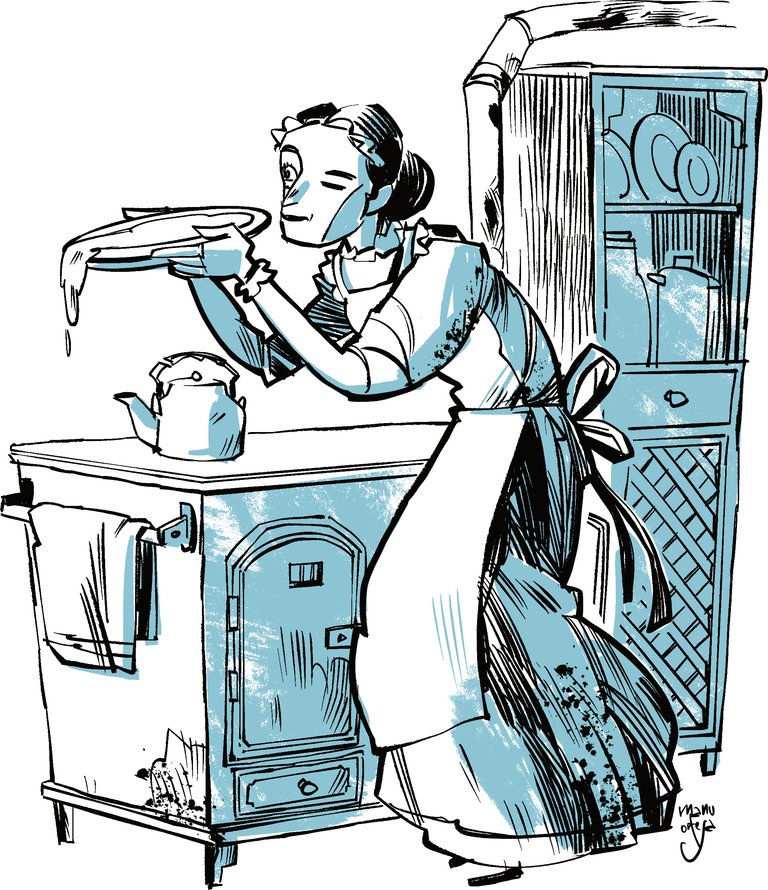
In the kitchen he looked at the sink, attentively. Where anyone else would see the dirty water, he saw strange facts that aroused his curiosity and desire to investigate: how a drop of soap, a trace of oil or a little fat completely changed the behavior of the water. “I have found abnormal behavior on the surface of water,” he wrote in his journal in 1881, at the age of 18.” It was the starting point of a ten-year investigation.
Agnes Pockels was born in Venice in 1862. At that time the city was part of the Austrian Empire and its father was an army officer. Affected by malaria, when his father had to retire early, they moved to Brunswick, Germany. She studied at the Girls' Institute. It was then that he realized that he was passionate about natural sciences, especially physics. Unfortunately, at that time, women in Germany were not able to enrol in the university. The Institute was the only formal education she would receive.
His younger brother was able to study physics at the University of Göttingen. Agnes read with passion the books and texts that he brought home. Thanks to this, by the time he began to observe the water in the sink, he had already developed his scientific look.
He didn't have a lab. No special tools. But at all costs, he had to study these phenomena in the sink.
He built the tool he needed for this: a long metal tray that allowed the surface to be squeezed or stretched by a moving sheet. With a small button and a simple balance, he could measure the surface tension. “I have developed the Schieberinne,” he wrote in the newspaper in 1882.
With this home-made device, Pockels was able to make high-precision measurements and obtain results that no one had achieved until then. He spent ten years systematically measuring notebooks and notebooks. He was able to describe the general behavior of surface tension with different oil concentrations and the amount of different oils needed to form a monolayer of known surface.
“Where anyone would see the dirty water, he would see strange events that aroused his curiosity and desire to investigate.”
Only his brother was aware of his sister's investigations until Agnes decided to write to physicist Lord Rayleigh. In fact, he had read a work he had done on the same subject of study. on January 10, 1891, he wrote him a letter of twelve pages. It started like this: “My lord, you will forgive me for daring to annoy you with a German letter on a scientific subject. Knowing about your fruitful research on the unknown properties of water surfaces last year, I thought you might be interested to hear about some of my observations on the subject. For various reasons I am not in a position to publish in scientific journals, so I have chosen this channel to send you my most relevant results.”
After informing him of the study carried out, he said at the end of the letter: “I thought I shouldn’t hide these results from you, even if you’re not a professional physicist. Once again, I apologize for the courage.”
Lord Rayleigh found Pockels' work extremely interesting. And that letter, written in German, which his wife had translated into English, he sent to the Nature magazine, with a cover letter: “I would be grateful if you could find a place for this translation of an interesting letter I received from a German lady. In fact, with very household appliances, it has obtained valuable results on the behavior of contaminated water surfaces. The first part of Miss Pockels’ letter covers almost the same area as part of my last work, and mostly coincides with it. The following sections seem to me to be very suggestive, as they raise or fully answer many important questions. Soon, I hope to be able to repeat some of Miss Pockels’ experiments.”
this letter from Agnes Pockels was published on March 12, 1891 in the Nature magazine under the title "Surface Tension". After that, he received an invitation from the University of Göttingen to use the physics laboratory there. He could not accept it, because the care of his parents, who were in poor health, prevented him from doing so.
However, he did not stop investigating. With his characteristic precision, he investigated the surface forces of monomolecular layers, the adhesion of various liquids to the crystal and the surface tensions of emulsions and solutions. In the following decades he published several other articles in Nature and other German magazines. And he had a correspondence with several researchers.
in 1932, at the age of 70, he was awarded an honorary doctorate by the University of Brunswick as the inventor of the quantitative method for measuring surface tension. That same year, Irving Langmuir received the Nobel Prize for his work based on this method.
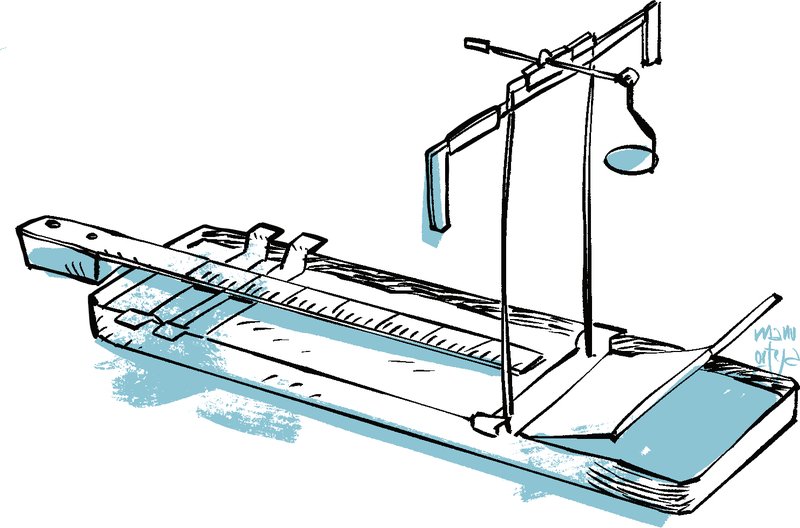
Image: Manu Ortega Santos/CC BY-NC-ND
Langmuir, perfecting the Pockels schieberinne, developed the Langmuir scale, which is still in use today. And with this device he did more extensive research and important discoveries in surface science. Although she did not mention it when she received the Nobel Prize, part of her achievements were based on home experiments with a tray by an eighteen-year-old woman without any formal scientific training.
Buletina
Bidali zure helbide elektronikoa eta jaso asteroko buletina zure sarrera-ontzian