 Bilatzailea


[Statins for the treatment of polycystic liver disease]
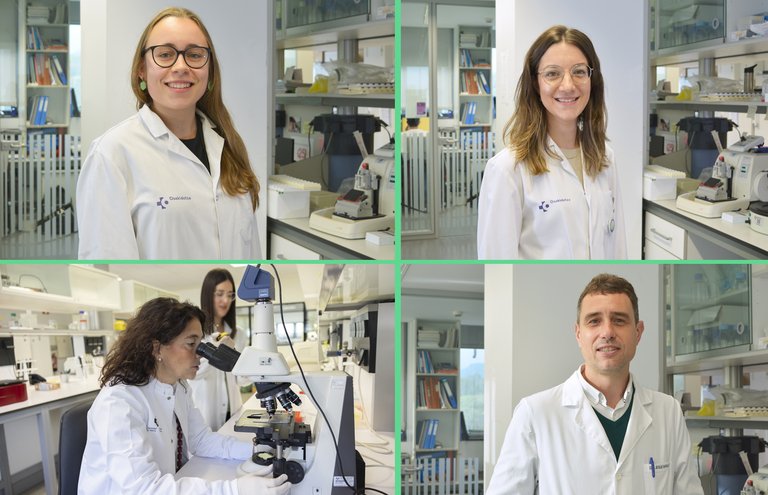
Researchers from the UPV, Biogipuzkoa, Bobizkaia and CIBERehd have discovered a new therapeutic strategy for polycystic liver disease. Statins, drugs used to lower cholesterol, have been shown to slow the growth of liver cysts and slow the progression of the disease. This finding is particularly important because it is based on drugs that are already available and whose safety profile is well known in clinical practice. The work has been published in the journal Hepatology.
Polycystic liver disease is a hereditary disorder in which multiple cysts appear and grow progressively. In many cases it develops without symptoms for years, but in advanced stages it can lead to a significant increase in liver size, abdominal pain, digestive problems and a significant loss of quality of life. There is currently no effective treatment beyond liver transplantation (in the most severe cases).
Research has shown that the cells that make up the cysts have a profound alteration in energy metabolism. In particular, they exhibit increased mitochondrial activity and increased energy production; this situation promotes uncontrolled cell growth and proliferation. In addition, researchers have identified abnormal cholesterol accumulation in these cells. Based on this finding, the use of statins was proposed as a strategy to block this anomalous behavior of cells.
In experimental models, statin treatment significantly reduced cyst growth and further reduced liver inflammation and fibrosis. The study also included clinical data from patients participating in the international DIPAK cohort—autosomal dominant renal polycystosis (PQRAD), a rare genetic disease, the largest study of academic cohorts designed to investigate—and found that patients taking statins had a lower increase in liver volume than those not receiving this treatment.
Buletina
Bidali zure helbide elektronikoa eta jaso asteroko buletina zure sarrera-ontzian