 Bilatzailea


A clinical trial of the vaccine against the current Ebola outbreak has begun
On 23 October, the first vaccination against the current Ebola outbreak was carried out in the city of Bunia in the Democratic Republic of the Congo.
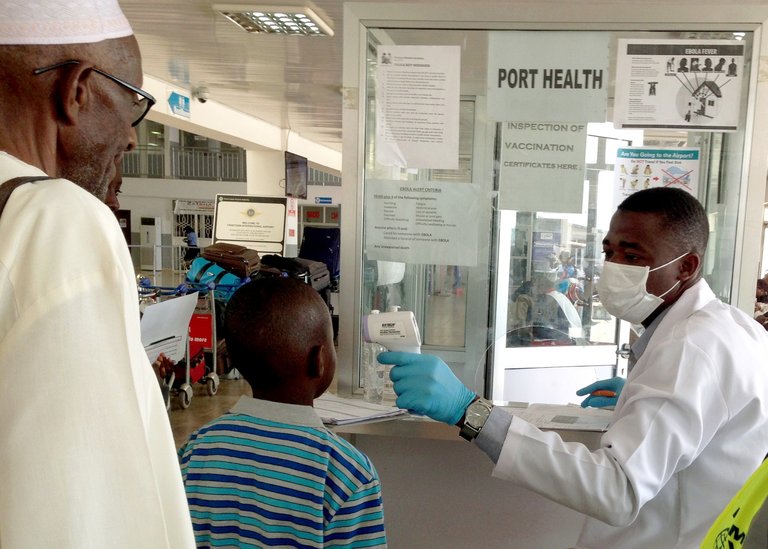
Tumaini means ‘hope’ in Swahili, and has been named the first clinical trial against the Bundibugyo virus that has led to the current Ebola outbreak. The trial will combine phases 2 and 3; that is, evaluate the efficacy and dose of a vaccine candidate and compare all this on a large scale with a standard treatment or placebo, all at the same time. The protocol aims to accelerate vaccine research to address the serious health situation.
“Two other vaccines specifically designed against the Bundibugyo virus may be added to the trial in November.”
There is currently no approved vaccine against Bundibugyo virus. The first candidate to be included in the Tumaini clinical trial is the vaccine called Ervebo, which was developed 25 years ago against another Ebola virus called Zaire. The vaccine is not specific for Bundibugyo virus, but animal studies suggest it may be effective.
The trial will be conducted with some direct contacts of confirmed cases of Ebola. At the moment, half of these contacts will receive the Ervebo vaccine on the first day and four weeks later they will be given the anti-typhoid fever, while the other half will do the opposite.
According to the main researchers of the Tumaini clinical trial, two other vaccines specifically designed against the Bundibugyo virus may be added to the trial in November. The most advanced vaccine, developed by researchers at the University of Oxford, has been obtained by vaccinating a Bundibugyo virus surface protein in a chimpanzee adenovirus. The other vaccine, developed by Modern, is based on messenger RNA.
In addition to vaccines, another clinical trial has begun to evaluate two treatments for Ebola in 600 patients so far. The treatments consist of a cocktail of MBP134 antibodies and antiviral remdesivir, and it is expected that sufficient data will soon be available to study the effect of both.
In this way, the outbreak is far from being controlled and the disease can continue to spread. In early October, Kenya reported the first case of this virus, and on 20 October, Nigeria also reported another case.
Buletina
Bidali zure helbide elektronikoa eta jaso asteroko buletina zure sarrera-ontzian
Bizitza




Aldizkaria
Kolaboratu
Zure lana argitaratzea nahi duzu?
Gai zientifiko bati buruzko artikulu bat baduzu, bidali eta sarean zein aldizkari inprimatuan argitaratu dezakegu.