 Bilatzailea


The knowledge and attitude about local snakes requires a change of skin
A study carried out in collaboration by researchers from the Aranzadi Science Society and the UPV/EHU has analyzed the knowledge and attitude of adolescents in the Basque Country towards snakes. In general, they know more exotic species than native ones, and fear or disgust are the main feelings that these animals provoke.
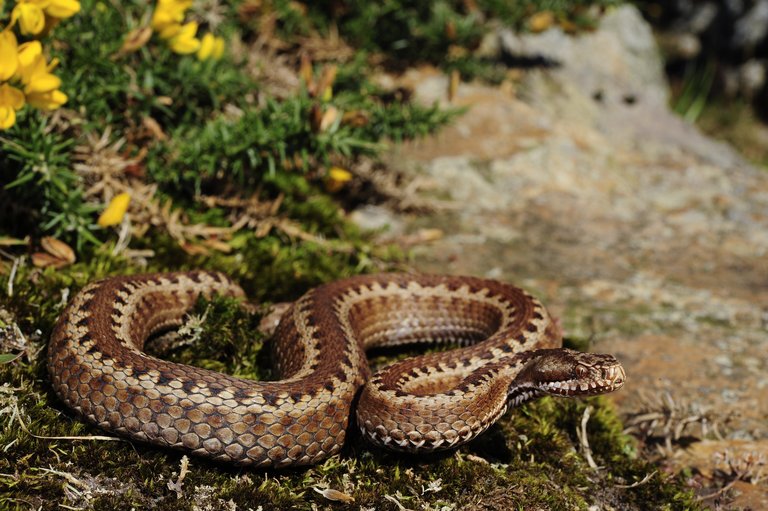
Globally, only 10-15% of snakes are poisonous and in Europe the proportion is similar. In the Basque Country, of the seven species of snakes, only the Cantabrian viper (Vipera seoanei) has poison and is far from lethal.
However, snakes are an animal of bad reputation, probably because of the superstitions and myths they have collected over the years. The most important mythological figure related to snakes in the Basque Country is Sugaar, a character linked to fertility, storms, fire, etc. In Christian culture, however, snakes are associated with evil and deceit. Adolescents today are probably not directly affected by these superstitions, but the media, by replicating cultural narratives, can reinforce stereotypes and fears about snakes.
“The most repeated species among adolescents was cobra, followed by anaconda, python and rattlesnake — all exotic species.”
A study published in the Journal of Biological Education aims to clarify the knowledge, attitudes, emotions and behaviors of adolescents in the Basque Country towards snakes. In addition, to facilitate the understanding of the results, the sociodemographic characteristics of young people, the size of the population in which they live and their habit of going to nature have been taken into account.
640 students between the ages of 15 and 16 completed a questionnaire on the subject. Students in this age group were selected because being in the last year of compulsory secondary education they could reflect the biodiversity literacy of society.
The results obtained through the questionnaire were illustrative. Asked to write down the names of all the snakes they knew, the most repeated species among adolescents was the cobra, followed by the anaconda, the python and the rattlesnake—all exotic species. The first native snake species was ranked sixth, with less than 20% of teens naming it. This species was the viper, the only poisonous species among the locals.
Researcher Iñaki Romero explains it this way: "Given the adolescents' knowledge about snakes, we asked them about the main sources of information about this knowledge. Most of them said they had heard about these snake species on the net or on television." The authors believe that the key may be in the source of the information. "Before, parents or relatives taught young people to identify the fauna of the area, while now they learn in globalized media."
In terms of emotions and behaviors, a high percentage of students associated the word ‘snake’ with negative terms, and escaping in case of encountering a snake was their most common behavioral intention. 6% said they would kill the animal and leave it there.
“The authors say that one way to address the issue can be through education.”
The students’ knowledge of snakes was greatly influenced by the size of their homeland and the frequency of visits to nature. The smaller the students’ hometown, the more aware they were of the native fauna. On the other hand, those who visited nature more often and saw snakes more often there identified the species of snakes better.
Almost half of the snake species in Álava, Bizkaia and Gipuzkoa are protected because they are in a precarious ecological state and are not favored by the negative perception that society has of them. The authors point out that education can be a way to address the issue, and they wanted to give importance to the use of native species as a model. They believe that education can be important for young people to make good environmental decisions, both with snakes and with the conservation of biodiversity in general.
Buletina
Bidali zure helbide elektronikoa eta jaso asteroko buletina zure sarrera-ontzian
Bizitza


Doitasuna hegan egiteko
Garraioak

Aernnova: Diseinutik zerura
Garraioak

Motor aeronautikoak laborategian
Garraioak