
 Bilatzailea


Eclipses in sight
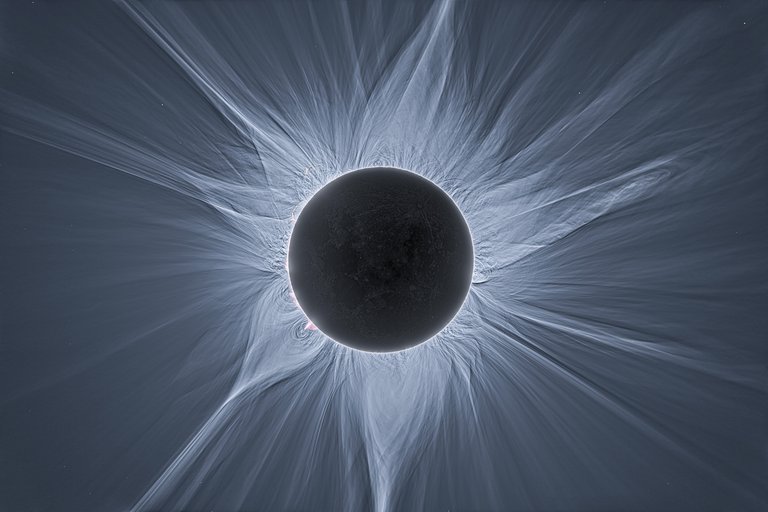
A little night in the middle of the day. Concealment of what is usually seen, appearance of what is usually invisible. The magic of exact alignments. Magnetic plasma dance. The excitement of the public. The fascination. Emotion. Emotion. A minute or two, maybe three. Then the light again.
A total eclipse of the Sun is one of the most spectacular astronomical phenomena; with simple filters to protect the eyes, or by observing the shadows, or converting the light into sound, which anyone in the right place can enjoy.
The first photographs were taken at the beginning of the 19th century. Some of them are Warren de la Rue in 1860, who took them out of an Alava era. The latter, on the other hand, a century and a half later, was taken out on the Artemis II mission from a point of view that no one else has ever had.
They also happen beyond our sky. And there are also triple and quadruple eclipses, as in Jupiter and Saturn.
The play of lights and shadows between stars, planets and moons is constant.
Buletina
Bidali zure helbide elektronikoa eta jaso asteroko buletina zure sarrera-ontzian