 Bilatzailea


The fossil embryo of an oviparous ancestor of mammals has been discovered
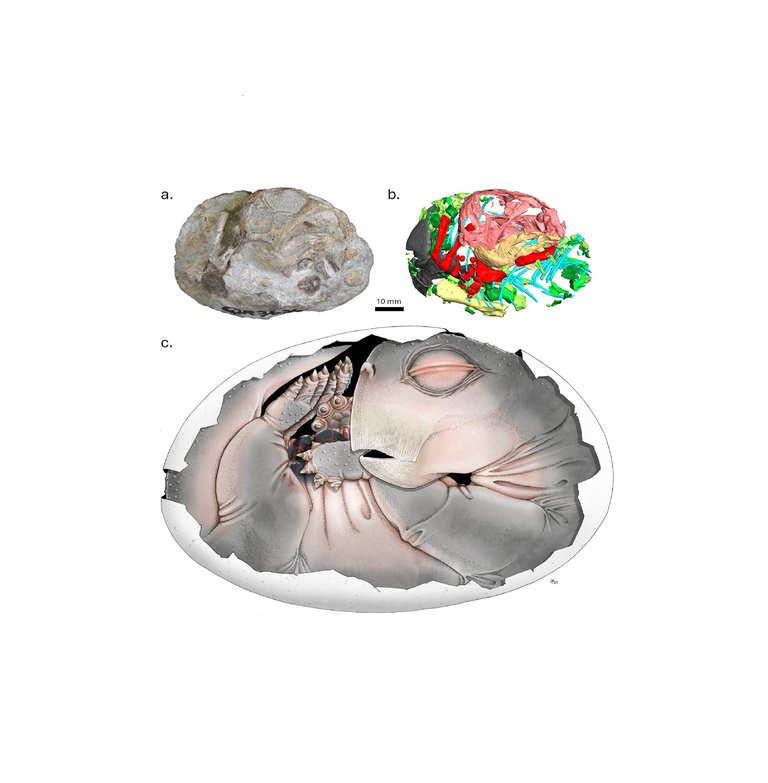
Lystrosaurus, a vegetative ancestor of mammals, became one of the main species after the mass extinction at the end of the Permian, about 252 million years ago. Now, an international team has published the research on an egg containing a Lystrosaurus embryo. The discovery proves that ancient mammals laid eggs (as ornithorrine and equidae do today) and helps to clarify why Lystrosaurus was so successful in the harsh post-extinction periods.
The fossil of the Lystrosaurus embryo was discovered in 2008 in the Karoo Basin, South Africa. Even then I suspected that he had died inside the egg, but they had no technology to confirm it. Now, through the tomography techniques of the European Synchrotron Radiation Laboratory, they have had the opportunity to study the fossil in a non-invasive way, thus confirming that the suspicion was correct.
“It has been suggested that the eggs of this species would be soft, which explains why this finding is so unusual.”
Among other details, it has been explained that the bones of the lower jaw were not fused. This proves that this individual was an embryo because he was unable to feed himself until he was fused.
In addition, it has been suggested that the eggs of this species would have been soft, which explains why this finding is so unusual. On the other hand, they believe that the offspring were born highly developed and were able to escape predators and survive on their own. Rapid development would also help them to reproduce early. All this has been concluded by researchers to face harsh conditions (heat, droughts...) and to be able to stand out among other species.
Buletina
Bidali zure helbide elektronikoa eta jaso asteroko buletina zure sarrera-ontzian