 Bilatzailea


The Neanderthals used wood to a large extent for various functions
Hundreds of wooden remains extracted from the Abric Romani site suggest that this material was widely used by Neanderthals and for many functions.
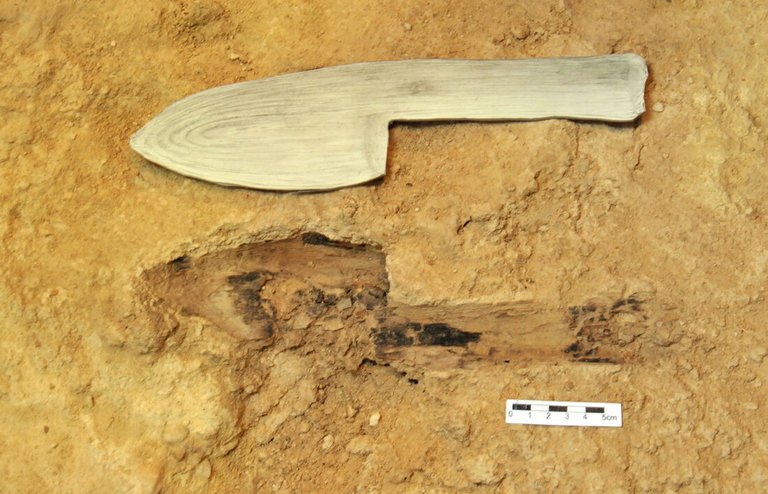
A study led by IPHES-CERCA has analyzed 597 wooden remains extracted from the Abric Romaní site in Barcelona over forty years. The remains date from 62,000 to 40,000 years ago, and the results show that during all these years the Neanderthals used wood as fuel and for the production of weapons and tools, and possibly for the construction and conditioning of the house.
“It is not common to find wooden remains in archaeological sites because it is a perishable material.”
Most of the remains are logs, branches, roots and wood deposits. But thirteen elements manufactured and used by Neanderthals have also been identified: household objects, construction elements, tools and weapons. Among them, there are three particularly striking objects. Two of them are wooden lances that measure about 2 m. The third is an object made in a single piece of wood; although it has the appearance of a mace, researchers have not been able to determine its function.
It is not common to find wooden remains in archaeological sites, as it is a perishable material. But the Abric Romaní site is an exception, thanks to some of the toba formations that exist in it. Calcium carbonate covered the remains of wood, and when the latter were broken down, their shapes were stored in the hopper.
It is not the first time that Neanderthal wood remains have been found, but for the first time it has been possible to study the wood remains that have remained in a certain place for thousands of years in a row. This has allowed them to conclude that wood was an indispensable material for these groups.
“The most special aspect of the Abric Romani site is that we can also see things that usually disappear,” explains Palmira Saladié, coordinator of the study. The site is in an unusual state of conservation, which allows us to represent the life of the Neanderthals in almost all its complexity; not only what they did, but also how they distributed their activities, managed their resources and organized the space.
Buletina
Bidali zure helbide elektronikoa eta jaso asteroko buletina zure sarrera-ontzian
Bizitza


Doitasuna hegan egiteko
Garraioak

Aernnova: Diseinutik zerura
Garraioak

Motor aeronautikoak laborategian
Garraioak