 Bilatzailea


The formation of the Earth's crust has been directly observed
For the first time, the expansion of the seabed has been directly observed. It takes place in the Indian Ocean, on the oceanic ridge that borders the tectonic plates of Australia and Antarctica.
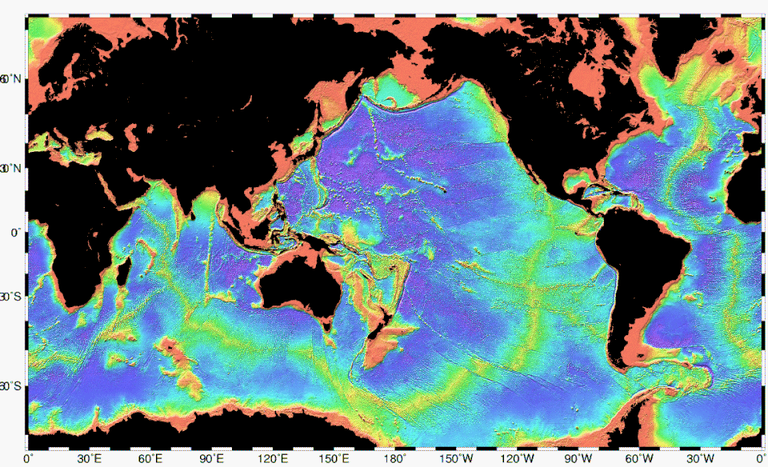
The study was published in the journal Nature. The earth’s crust is destroyed and regenerated by the movement of the tectonic plates. The main areas that give rise to the new crust are the oceanic ridges, “networks of mountain chains” on the seabed of 65,000 km in total length. On these crests, two thirds of the total crust has been formed, since under the tectonic plates the magma rises, cools and solidifies. Until now, little was known about the expansion process that took place in the ridges at short intervals of time.
“In a period of six days it expanded 4.2 m and created a new crust in the newly made space.”
Researcher Jean-Yves Royer of the University of Brest in Brittany, France, and his colleagues installed an autonomous observatory in an area of the ocean ridge in the southeast of the Indian Ocean. The aim was to collect cartography and seismic data from the area.
Coincidentally, on April 26, 2024, while the devices were installed, the ridge began to expand. In a period of six days, 4.2 m was extended, giving rise to a new crust in the newly created space.
With these observations, the authors conclude that although faults around the crests move more frequently, the expansion segments of the ocean crests accumulate displacement for decades and release tension in sudden events.
Buletina
Bidali zure helbide elektronikoa eta jaso asteroko buletina zure sarrera-ontzian
Bizitza



Aldizkaria
Kolaboratu
Zure lana argitaratzea nahi duzu?
Gai zientifiko bati buruzko artikulu bat baduzu, bidali eta sarean zein aldizkari inprimatuan argitaratu dezakegu.