 Bilatzailea


They announce the creation of the first synthetic cell
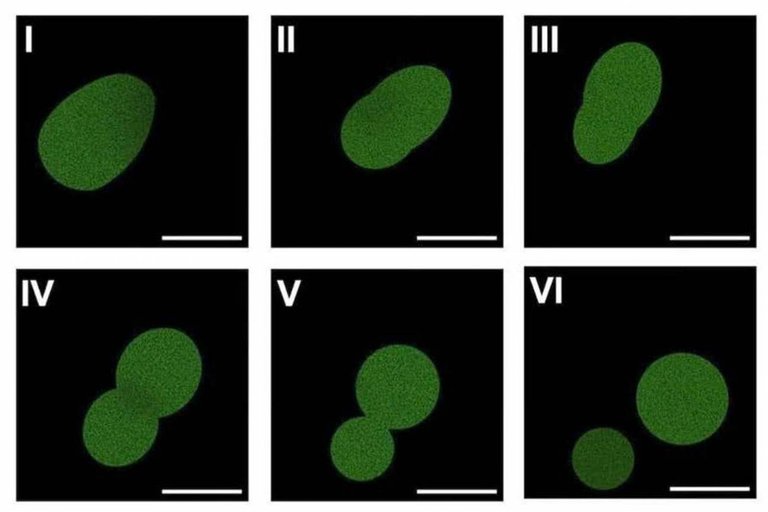
Researchers at the University of Minnesota have announced the creation of a synthetic structure that fulfills the basic functions of a cell: feeding, growing and proliferating. Called SpudCell, the study has not yet been published in a peer-reviewed scientific journal, but on the website and in the press called Biotic.
The way of predicting itself provokes criticism in the scientific community. In addition, others do not believe that the structure can be called a cell, since it does not have full autonomy and the reproductive cycle is very limited, among other things. However, most recognize it as an important step in research to obtain the synthetic cell.
According to Kate Adamala, one of the most prominent scientists involved in the study, the work they have done shows that the basic functions of life do not need a magical spark. In contrast, they have shown that a cell can be formed from non-living chemicals.
“it shows that the basic functions of life do not need a magic spark.”
It contains, among other things, an artificial genome consisting of 90,000 base pairs, divided into seven plasmids. This distribution allows different functions to be programmed separately. The process of duplication is also unique: proteins accumulate in the membrane until they divide the cell into two. In addition, it has been shown to be able to evolve in some way: they created a variant that grew faster than the others and was able to replace the other variants.
The researchers have anticipated that the method they have developed can be useful for creating molecules that are otherwise unobtainable, for example, for certain therapeutic uses.
Buletina
Bidali zure helbide elektronikoa eta jaso asteroko buletina zure sarrera-ontzian
Bizitza

Aldizkaria
Kolaboratu
Zure lana argitaratzea nahi duzu?
Gai zientifiko bati buruzko artikulu bat baduzu, bidali eta sarean zein aldizkari inprimatuan argitaratu dezakegu.