 Bilatzailea


[The new frontier of climaterium: hacking the hypothalamus]
If the origin of menopausal insomnia was not in hormones, but in the brain? Science no longer understands menopause as a mere lack of hormones, but begins to study it as a dysfunction of neurons.

Perimenopause and menopause are not merely biological events, but critical transition phases that redefine women’s homeostasis. The first is dominated by irregular fluctuations in estrogens and progesterone. During menopause, the end of reproductive function is definitively established after permanent amenorrhea. However, beyond the end of fertility, these stages produce a stream of physiological changes that can have a great impact on the quality of life of women [1]. While women’s biology takes its natural course, science is crossing a new frontier in its work to unravel the hidden mechanisms that guide this vital stage.
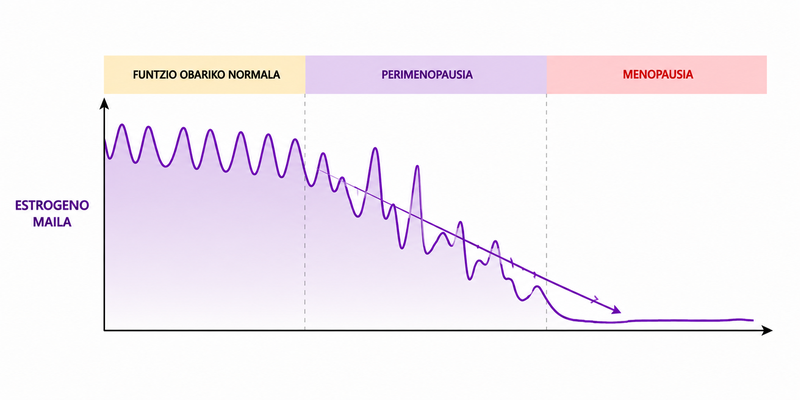
figure 1. [Estrogen levels in perimenopause and menopause]. ED. : made by the author with the support of Gemini AA.
In this period, sleep disorders are one of the most common and disabling symptoms [2]. According to statistical data, 31%-42% of women suffer from sleep disorders, and the prevalence increases with the advance of climacteric [3]. For a quarter of women, this disorder is not a simple inconvenience, but an alteration that significantly limits daily practice [4].
From an epidemiological point of view, it is one of the most notable gender differences in medicine: insomnia is 1.2 to 2.0 times more frequent in women than in men [5]. This chronic sleep deprivation not only fatigue the body, but also increases its vulnerability to physical and psychiatric disorders and establishes a bidirectional link with both depression and anxiety [4, 6, 7].
Thermal night storms
Menopausal insomnia rarely occurs alone. Vasomotor symptoms—hot flashes and night sweats—are the main symptoms of climacteric, affecting most women [8, 9]. It is estimated that between 50% and 75% of women suffer from it and can last between 7 and 10 years [10].
There is a strong link between the severity of hot flashes and chronic insomnia [5, 11]. Historically, hormone therapy has been the gold standard offered for its ability to reduce vasomotor symptoms by up to 75% [10, 12]. However, there is still a large therapeutic gap: many patients do not receive treatment due to medical contraindications or personal decision to avoid hormonal therapies [11, 13, 14].
As a result of this lack of specific alternatives, only symptoms have been treated in sleep management: In Europe, chronic insomnia, including that associated with menopause, is often treated by prescription of benzodiazepines or hypnotic “Z” in primary care [15, 16]. However, this approach does not take into account the basic pathophysiological cause and, in addition, promotes the chronic use of drugs that increase cognitive impairment and the risk of falls, which is especially high in this population of women who are losing bone mass [17].
Beyond estrogens: hacking the hypothalamus
There has been a qualitative leap in the understanding of the etiology of menopausal insomnia since the identification of hyperactivation of hypothalamic neurons KNDy as a key node of this disorder. The name KNDy comes from the three neuropeptides that together express these neurons: Kisspeptin, Neurokinin B and Dinorphine.
Before menopause, estrogens act as brakes on these neurons. By eliminating the estrogen inhibitory effect, however, KNDy neurons develop functional hypertrophy and fill the hypothalamus with neurokinin B. As a result, temperature control and circadian rhythms are destabilized.
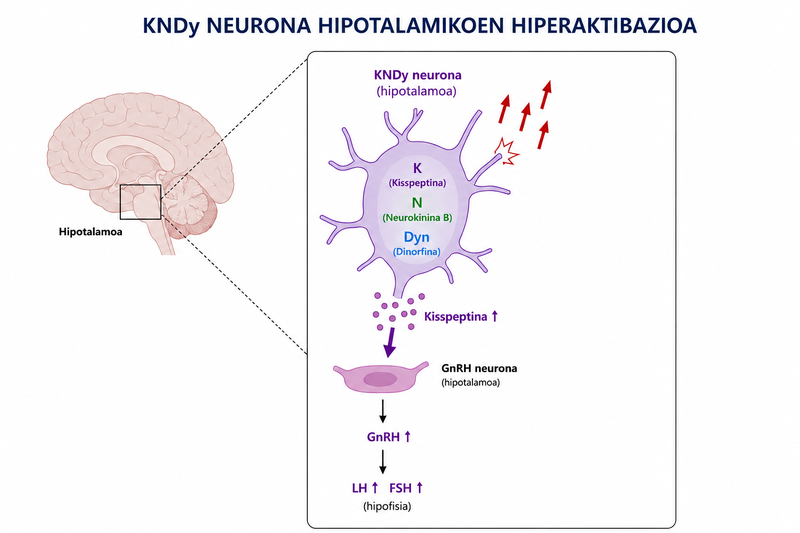
figure 2. [Hyperactivation of hypothalamic neurons KNDy]. ED. : made by the author with the support of Gemini AA.
This finding has encouraged the development of neurokinin antagonists. This new pharmacological limitation does not seek hormonal replacement, but aims to directly modulate the root cause present in the brain itself, thus offering a double solution for heat and sleep disturbance [2].
Recent studies confirm the success of this approach: these modulators produce a rapid clinical improvement in the process of alleviating hot flashes and the benefits are noticeable in the first weeks of treatment. By acting specifically on brain circuits, these drugs not only reduce thermal discomfort, but also restore the sleep architecture and improve the overall quality of life of women. This line of therapy expands a new era of precision medicine by providing an effective and safe alternative that allows well-being to be restored without relying on traditional hormones [18–20].
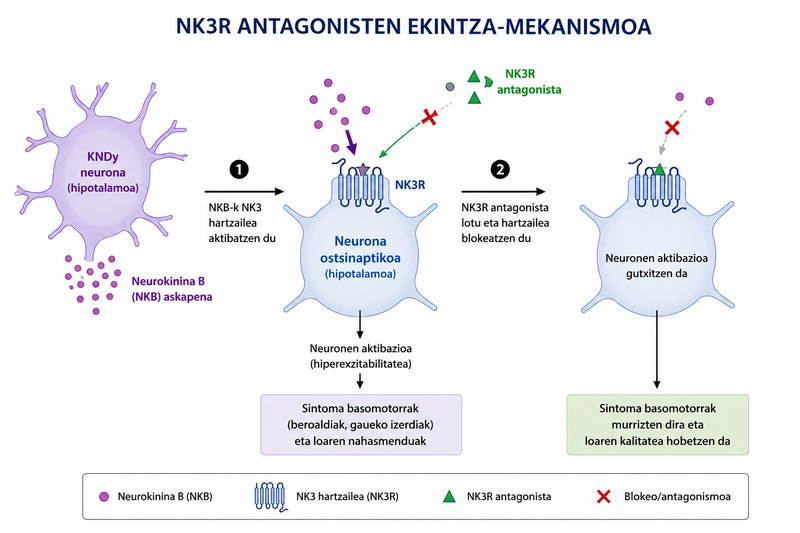
3. The image. Mechanism of action of NK3R antagonists. ED. : made by the author with the support of Gemini AA.
Towards a future of precision. Treatment or pathologization?
In short, we are witnessing a paradigm shift. The transition to menopause is no longer conceived as a deficit to be replaced, but as a complex neuronal system that can be modulated.
However, this technological advance confronts us with an essential ethical and social dilemma: the medicalization of the vital stages of women. In fact, although neurokinin antagonists are an effective therapeutic option for women with disabling symptoms, we should not accept the narrative that explains each stage of a woman's life as an imbalance that requires pharmacological correction.
The real new frontier would be a medicine that knows how to relieve suffering but at the same time does not know how to pathologize a natural process. The challenge for the future is to integrate all these precision advances into a health model capable of validating the experience of women, offering alternatives and preventing the biological transition from becoming a chronic disease subject to prescription.
Sources
- Troìa L., Martone S., Morgante G. and Luisi S. 2021. “Management of perimenopause disorders: hormonal treatment”. Gynecological Endocrinology, 37, 195–200.
- Maki P.M., Panay N. and Simon J. A. A. 2024. “Sleep disturbance associated with the menopause”. Menopause, 31, 724–733.
- Ciano C., King T.S., Wright R.R., Perlis M. and Sawyer A.M. 2017. “Longitudinal Study of Insomnia Symptoms Among Women During Perimenopause”. Journal of Obstetric, Gynecologic & Neonatal Nursing, 46, 804–813.
- Baker F.C., by Zambotti M., Colrain I.M. and Bei B. 2018. Sleep problems during the menopausal transition: prevalence, impact, and management challenges. Nature and Science of Sleep, 10, 73–95.
- Bonanni E., Schirru A., Di Perri M.C., Bonuccelli U. and Maestri M. 2019. “Insomnia and hot flashes”. Maturitas, 126, 51–54.
- I. M. Rosen, Gimotty P.A., Shea J. A. and Bellini L. M. 2006. “Evolution of sleep quantity, sleep deprivation, mood disturbances, empathy, and burnout among interns”. Academic Medicine, 81, 82–85.
- Terauchi M., Hiramitsu S., Akiyoshi M., Owa Y., Kato K., Obayashi S. and others. 2012. “Associations between, anxiety and insomnia in peri- and post-menopausal women”. Maturitas, 72, 61–65.
- Brown W. J., Mishra G. D. and Dobson A. 2002. Changes in physical symptoms during the menopause transition. International Journal of Behavioral Medicine, 9, 53–67.
- Zhu D., Chung H.F., Dobson A.J., Pandeya N., Anderson D.J., Kuh D. and others. 2020. “Vasomotor menopausal symptoms and risk of cardiovascular disease: a pooled analysis of six prospective studies”. American Journal of Obstetrics and Gynecology, 223, 898.e1–898.e16.
- Crandall C.J., Mehta J.M. and Manson J.E. 2023. “Management of Menopausal Symptoms: A Review.” JAMA, 329, 405–420.
- Salin S.A. D., Savukoski S.M., R.P. Peson Oh, my God. Auvinen J. P. and Niinimäki M. J. 2023. “Sleep disturbances in women with early-onset menopausal transition: a population-based study”. Menopause, 30, 1106–1113.
- mr. De Villiers T.J Gass M.L. S, Haines C.J., Hall J.E., Lobo R.A., Pierroz D.D. and others. 2013. “Global consensus statement on menopausal hormone therapy”. Climacteric, 16, 203–204.
- Biglia N., Bounous V.E., From Seta F., Lello S., Nappi R.E. and Paoletti A.M. 2019. “Non-hormonal strategies for managing menopausal symptoms in cancer survivors: an update.” Ecancermedicalscience, 13, 909.
- Constantine G.D., Graham S., Clerinx C., Bernick B. A, Krassan M., Mirkin S. and others. 2016. “Behaviours and attitudes influencing treatment decisions for menopausal symptoms in five European countries”. Post Reproductive Health, 22, 112–122.
- Soyka M., Wild I., Caulet B Leontiou C., Lugoboni F. and Hajak G. 2023. “Long-term use of benzodiazepines in chronic insomnia: a European perspective”. Frontiers in Psychiatry, 14.
- Tandon V. R., Sharma S., Mahajan A., Mahajan A. and Tandon A. 2022. “Menopause and Sleep Disorders”. Journal of Mid-life Health, 13, 26.
- Chang Y., Xie X., Liu Y., Liu M. and Zhang H. 2024. “Exploring clinical applications and long-term effectiveness of benzodiazepines: An integrated perspective on mechanisms, imaging, and personalized medicine”. Biomedicine & Pharmacotherapy, 173, 116329.
- Panay N., Joffe H., Maki P.M., Nappi R.E., Pinkerton J.V., Simon J. A. and others. 2025. “Elinzanetant for the Treatment of Vasomotor Symptoms Associated With Menopause: A Phase 3 Randomized Clinical Trial”. JAMA Internal Medicine, 185, 1319–1327.
- Sobral M.V. S, Rocha P., C. Rodrigues L., Barbosa A.M. P, Rocha is N. C., Peres C. de A. P and others. 2025. “Efficacy and safety of elinzanetant in vasomotor symptoms associated with menopause: A meta-analysis of randomized controlled trials”. European Journal of Obstetrics & Gynecology and Reproductive Biology, 307, 142–147.
- Pinkerton J.V., Simon J. A, Joffe H., Maki P.M., Nappi R.E., Panay N. et al. 2024. “Elinzanetant for the Treatment of Vasomotor Symptoms Associated With Menopause: OASIS 1 and 2 Randomized Clinical Trials”. JAMA, 332, 1343–1354.
Buletina
Bidali zure helbide elektronikoa eta jaso asteroko buletina zure sarrera-ontzian