 Bilatzailea


[Warning on GLP-1 agonists in the editorial of Science]
The editorial warns that there is a risk that social inequalities will increase and the wrong approach to obesity will prevail
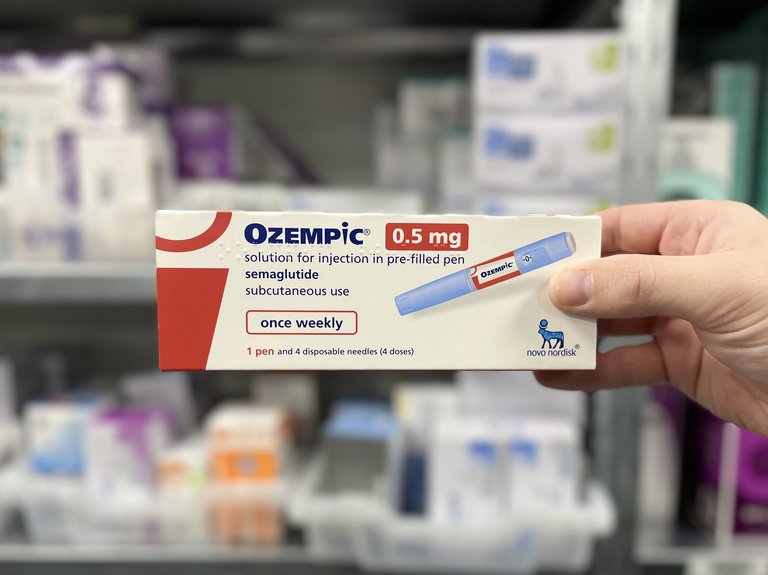
The scientific journal Science has analyzed the unexpected effects of Ozempic and other GLP-1 agonists in its latest editorial. The authors (Luc from the University of Amsterdam. L Hagenaars and Laura A. Schmidt of the University of California) have called the current situation “the Ozempic era”, where GLP-1 agonists have taken everything: scientific journals, clinics, the market, social networks and the enthusiasm of the population. In addition, although they initially went from being drugs for the treatment of diabetes to anti-obesity, the list of conditions that can now be treated has been extended: skin diseases, penile erectile dysfunction, fertility problems, addictions...
In any case, the authors have focused on the pros and cons of the “Ozempic era”, concluding that there is a risk that social inequalities will increase and the wrong approach to obesity will prevail. They therefore call on the World Health Organization (WHO) to intervene.
“GLP-1 agonists have taken it all: scientific journals, clinics, the market, social media and the enthusiasm of the population.”
The first of these positive aspects is the WHO global guideline, which, in addition to explaining the appropriate use of GLP-1 drugs, proposes to establish a framework that makes them accessible to all. They also point out that these drugs reduce the passion for ultra-processed food, which makes it easier to sharpen policies on ultra-processed foods. In this sense, they also serve to alleviate the guilt of people with clinical obesity, since it is understood that it is not entirely up to each one to be in this situation.
“they’ve built a whole framework to focus the anti-obesity effort on the individual.”
On the other hand, however, the leaders of the GLP-1 market, the pharmaceutical companies Eli Lilly and Novo Nordisk, are reinforcing their vision that obesity is a chronic disease that is not definitively overcome. What’s more, they have also created the category of “preclinical obesity” and have built a complete framework to focus the anti-obesity effort on the individual.
This approach is shared by Amazon and the wellness platform, with lifestyle programs aimed at GLP-1 users and telemedicine recommendations. The food industry, for its part, has always demonstrated its ability to adapt and create new products, markets and products. Even if everyone competes in the same market, they help each other build a certain vision about obesity, putting strength in individuals, and prioritizing economic gains over health and equality.
The authors of the editorial believe that WHO should intervene to make GLP-1 drugs useful in reducing rather than increasing health discrimination.
Buletina
Bidali zure helbide elektronikoa eta jaso asteroko buletina zure sarrera-ontzian