 Bilatzailea


Eclipse Tremor III: The Response of the Flyers
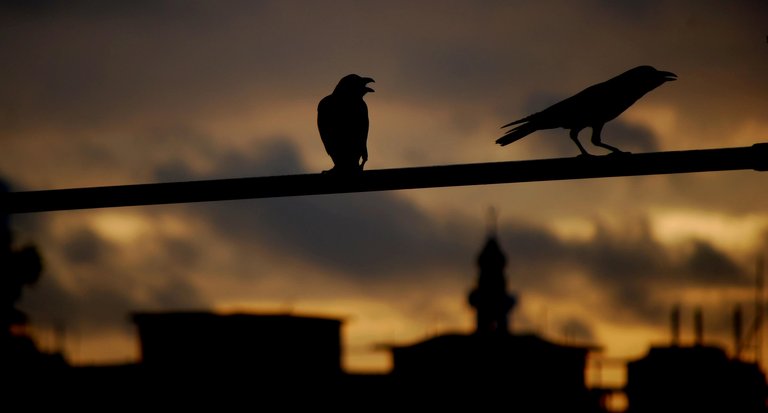
Edorta Unamuno Mirandona agrees with Perez de Villarreal that there are few systematic studies on how eclipses affect animals. Unamuno is an ecosystem biologist who studies birds mainly at the Urdaibai Bird Center. Until now he has not had to live a total eclipse of the Sun and is looking forward to the arrival of August 12 and see how the birds around him respond. In fact, in some documented cases, it is explained that it is spectacular.
On this occasion, being so close to sunset, Unamuno foresees that in some species the impact will be less pronounced, “but you will notice it, because clarity is of vital importance in birds,” he says. It also warns of the great diversity of birds, so the response will be very different from one species to another.
“Being so close to sunset, the effect on some species will be less pronounced.”
He explains that birds have multiple photoreceptors in their eyes and are very sensitive to light. During migrations, for example, according to photoperiod, certain hormones are secreted and many begin to eat to accumulate fat for migration. Night birds, on the other hand, are activated with sunset: owls, mochuelo, etc. And at the same time, other species are prepared for sleep. “The birds belonging to these groups will, of course, undergo a certain change in behavior when the light disappears,” Unamuno predicts.
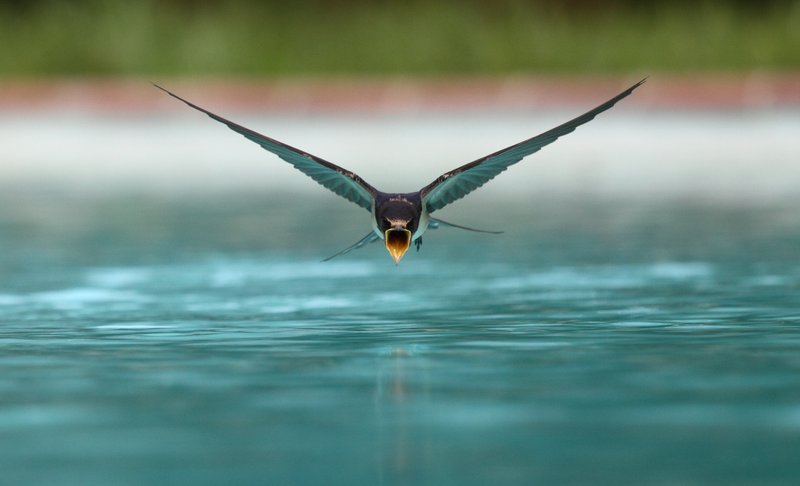
A swallow flies trying to drink water. Photo by sanchezn/CC BY SA 3.0 via Wikimedia Commons
And he continues: “At that time, on August 12th? By then, large swallows will begin to be harvested in the area during migration. The swallows migrate during the day and when the sunset arrives they look for a place to rest, usually marshes and carrizales of the marshes. They meet in large groups and we have seen, for example, that at 5:00 p.m. a great storm enters and the black clouds cover the Sun and the swallows descend before time to the places where they sleep. So I guess something like that will happen in the case of the eclipse as well.”
“Not only will the response of the birds be seen by eye, but also by ear at the time of the eclipse.”
In addition to the eyes, the response of the birds at the time of the eclipse will be perceived by the ear. “Some will sing at dusk, that’s for sure. We, here, have the last singers and the first jokes. That day, as the eclipse takes place, they will perform songs of dusk and retreat, thinking that it is night. And soon, the day will come again. And they'll sing again. It'll be weird." Unamuno plans to record all these details through its cameras at the Urdaibai Bird Center.
Suddenly the question arises: What will the bats do? The zoologist Joxerra Aihartza Azurtza answers the question. To begin with, he makes it clear that, just as there is a lot of diversity among birds, so does the bats. However, bats have been much less observed during eclipses than birds. There is less documentation.
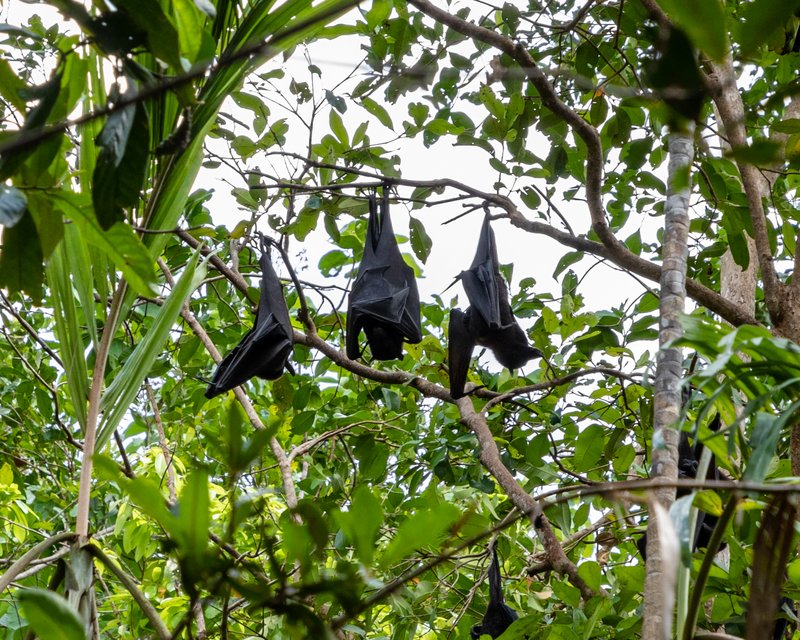
Bats hanging from a tree in Litchfield Natural Park, Australia. Ed: Dietmar Rabich/CC BY SA 4.0 Wikimedia Commons
However, it anticipates that some species will not even detect it: “Those who live inside the caves and do not come out until they are completely awake will not be aware that the Sun has disappeared for a while. Because they live according to the chronobiological clock, not according to clarity. But not all bats are like that, much less. There are those who live hanging from trees, such as tropical species, as well as some who live quite high in North America. And some here live under the bark of trees, and in attics and such places. All of them will detect the change in luminosity. These are the most opportunistic, which are activated at sunset. The eclipse will encourage them to come out. But it won't change their behavior much. In fact, first some specimens come out and stay around the burrow making social songs. They walk in and out, and so they will walk during the eclipse, otherwise the sunset is near.”
He admits that he will follow the eclipse but does not intend to investigate with bats. In fact, he doesn't think it would have been significant. “Each eclipse takes place at a different latitude, with different climates, at different times, so the impact is different. And it also varies a lot depending on the species. It’s very difficult to do meaningful research on this issue.”
Buletina
Bidali zure helbide elektronikoa eta jaso asteroko buletina zure sarrera-ontzian