
 Bilatzailea


Photo of the week: The carnivorous plant that fascinated Darwin
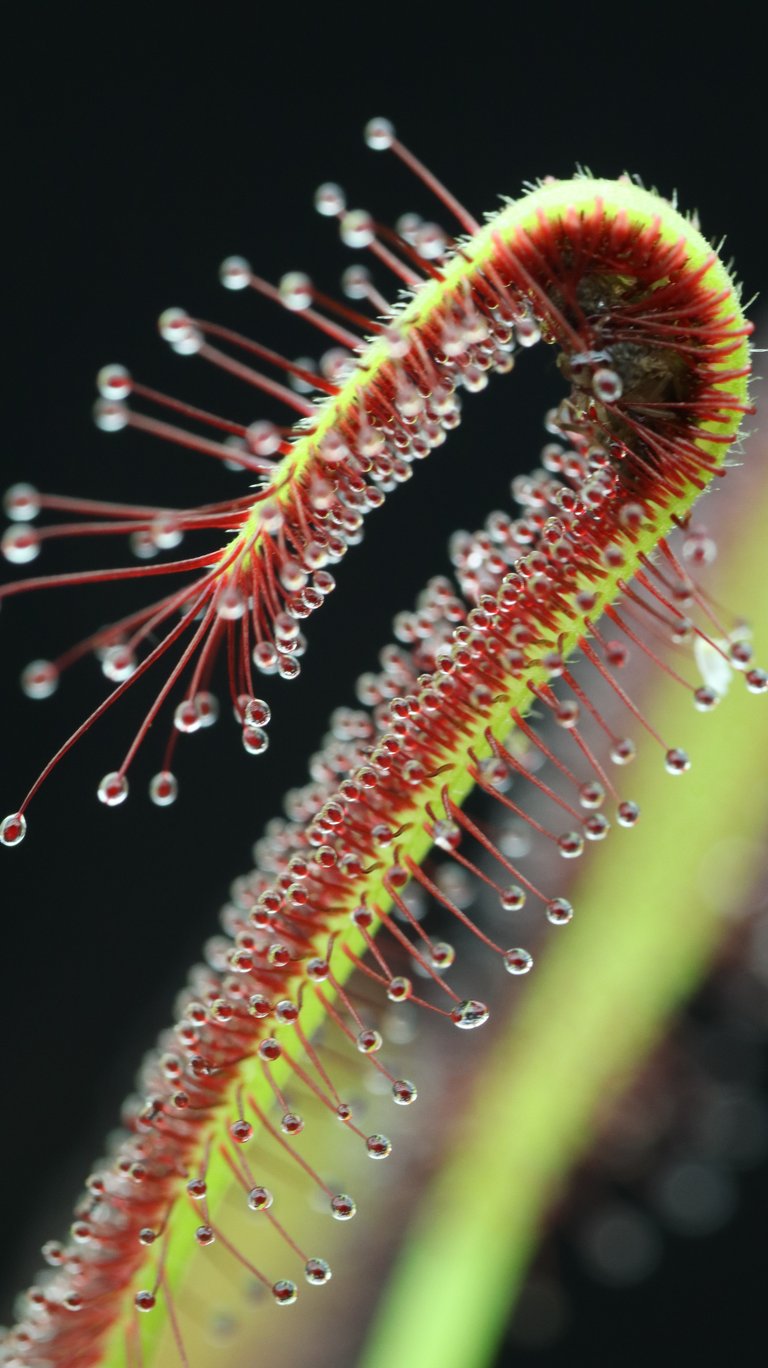
Darwin was fascinated by this plant, because every time he touched it with his finger he could not understand how it could be distinguished whether a prey had been placed on it or whether it was simply the touch of his finger.
He suspected that chemical signals helped the plant to differentiate. In fact, when it was tested on milk, egg white and other nitrogen-rich substances, it was easier to obtain the predatory reaction of the plant.
Later it was discovered that Darwin was right: although other carnivorous plants react to mechanical stimuli, the Drosera capensis plant is characterized by a purely chemical signal that a prey has been placed on it. It has now also been determined that the key is glutathione: when the insects rest in the plant, glutathione accumulates in that place, which causes the leaves of the plant to curl until the prey is squeezed and drowned.
Glutathione is a powerful antioxidant produced by living beings. A small peptide consisting of only three amino acids: glutamine, cysteine and glycine. But it causes powerful calcium-based signaling cascades in the body. And this also causes the foliage of the plant to fold.
Buletina
Bidali zure helbide elektronikoa eta jaso asteroko buletina zure sarrera-ontzian
Bizitza




Aldizkaria
Kolaboratu
Zure lana argitaratzea nahi duzu?
Gai zientifiko bati buruzko artikulu bat baduzu, bidali eta sarean zein aldizkari inprimatuan argitaratu dezakegu.