 Bilatzailea



The sound is also quantum
Below the molecular scale, light, matter and its associated magnitudes have a quantum nature. It has now been possible to demonstrate that sound also behaves in this way, since in the phonons, that is, in the basic modes of vibration, they have measured their quantum nature.
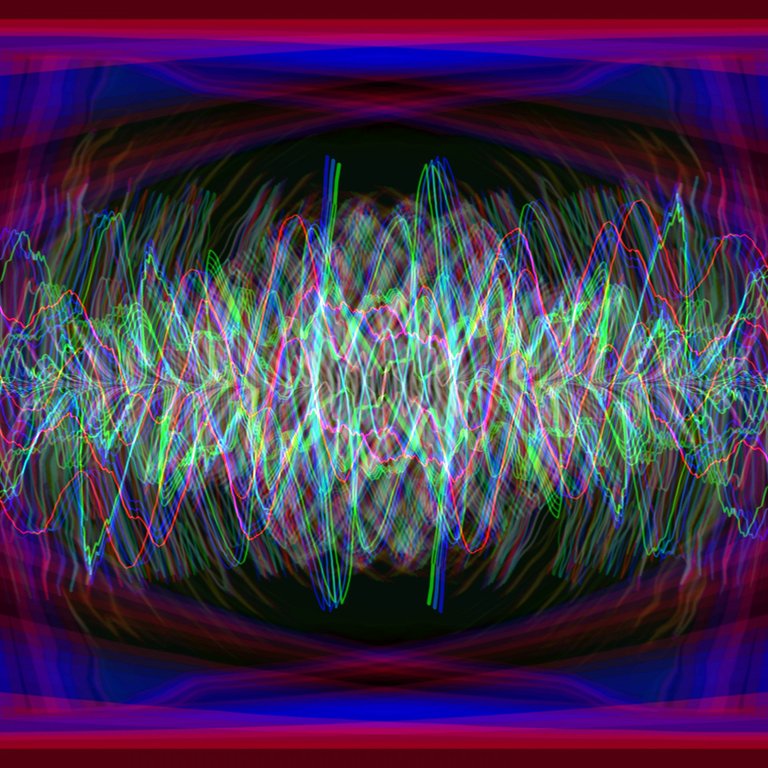
Some experts at Stanford University have shown that sound has a quantum behavior. In fact, they have measured the quantum jump from one sound vibration mode to another using a tiny resonator.
“A small device that was in a basic vibration state has jumped into a non-vibration state.”
We have known for a long time that light is quantum; in fact, at the beginning of quantum physics, light was investigated. Shortly after, physicists studied the behavior of atoms and molecules and discovered that matter also has a quantum nature on these scales. Now they have clarified the quantum basis of sound: by changing the vibrational modes of a very small resonator, Stanford physicists have studied how this vibration changes at a very basic level and have found a remarkable quantum behavior.
This means that the resonator only has certain modes of vibration and, when changing the sound, jumps from one of these modes to another without going through intermediate states. To facilitate the understanding of the effect, it is possible to compare it with a guitar; the traps that the guide of the guitar has determine which notes can be played. The guitar has a semitone note scale and you can jump from a do to a sustained do, for example, but not to an intermediate note. However, if you remove the traps from the guitar, you can get the illusion of making a continuous transition from one note to another. However, on the fundamental scale of sound, this transition would not be continuous either.
Stanford physicists have conducted a similar experiment with the basic vibratory modes of sound, using modes called phonons. Researchers have studied the disappearance of a phonon, measuring the jump from a small device in a basic vibrational state to a non-vibrational state. And it is clear: the jump of a phonon has a quantum character.
This feature could have many applications in the future, for example, it could be useful in the manufacture of detectors or sensors of very high precision. For now, it’s a basic science, a discovery of how nature works at a basic level. Currently, only speculation is about what the effect will be used for.
Buletina
Bidali zure helbide elektronikoa eta jaso asteroko buletina zure sarrera-ontzian
Bizitza





Aldizkaria
Kolaboratu
Zure lana argitaratzea nahi duzu?
Gai zientifiko bati buruzko artikulu bat baduzu, bidali eta sarean zein aldizkari inprimatuan argitaratu dezakegu.