 Bilatzailea


In the hunting of the mass of neutrinos, the JUNO observatory
Those who found neutrinos didn't think they had mass. Decades later, it was confirmed that it was indeed a very small mass, but that it existed; that was when a hunt began to determine that mass by measuring an increasingly narrow range of values. Now, a new center, the JUNO Observatory in China, has begun to give good results in this hunt.
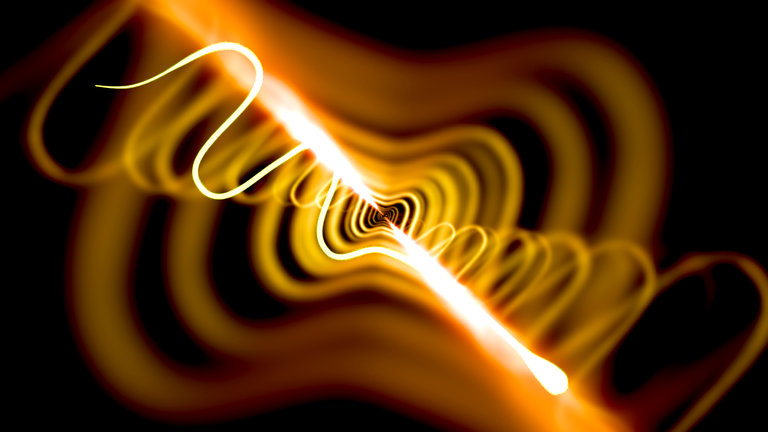
It is great news in the field of particle physics: The Chinese neutrino observatory JUNO has given its first results and measured the mass of the neutrino more accurately than ever, which is 3% in a MeV.
Actually, it's two news stories. On the one hand, that the observatory is in operation (it was inaugurated in August 2025) and that it has begun to bear fruit. And on the other hand, he has made the first measurements with great precision. I mean, they haven't found the mass of the neutrino, but they've come a long way. And that's great news.
Neutrinos have a long history. They discovered that they were investigating the beta decay of radioactivity. And what they said, at first they thought it wouldn’t have electric charge or mass. And they were right in charge, like neutrons, neutrinos have no charge, and in that sense the name is well placed (by the way, the name was given by the Italian physicist Enrico Fermi to indicate that they were a small version of neutrons). But modern physics has shown that neutrinos have mass, albeit very small. By the way, it's very small, even compared to electrons. The Nautrine is about ten thousand times smaller than the electron.
More or less that’s where the interest of this research lies. We don’t know how much this mass is and, in fact, we don’t know how to measure it accurately. However, over time we have narrowed down what a mass range is possible for the neutrino.
since 1991, better experiments have been carried out to measure the mass of the neutrino. Researchers are getting closer, little by little. And today’s news is that a recently launched observatory in China has given the most accurate value so far, although we still don’t know the exact mass, which is 3% in a MeV.
The study is difficult because neutrinos hardly interact. Here comes the problem. It is the second most abundant particle in the universe, and yet it is very difficult to detect. Since it has no load, it does not receive electromagnetic force. The magnetic field of a magnet, for example, does not affect it. One of the few ways to detect it is for neutrinos to collide directly with a proton or an electron if it hits fully. This happens very rarely, but it happens. A neutrino can cross the planet Earth without colliding, but one of the billions of neutrinos coincidentally collides. This is usually used by physicists to detect neutrinos and measure their mass. That’s why neutrino detectors, instead of looking into space, look towards the center of the Earth, trying to capture this fleeting collision.
The new JUNO observatory in China, on the other hand, looks at a nearby nuclear power plant, since neutrinos are also generated in nuclear fission. But instead of looking for clues to these shocks, they look for oscillations of neutrinos. The sudden changes in neutrinos are called oscillations. There are three types of neutrinos, and quantum effects cause changes from one type to another. And in each change, they emit energy; this is what JUNO detects, and from this amount of energy it is possible to calculate between what values the mass of the neutrino can be. That is, physicists calculate how much the neutrino must weigh to match that energy at least and at most. It's a hunt for precision, an attempt to narrow the gap.
Buletina
Bidali zure helbide elektronikoa eta jaso asteroko buletina zure sarrera-ontzian