 Bilatzailea


Biomarkers have been identified for the diagnosis of male sterility
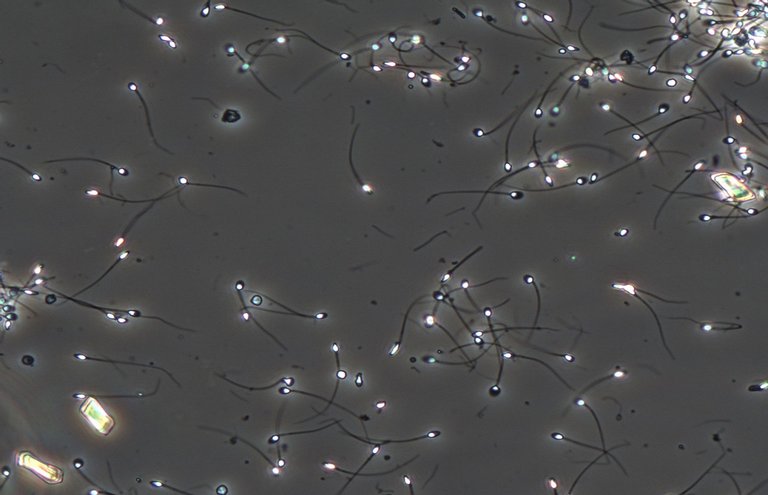
Currently, male fertility is studied by means of a seminogram, in which the concentration, motility and morphology of sperm are analyzed under a microscope. But it's not enough. Just because these values are normal doesn’t mean you’re really fertile. Researchers from the Human Fertility Group of the UPV/EHU have placed the emphasis on the metabolic reactions of sperm, the key to knowing if they are really fertile there.
Therefore, they have developed a methodology for detecting molecules involved in metabolic reactions in spermatozoa. It has made it possible to detect the largest number of potential biomarkers identified so far.
“Women have historically placed the greatest burden of infertility and, as a result, there are significant gaps in research into male infertility.”
One of the biggest difficulties in working on the method of detecting male sterility has been gaining access to sperm molecules. It is very difficult to break the sperm because they are very resistant. They have had to resort to a high-frequency ultrasound technique to ensure that sperm breaks well and that all their metabolites are removed.
Researchers have determined potential biomarkers that may include spermatozoa. As never before, 955 metabolites and 473 lipids have been identified in spermatozoa. An overview of sperm metabolites has thus been obtained. From now on, we will begin to investigate what happens with these metabolites in each pathology.
Researchers from the UPV/EHU point out that the study of male sterility is still in its infancy, since historically it has not been investigated: “Most of the research has been done on women, who have always been given the greatest weight of infertility. But it is proven that the inability to fertilize is a problem of the couple.”
According to data provided by the UPV, 30% of cases of infertility are related to female factors, the other 30% are of male origin, and the rest have mixed causes or are related to unexplained infertility. The UPV/EHU has its own line of research to reduce the deficiencies in male sterility.
There are also deficiencies in assisted fertility
Another study has also revealed other deficiencies related to fertility. They have found that almost half of the complementary treatments used in fertility in vitro do not have sufficient solid scientific evidence to prove their effectiveness. In view of the costs and side effects of these treatments, scientists have highlighted the need to be careful. In fact, they have been incorporated into treatments before sufficient evidence is available.
Buletina
Bidali zure helbide elektronikoa eta jaso asteroko buletina zure sarrera-ontzian
Bizitza


Doitasuna hegan egiteko
Garraioak
Aernnova: Diseinutik zerura
Garraioak

Motor aeronautikoak laborategian
Garraioak