 Bilatzailea


Measuring the mass of a fundamental hole
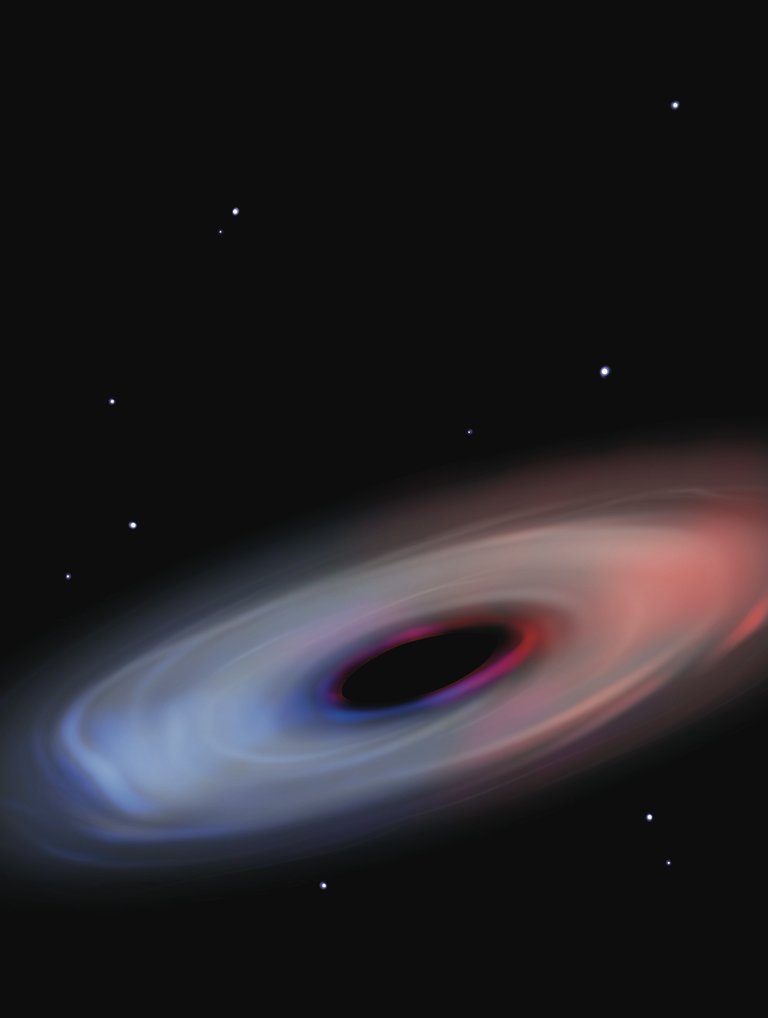
A key black hole has been detected and its mass measured by astronomers at the University of Cambridge at a small red spot called Abell2744-QSO1. And, according to the measurement, this black hole is a body of millions of masses of sun.
It was discovered by the James Webb Telescope. Discoveries in plural, because through this telescope there have been two discoveries related to this subject: on the one hand, it detected small red dots for the first time in 2024, and on the other, it has discovered a fundamental black hole in one of these small red dots.
Fundamental black holes are the least known black holes today. Supermassive black holes in the centers of galaxies (millions of Solar Masses) and small black holes created by the death of a star (up to 10,000 Solar Masses) are more common for astronomers. In addition to them, medium black holes are also known. But the fundamental black holes are semi-hypothetical bodies, and if they exist, no one knows what size they are. Until now, at least, they didn’t know.
Now, astronomers in Cambridge have found an example. It is believed to be a key black hole with millions of solar masses. It was discovered in a galaxy when the universe was only 700 million years old.
Buletina
Bidali zure helbide elektronikoa eta jaso asteroko buletina zure sarrera-ontzian