 Bilatzailea


The surface of the Atlantic slope of the Basque–Cantabrian mountain range has risen 88 m above the surface of the Mediterranean slope
Researchers from the UPV/EHU have clarified why the surface of the Atlantic slope has risen 255 m and that of the Mediterranean slope 167 m.
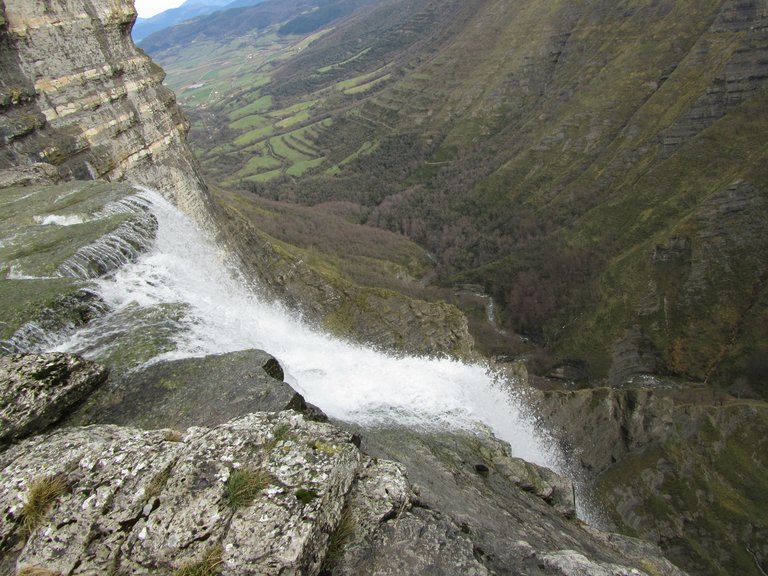
Between the two slopes of the Castro Valnera mountain range, on the border between Burgos and Cantabria, and the Pyrenees, there is a clear difference in relief. Since the creation of the mountain range, the erosion of both sides has been uneven, which has caused the surface of the Atlantic slope to rise more than that of the Mediterranean slope.
The tectonic plates float on the mantle and, when the load on these plates is lightened, the relief gradually increases when the load is removed in a similar way to that of the boats on the water.
Researchers from the Department of Geography, Prehistory and Archaeology and the Department of Geology of the UPV/EHU, together with researchers from the Department of Geology of the USAL, have calculated that since the foundation of the Basque–Cantabrian mountain range, 2,019 km3 of rock have been eroded on the Atlantic side of the mountain range, and 1,408 km3 on the Mediterranean side.
“About 6 million years ago, the Mediterranean Sea dried up and the sea level fell by more than a kilometer.”
Rivers from 35 basins on two sides have been studied using classical and modern methodologies. The authors explain that in this study they have calculated for the first time the discharge that has occurred in both sides and the response.
It is known that the river network of the Atlantic slope is more developed from the sea than from the Mediterranean, with shorter rivers, with a steep slope and, in addition, with more rainfall in this area. But, in addition, the authors explain the importance of taking into account how sea levels have changed in the history of the Earth. About 6 million years ago, the Mediterranean Sea dried up and the sea level fell by more than a kilometer. In this sense, it has been observed that at that time there was a strong erosion of the rivers of the Mediterranean slope.
On the other hand, the results have shown that, in general, everything is tilted to the west. In the central area, which includes Bilbao and Vitoria-Gasteiz, where the Zadorra and the Nervión River are located, the uprising is relatively horizontal, although it has been observed that it increases in small basins. In fact, it is very difficult to change the big rivers, but the small ones are easy to change.
Buletina
Bidali zure helbide elektronikoa eta jaso asteroko buletina zure sarrera-ontzian