 Bilatzailea


Satellites are jeopardizing astronomical research
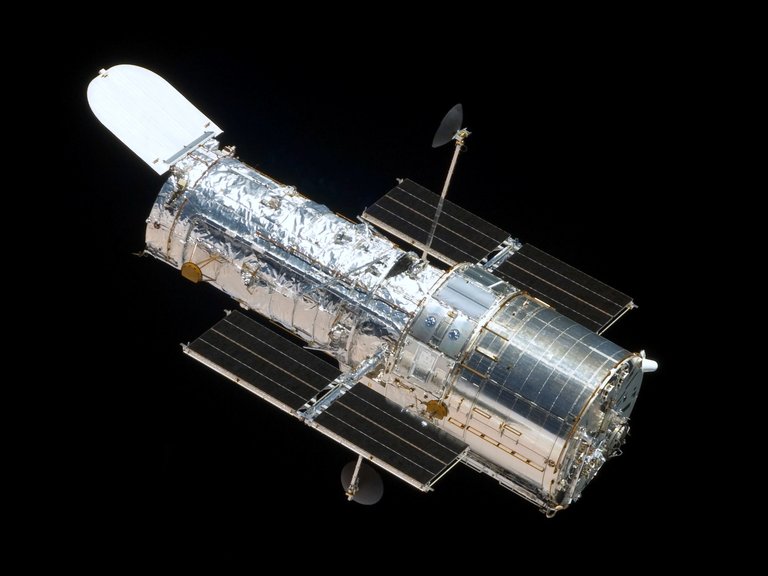
Researchers warn that astronomical research is putting the light pollution of satellites at risk. If this continues, they have calculated that by the next decade, 96% of the images from space telescopes operating in low Earth orbit will not be of quality.
In fact, the number of satellites orbiting the Earth has increased enormously in 2019 it was around 2000, today it is 15,000. Although in previous works the influence of satellites on the work of terrestrial observatories has been studied, so far their influence on space telescopes has not been taken into account. The latter study has shown the extent to which it also affects them.
“About 39.6% of Hubble’s images and 96% of the others would be affected by satellite pollution.”
To do this, researchers have simulated the vision of four space telescopes as the population of satellites grows in orbits between 400 and 800 kilometers. Of these four telescopes, two are from NASA, Hubble and SPHERX, and the other two are panified for the future by ESA (ARRAKIHS) and the Chinese space agency (Xuntiar). Well, according to the simulation, there could be 560,000 satellites in orbit in the future, and about 39.6% of Hubble's images and 96% of the others would be affected by satellite pollution.
One solution, researchers say, may be to deploy satellites in smaller orbits than telescopes do. This would have consequences for the Earth’s ozone layer.
Buletina
Bidali zure helbide elektronikoa eta jaso asteroko buletina zure sarrera-ontzian