 Bilatzailea


El Niño II: How will global warming affect us?
This year’s El Niño climate phenomenon is expected to be associated with global warming and may be the most violent in the last 150 years.

One study has suggested that the phenomenon is increasing as the Earth warms up. An analysis of a millennial record of corals from the Galapagos concludes that the variability of the phenomenon is about 37% higher than that of the pre-industrial era in the eastern Pacific.
In the El Niño phenomenon, the average temperature of the Earth rises, since the hot surface water of the Pacific Ocean occupies a greater surface, so the ocean gives more heat to the atmosphere. Global warming can cause the temperature to rise even more.
“The violent Children can be weakened.”
But not all El Niño are the same. When the surface of the Pacific Ocean is 1-1.5°C warmer than the average, El Niño is said to be a common one. Above this temperature, the phenomenon can be violent or very violent.
With this in mind, global warming can also have an unexpected effect on this phenomenon. Climate models have shown that if the Earth's average temperature were to rise by 3.5 °C in the future, the violent El Niño could weaken in North America, but could strengthen in Europe. The authors note that violent El Niño will occur more frequently, but the impact on the Earth’s climate may be less.
At the beginning of the summer, experts pointed out that the summer of 2026 could be particularly hot, and this has been the case in some areas, such as the Basque Country. See how the next few months evolve.
Buletina
Bidali zure helbide elektronikoa eta jaso asteroko buletina zure sarrera-ontzian
Bizitza

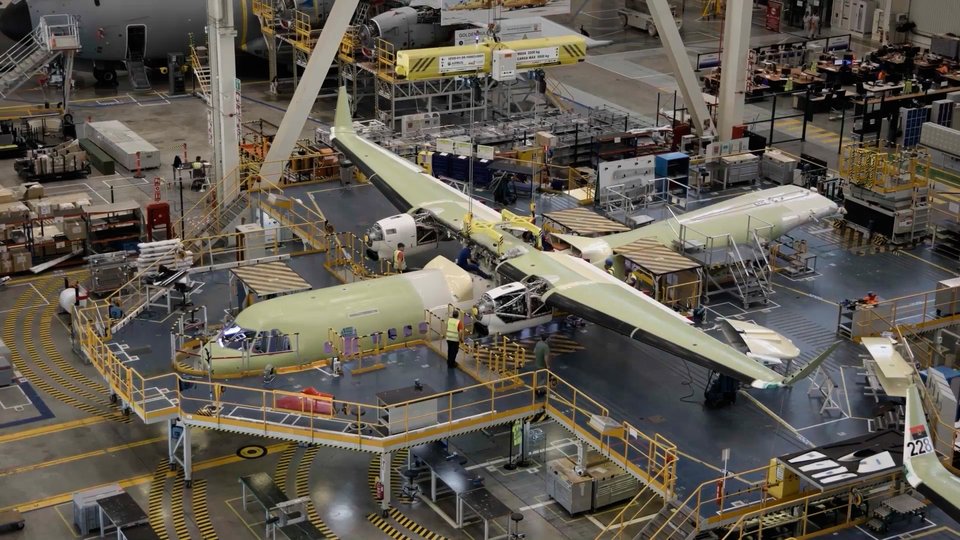
Doitasuna hegan egiteko
Garraioak

Aernnova: Diseinutik zerura
Garraioak

Motor aeronautikoak laborategian
Garraioak