 Bilatzailea


Look at the sun
He's a normal star, he's close to us, and he's been doing a lot of research. But that doesn't mean we know everything about him. Not even if it's not fascinating. Kristina Zuza Elosegi (UPV/EHU) and Iñigo Arrangi Uribe-Etxebarria (Instituto de Astrofísica de Canarias) have been fascinated by the Sun for years. And on August 12, like millions of other eyes, their eyes will also be looking at the Sun to see how the Moon hides it. They talk about what he's going to hide and what he's going to reveal.
The sun is there. In any case. It's an ordinary star. This is exactly how the two experts in this report have described it. “It’s a very common star,” says UPV professor Kristina Zuza Elosegi, “there are millions of stars like the Sun in our galaxy.”
It has a low mass, a surface temperature of about 6,000°C, a yellow color, and is in the middle of its life. It was formed about 4.5 billion years ago. “It is a second-generation star,” says Zuza, “that is, it came from matter detached from the explosions of earlier stars.”
Although he was a child amateur astronomer, the Sun never paid special attention to Zuza until he studied astrophysics. Then he understood what the Sun is: “It’s a bomb, because it has a nuclear bomb on itself and the activity it has is enormous.”
This activity is due to the structure of the Sun. “In the core, hydrogen is converted to helium. There is a loss of mass here, which is released as energy. That’s the light, the heat, and all the energy we get across the entire spectrum of electromagnetic waves.”
This energy is extracted out of the core: first through a radiative zone, and then through a convective zone. In the latter, the hot plasma rises, cools and descends again, continuously. Since the plasma is composed of ions, this movement of ions is an electric current, and the electric current generates magnetic fields. “The magnetic field is the key to the sun’s activity,” says Zuza.
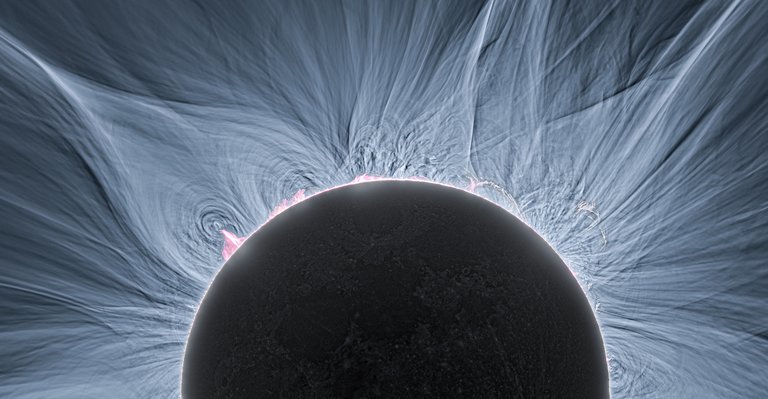
This magnetic field is constantly changing during 11-year cycles. At the beginning of the cycle it is ordered in rows that go from one pole to another, but it is twisted until the maximum of the cycle. This greatly increases the surface magnetic activity, from which stains, eruptions, solar wind and auroras arise. In eclipses you can see the phase in which the cycle is located. “When the Moon covers the Sun, you see the crown, and the shape of the crown shows us at what stage of the cycle it is. If it is quiet, the crown will be smaller at the poles than at the equator, while if there is intense activity it extends symmetrically in all directions.” The maximum of the cycle was in the summer of 2025, so the Sun is still in a phase of intense activity.
Our star
“In the Great Star Zoo it is a very common star,” says astrophysicist Iñigo Arrangi Uribe-Etxebarria. For years, Fixi has been researching the Sun at the Instituto de Astrofísica de Canarias (IAC). And you can see that he loves that normal star. “There are bigger stars, but it’s our star, we see it up close. So from our point of view, it’s big.”
It's the nearest star and the most studied. But that doesn’t mean we know him well. “Other groups investigate very interesting things: cosmology, the beginning of the Universe, the end, the evolution of galaxies. And even among us, it often seems that we already know everything about the Sun,” explains Arrangi. “We have telescopes both on Earth and in space, better and better, but the better instruments we have and the more detail we see, the less we understand.”
“Solar research is still a very active area,” says Arrangi. And he points out that the biggest questions are in three areas.
On the one hand, the interaction between plasma and magnetism. “The sun is a plasma. It interacts with the magnetic field, which creates a dynamic. “We still don’t know what’s going on here on a small scale.”
On the other hand, the connection between the interior and the exterior of the sun. “In the interior of the Sun we know more or less how the magnetic flux is formed and how it exits to the surface, but we do not fully understand its relationship with the structures and dynamics of the crown. And it is very important because it depends on the eruptions and explosions of the crown and, consequently, on how the activity of the Sun will affect us on Earth. We know how to replicate the convection on the surface of the Sun in our computers, but how these structures are formed in the corona and their dynamics and evolution have not yet been replicated.”
And, thirdly, space weather: the impact of solar activity on the Earth. Solar storms can affect satellites, GPS or electrical networks, and predicting these phenomena is a major challenge. Precisely in this area, Arregui expects the greatest advances in the near future: “It’s not just scientific. Our society is increasingly dependent on technology and there are economic and even military motivations. The United States, Europe and China are putting a lot of money in there.”
In each of these areas there are still many unanswered questions. For example, what for many years has been one of the great mysteries of the Sun: why the crown is so hot. In fact, the surface is at 6,000°C, but it starts to warm up as it goes out, and the crown is above one million degrees. In recent years, progress has been made in understanding this. “More or less, we know the answer,” says Arrangi. “We know that it is the result of two processes: magnetic reconnections and the waste of magnetic waves, but we do not know how much heat each one provides, for example.”
On the other hand, the crown has been extensively studied in recent years, but there is a thin layer between the surface and the crown, the chromosphere, which until recently has not received much attention. “It’s a very thin layer, it’s about 2,000 km long, but it’s very important because it’s the connection between the inside and the outside,” explains Arrangi. “On the inside, the plasma dominates, the fluid tells the magnetic field how to move, while on the outside, the magnetic field dominates and the fluid moves according to it. There is a clear dominator on both sides, but not on the chromosphere, the two are paired.” The physics here is very complex. “We understand this layer less. And it’s essential, because from there the structures that we see in the crown are formed, and it’s those structures that create space weather.”
New looks
In recent years, some space missions are making a great contribution to the knowledge of the Sun. The Parker Solar Probe (NASA, 2018), for example, has arrived for the first time inside the crown and has been able to make direct measurements. “A problem we have in solar physics, and astrophysics in general, is that we cannot make measurements directly. We observe and make theoretical models or numerical simulations, but without direct measurement it is difficult to compare them later. Parker was the first instrument capable of approaching the Sun and measuring its conditions (density, temperature, magnetic field, electric currents). For example, it is becoming very important to see if the actual solar wind structures fit our theories.”
The Solar Orbiter (ESA/NASA, 2021) is providing very high resolution images and data at many wavelengths. This allows the analysis of dynamics on a smaller scale. “And the smaller the scale we see, the more interesting things we see,” says Arrangi. But he also emphasizes another objective of this mission: Study of the Sun's poles. “So far we have not been able to see well the structure and evolution of the magnetic field at the solar poles. An important goal of Solar Orbiter is to clarify this.”
Even on Earth, larger and larger telescopes are being built to observe them in ever greater detail. Hawaii is home to the DKIST telescope, the largest solar telescope to date, with a diameter of 4 meters. “In the Canary Islands, our institute is preparing the EST (European Solar Telescope), which will also have 4 m,” explains Arrangi. “With them we really hope to study well this interaction between magnetism and plasma.”
Value of the shadow
Among all this technology, eclipses also continue to have scientific value. They have been of great importance throughout history and organized numerous expeditions to observe the eclipses. before Bernard Lyot invented the coronograph—a device that artificially covers the sun—in 1931, the only way to see the crown was through eclipses, for example. “When the Moon completely covers the Sun, there, suddenly, where normally nothing is seen, the crown appears,” explains Zuza.
On the other hand, Zuza wanted to highlight that they have also served to make some important discoveries in physics. “The first accurate calculation of the distance between the Earth and the Moon was made in a complete eclipse, B.C. In the second century,” he throws the first example. “There is only one chemical element that exists on Earth but was not discovered on Earth: helium,” he continues. This was also discovered in a complete eclipse by spectrometry in 1868. “And, perhaps the most well-known, the theory of General Relativity that was proven in 1919.”
Since the arrival of the coronographs, it is possible to create an artificial eclipse and observe the crown at the desired time. That's what today's telescopes do. However, as Zuza says, there is still “no better coronograph than the Moon.”
This is also confirmed by Arrangi: "Despite the advancement of technology, the conditions that occur during a natural eclipse cannot yet be replicated." In fact, coronographers introduce artificiality into the observations. “What we see with a camera, a mobile phone or our own eyes doesn’t look the same. Something similar happens with the coronographers. They must be calibrated, for which eclipses are taken as reference. “For the calibration of instrumentation in space missions, for example, it is very important.”
On the other hand, “since the same eclipse can be observed from different parts of the world, throughout the course of darkness, when comparing these data collaboratively, it is a great advantage,” adds Arrangi. “So, although our telescopes are very advanced, natural eclipses are not only a beautiful experience, but they are extremely useful from a scientific point of view.”
The magic of the eclipse
Arregi himself has not had the opportunity to live this experience, yet. He has tried it twice, in Japan and China, but in both cases the bad weather frustrated him. Torches, yes. in 1999 he moved to Munich to witness the total eclipse. “I remember that moment of wholeness, wow, that magic!. Above all, the shift from partiality to integrity was so significant! That’s why I’m telling people over and over again to move to see the integrity.”
Because Zuza says it clearly: "99.9% is by no means equal to 100%. Due to the luminosity of the Sun, this 0.01% is enough not to see the crown. Therefore, please remove the approved glasses and move them to the assembly. That moment, that moment of seeing the crown, is truly unforgettable.”
The eclipses of the Sun also have something shocking for Zuza. “How lucky we are to see the Moon and the Sun the same size from Earth.” The Sun is 400 times larger than the Moon, but it is 400 times farther away. “If the Moon were a little smaller, or a little farther away, we wouldn’t be able to see the crown during eclipses,” Zuza said. “What’s more, the Earth didn’t really have satellites like the Moon, like Mars or Venus, at most some rocky edge. This wonderful Moon is the result of an accident and, in addition, there is a point where it allows us to see total eclipses of the Sun. That annoys me.”
Zuza will travel to La Rioja to visit the one on August 12. Arregi is not yet clear if he will see it in Cantabria or Palencia, but he knows that the second option is better, because the whole will last longer and the weather will also be safer. He's clear on one thing: “I don’t want any instruments, no telescopes, no phones, no cameras. Only the antiques.”
Buletina
Bidali zure helbide elektronikoa eta jaso asteroko buletina zure sarrera-ontzian