 Bilatzailea


The quantum tower
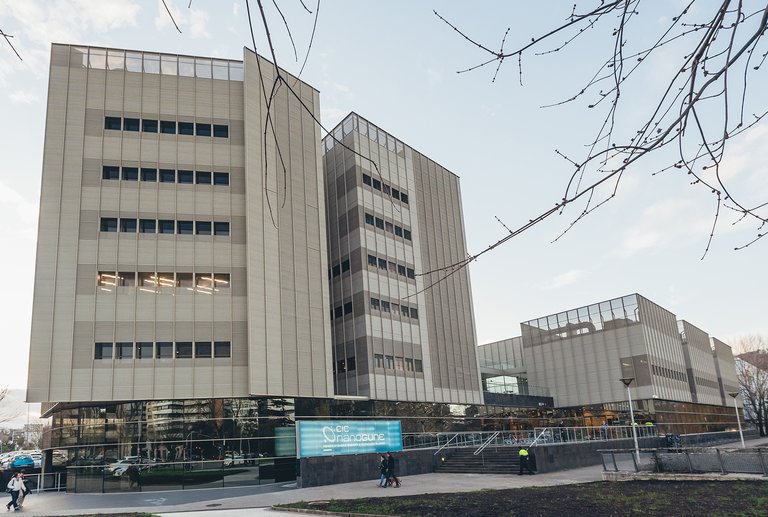
In San Sebastian, at the CIC Nanogune center of the BRTA alliance, a tower for the design and testing of quantum chips has been in operation since last February. In this tower they work with the ambition to be one of the most advanced laboratories in quantum computing worldwide, together with the company Quantum Motion.
Quantum computers will have the potential, at least in theory, to perform calculations that are impossible for today’s computers. These computers are supposed to help in the development of new drugs or in the fight against climate change. But to do this, they need to gain more computing power. And that will come when computers have many qubits, when quantum chips with thousands of qubits are developed.
Although we are still far from it, they have been working with this objective since last February in the quantum tower that was launched in San Sebastian. These are not conventional laboratories, but quantum hardware laboratories, which have a special infrastructure for the development of silicon-based quantum chips, in which quantum computers design and test the chips they need to perform their calculations.
Fernando González-Zalba, head of quantum tower research, explains it this way: “We design chips for quantum computing and then, above all, we test and validate that our designs perform the functions we want. To do these tests, we need very special equipment.”
For example, to make the chips work, they are placed in a cylindrical dilution refrigerator. They reach temperatures close to absolute zero. “It’s a refrigerator that cools to ultra-low temperatures,” explains González-Zalba. “These are temperatures very close to absolute zero, about 273°C below zero.” For these studies it is essential to work at these temperatures: “The quantum effects that are essential to our work are manifested more strongly at these low temperatures.”
In the laboratory, the rhythmic sound that comes out when pumping helium is constantly heard. In fact, to reduce the temperature so much, they use liquid nitrogen and two special isotopes of helium. They fill the liquid nitrogen tank once a week, which is necessary for the system to work. But the ultra-cold is achieved thanks to helium.
For now, they have three chillers to design and test the chips. But in the laboratory they have space for six fridges. In fact, the quantum tower consists of five floors, each of which can house such an infrastructure. The reason is clear: they plan to grow in a few years.
González-Zalba himself has made it clear: “The ambition of our team and research center is to become a reference center in this field, one of the leading organizations in the development of quantum chips based on silicon technology.”
They bet on silicon to make chips. In fact, researchers have highlighted the promising future of silicon-based quantum technologies. In fact, it is the basic material of classical computing, and if it succeeds, it will be able to take advantage of the same huge industry and infrastructure of chips today to make quantum computers.
So far they have worked with 4 qubit chips from CIC Nanogune, but they have already prepared a chip with more quantum bits and have started the path of designing the chip with thousands of qubits.
Buletina
Bidali zure helbide elektronikoa eta jaso asteroko buletina zure sarrera-ontzian
Bizitza





Aldizkaria
Kolaboratu
Zure lana argitaratzea nahi duzu?
Gai zientifiko bati buruzko artikulu bat baduzu, bidali eta sarean zein aldizkari inprimatuan argitaratu dezakegu.