 Bilatzailea


Basic components of DNA and RNA in the asteroid Ryugu
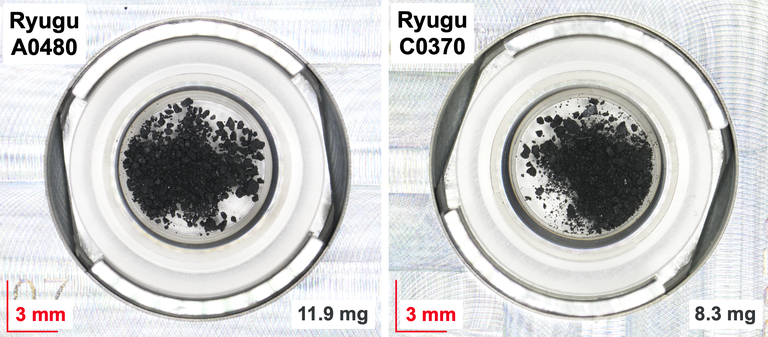
In the samples of the asteroid Ryugu, the five basic nucleic bases of DNA and RNA (adenine, guanine, cytosine, thymine and uracil) have been discovered by a Japanese research team. The samples were brought to Earth as part of the Hayabusa 2 mission, and now the focus has been on nucleic bases. Thus, the analysis of Ryugu samples has been compared with that of another asteroid (Bennu) and with that of the two meteorites (Murchison and Orgueil), finding significant differences in the percentages of nucleic bases according to their origin. The results of the study were published in Nature Astronomy.
“This means that these molecules that are considered the basis of life are widespread in the Solar System.”
The researchers explain that these differences are due to the original chemical environment and the evolutionary history of each one. In any case, it is noteworthy that all of them have traces of nucleic bases. For them, this means that these molecules, which are considered the basis of life, are widespread in the solar system. It has even been suggested that asteroids and meteorites may be involved in the formation of life on Earth.
Buletina
Bidali zure helbide elektronikoa eta jaso asteroko buletina zure sarrera-ontzian