 Bilatzailea


“After all, that’s research: find the way.”
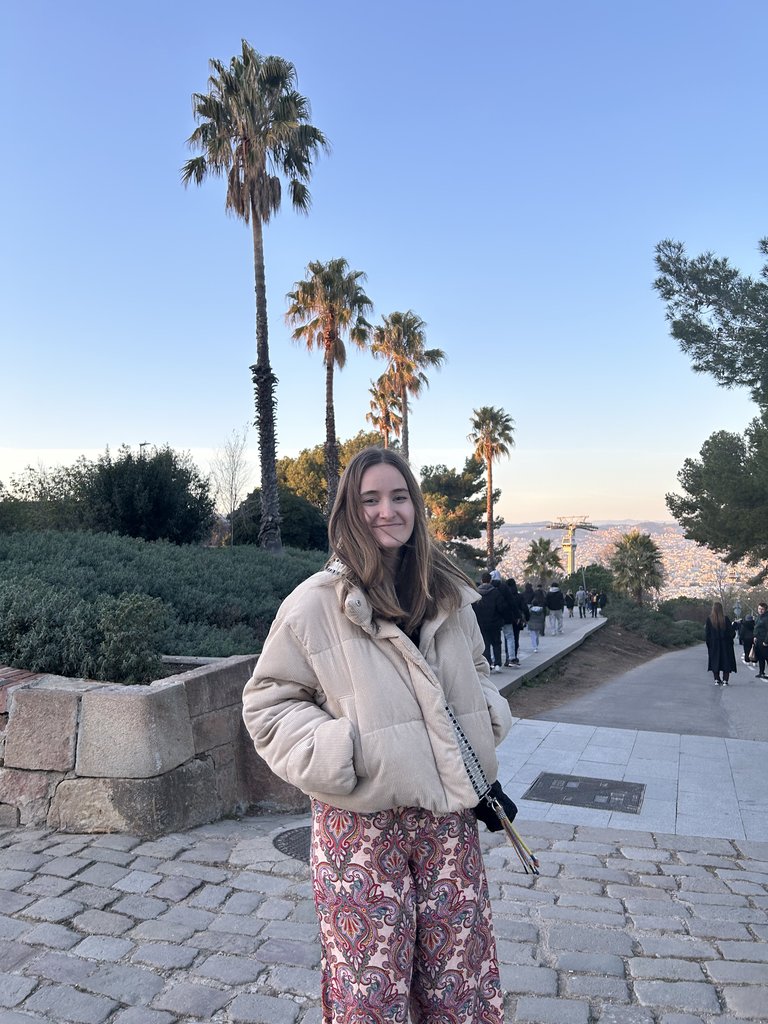
Researcher Jaione Bengoetxea Azurmendi received the prize for the best presentation oral at the IkerGazte congress, in the field of engineering and architecture, for her work ‘Creation of counter-narratives in Basque and Spanish: generation and evaluation of data’. However, he explains that the way to get there did not start from engineering, but from linguistics: “I learned English, attracted by the language itself. The truth is that until the beginning of the career, I didn’t know very well what linguistics was or where it was going, and I liked it a lot,” he recalls.
He entered into fourth grade internships in language technology. “I did internships in a company that works in this field, in Vitoria, and I liked a lot. Then, some professors from the computer science faculty came to present the master’s degree and I decided to try it.” According to the stereotype, the people of the letters are not very technological, but Bengoetxea clarifies that they learned to program from scratch and that the teachers helped them a lot: “Learning to program isn’t just about learning another language; it’s a different way of thinking. It was a bit of a shock at first, but once I got over it, I was happy to enter this world.”
“They were creating messages that were hurting and spreading hate on social media, and there was nothing to resist.”
And once he entered, the wave of artificial intelligence came to him: “It’s been the last four or five years and I did my master’s degree just five years ago. So, since then, we’ve always been in that wave: you’re reading something, and right on that topic, on the other side of the world, someone is researching and coming up with new things. And it goes so fast that you always have the feeling that you’re going after it in some way.”
Despite his visions, the work presented at IkerGazt shows that he has been able to surf the wave. “It was a master’s thesis. In fact, they saw that there was a vacuum: they were creating messages that were hurting social networks and spreading hatred, and there was nothing to deal with,” explains Bengoetxea.
From counter-narratives to dialects
In fact, counter-narratives are non-aggressive responses that are used to respond to hate speech. There was something like that in English and some other language, like Italian, but in Basque they didn’t find anything: “For the most part, I came back from Italy. It was quite fun to see what the answers were. Then it was about creating automatically, which was a pretty big challenge. But at least we managed to give it a first push and make a database available to the public in Basque.”
Now he has started his doctoral thesis and has radically changed the subject: “In my research, I’m trying to get language technologies to understand the dialects better. We're at the beginning, so we're laying the groundwork. First, an evaluation has been carried out, mainly with the Guipuzcoan, Vizcaya and Navarrese, and lately we have focused a little more on the Vizcaya. The idea is to study as many dialects as possible, but it is difficult because there is not much data.”
“I’m trying to get language technologies to understand the dialects better.”
However, he is satisfied because, although the people who do the thesis usually say that it is a solitary work, he is well accompanied. He confesses: “We have a very good atmosphere in the team and we are many and we help each other. It’s true that there will always be times when you don’t know very well where to go or where to go. But in the end, you always find your way. After all, that’s research: finding the way.”
Jaione Bengoetxea was born in Azurmendi Usurbil in 1998. He has studied English at the UPV and then has a Master’s degree in Language Analysis and Processing at the Faculty of Computer Science of the UPV. He is currently working on his doctoral thesis on language technologies and dialects.
Buletina
Bidali zure helbide elektronikoa eta jaso asteroko buletina zure sarrera-ontzian