 Bilatzailea


What I like most about artificial intelligence is its predictive power
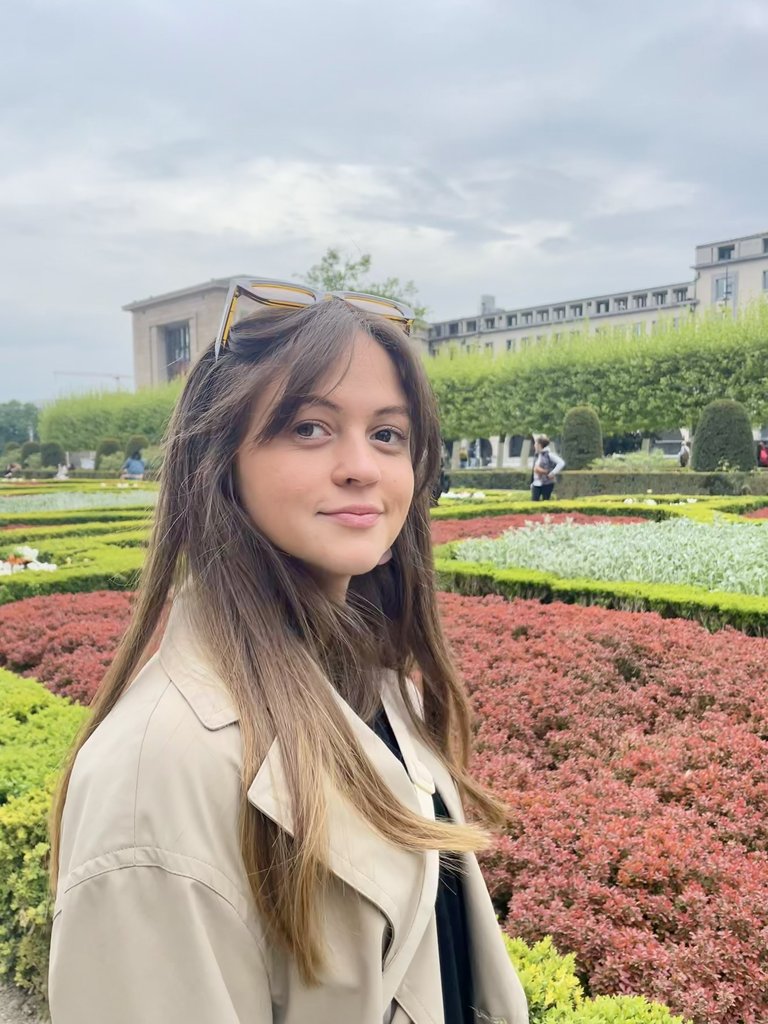
Nora Alcelay Uribeecheverria has completed a degree in Artificial Intelligence and a Master’s degree in Artificial Vision, with knowledge of English, French and German, and has recognized that music and cultural activities have always been part of her life. He is a Legazpiarra who plays oboe in the local band, is a member of the Subtracaiak Dance Group and is a monitor of the Sorgintxulo Alai leisure group.
It is clear that his hobbies are very diverse, but he recalls that as a child he did not intend to enter the world of computer science or technology later. “Everyone in my family has been in health care. But since I don't like blood at all, and seeing that I was good at math, I thought I'd play it over there. Then, however, an acquaintance told me that they had launched a new career at the UPV/EHU and that it seemed very interesting. It was an Artificial Intelligence degree. I looked, and I thought it would be a nice challenge, and that’s how I got in, not knowing much about artificial intelligence.”
The rest of the people didn’t know what AI was, either, and even now it seems to him that for most people AI is ChatGPT and the like, no more. “It’s normal, because that’s what everyone uses. But that's only part of it. In general, artificial intelligence is a field of computer science that generates models based on a large amount of data. The models can be linguistic, but also sanitary, meteorological, technological,” explains Alcelay.
“I thought it would be a nice challenge and that’s how I got into it, not knowing much about artificial intelligence.”
Being a new grade, I didn’t know what I was going to find. Still, he thinks he made it up. He has especially liked the power of artificial intelligence to predict or predict. “It was the time of COVID-19 and we saw how it served to predict how many cases would be made, for example. It is also used for diagnostics and to improve the knowledge of diseases such as Alzheimer's... I think it brings a lot of benefit in many areas.”
What he least liked were hardware issues, telecommunications networks, etc. “Otherwise, I was very pleased. Most of us were girls, probably because it was a new career, and since we entered by grade, it was the girls who had the highest grades.”
Remember that when they went to classify Computer Engineering, there was a change in the proportion of boys and girls: until then, although it was quite balanced in terms of gender, when they called engineering, the proportion of boys increased considerably, and today it is still so.
“It’s also paradoxical to see that, with the majority of girls in the race, artificial intelligence has a gender bias.”
“I think it’s significant,” Alcelay says. “On the other hand, it is also paradoxical to see that, with the majority of girls in the race, artificial intelligence has a gender bias. I hope it will be resolved in the future, but for now, that’s the case.”
He is currently working at CEIT on research and improvement of railway communication systems and on projects that come from abroad. Looking to the future, although he initially thought about entering the health sector, he now believes that he will probably continue in the technology sector: “After all, I’m from Goierri, and here industrial activity has a lot of strength and I like the work.” However, he does not want to close any doors: “I’m open,” he says. The future will tell
Nora Alcelay Uribeecheverria was born in Legazpi. He has completed the Degree in Artificial Intelligence and the Master in Artificial Vision and currently works at the CEIT Technology Center.
Buletina
Bidali zure helbide elektronikoa eta jaso asteroko buletina zure sarrera-ontzian