 Bilatzailea


They have created a biomaterial that becomes more resistant to water
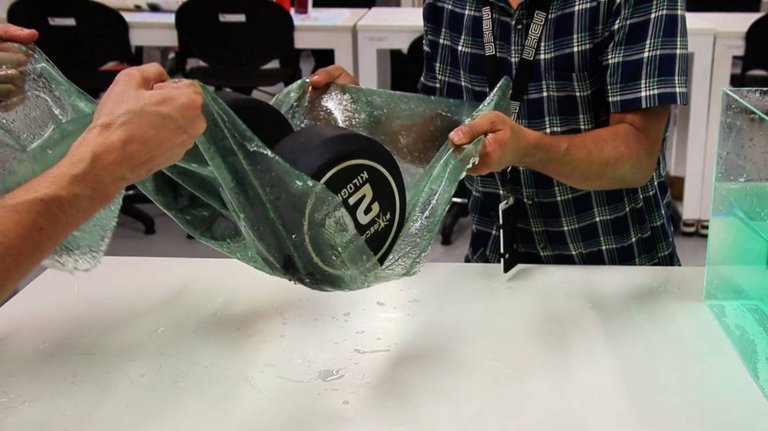
With the addition of nickel to chitosan, the Institute of Bioengineering of Catalonia (IBEC) presents the first biomaterial that becomes even more resistant when impregnated with water. It is anticipated that it may be an ideal material to replace plastics.
Most of the biomaterials that have been developed to replace plastic are weakened by wetting, which, of course, completely limits their use. To overcome this problem, protective coatings are used or chemically modified, but then they lose their advantage over plastics, making these transformations dangerous to the environment.
“Most of the biomaterials that have been developed to replace plastic weaken if they get wet.”
The material they have developed at IBEC is based on a chitin derivative: chitosan. After cellulose, it is the most abundant organic molecule in the world; for example, it is part of the skin of arthropods. According to the researchers, this is a paradigm shift: until now, the development was based on the isolation of material from nature, and this time they have sought just the opposite: the interaction with nature.
Based on nature
They observed the worm Nereis virens: if zinc is extracted from the canines of the worms, they soften when immersed in water. This led to the conclusion that metals could play a key role in the behaviour of biomaterials. From there, the test was carried out with nickel, which is found in nature, which interacts easily with chitin and dissolves well in water.
Thus, nickel has been added to chitosan and processed into thin films. It has been shown to become 50% more resistant when immersed in water. They have designed a zero-waste production process that has the added advantage of being industrially scalable. In addition, the raw material can be obtained locally, that is, it does not generate dependence on a single origin.
Among the applications, agriculture, fishing material, packaging and possibly sainitary material have been mentioned.The study was published in the journal Nature Communications.
Buletina
Bidali zure helbide elektronikoa eta jaso asteroko buletina zure sarrera-ontzian