 Bilatzailea


The Iberian Peninsula is rotating clockwise
The HGI group of the UPV/EHU has studied the compression and deformation of the earth’s crust in the confluence of Eurasia and Africa in the western Mediterranean.
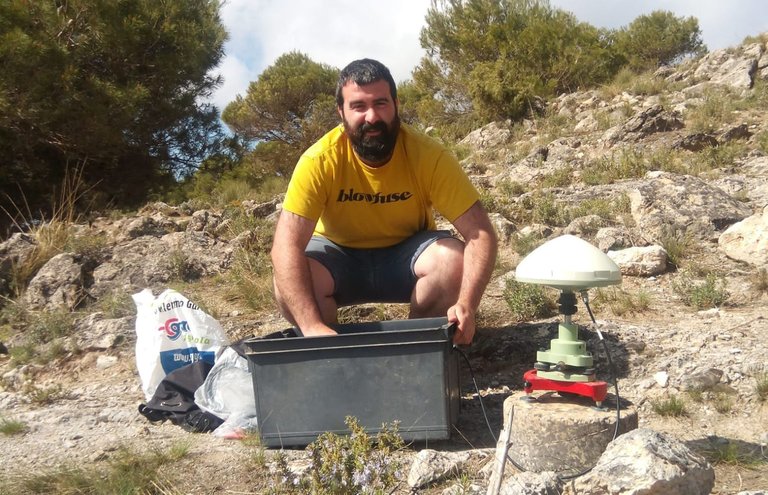
As explained by members of the HGI Hydro-Environmental Processes Research Group of the UPV/EHU, in the western Mediterranean, the Alboran domain completely conditions the boundary between the Eurasian and African plates. This area is moving westward and supports the development of the active arch of Gibraltar, connecting the Perpetual Mountain Range with the Rif Mountain Range. In order to better understand this dynamic, a study has been carried out using data from earthquakes that have occurred in recent years and deformation data obtained by satellite.
“Data on stress and strain zones are useful for identifying active failures.”
The data confirm that the Iberian Peninsula is rotating clockwise. In fact, they have observed that the deformation caused by the Eurasia-Africa collision east of the Strait of Gibraltar is absorbed by the surface of the Arch of Gibraltar, preventing the transmission of efforts to Iberia. To the west of the Strait of Gibraltar, on the other hand, there is a direct collision between the plates of Iberia (Eurasia) and Africa, which they believe can cause the efforts to be transmitted to the southwest of Iberia, pushing Iberia from the southwest and turning it clockwise.
Database of active failures
Additionally, stress and strain field data are useful for identifying active faults. In fact, together with other research groups, the database of active failures in Iberia is being completed. They recognize that, although we are doing a lot of work, there are areas where there is a lot to do, such as the west of the Pyrenees (Navarre) and the west of the Arch of Gibraltar.
The researcher points out that the database created in the study has complemented the previously used databases, which increases the reliability of the results and conclusions. In addition, they anticipate that from now on the data will grow exponentially: among other things, they will be able to calculate deformations more accurately, even in places with little information.
The research was published in Gondwana Research.
Buletina
Bidali zure helbide elektronikoa eta jaso asteroko buletina zure sarrera-ontzian