 Bilatzailea


Gluten-free diet? Okay, but... is that all?

It all started with a simple question: "If a person with celiac disease (CD) is on a gluten-free diet (GGD)... why does he still have symptoms? ".
I thought it was a contradiction. The treatment was clear, wasn't it? Just skip the gluten and everything should be fine. But the closer we approached people with AD, the clearer we knew that this "simple" diet was not really that simple. And, for many people, the diagnosis was not a goal, but the beginning of a long journey that went beyond looking at labels to know if a food contains gluten or not, and in fact was full of obstacles.
So we decided to observe, investigate, ask... and help. And the more we learned, the more we were surprised: the error was not in the patients, but in our expectation of what should be a “GGD.” It was time to listen carefully.
Gluten: an unknown enemy
For those who do not know, AD is an autoimmune condition in which the body responds to gluten as a threat. Gluten is a protein found in wheat, barley, rye and other similar cereals. In people with CD, when gluten is ingested, the immune system damages the mucosa of the small intestine, preventing the absorption of nutrients.[1] Thus, the only treatment currently available is a rigorous GGD.[2]
One very curious thing is that AD can appear in a very different way. Some suffer from diarrhea, others from anemia, tiredness, hair loss... and there are people who do not feel anything and yet are damaged from the inside. Some people are diagnosed with the condition after several years of consultation without receiving a response.[3] Others, in a routine study. But in all cases, the diagnosis influences. It forces the person with AD to change the way they eat, buy, go out and live.[4]
Although an estimated prevalence of about 1-2% of the population, it is estimated that 75% of cases are undiagnosed due to the wide spectrum of symptoms and lack of knowledge about the disease[5].
An unbalanced IMI
The idea of eliminating gluten from the diet is simple: avoid bread, pasta, cookies... that is, cereals with gluten and derivatives (see Figure 1). But the reality is much more complex. Gluten can be found in sauces, sausages, prepared dishes, etc. People with CS should read each label, each ingredient list, to ensure that gluten is not present and to confirm that it is safe for them to eat.[6]
In addition, there are many gluten-free products (GGPs) available on the market. However, its composition is not exactly the healthiest: it is rich in fats and sugars and is poor in fiber. They are also 2-3 times more expensive products than their gluten counterparts (see Figure 2)[7,8].

figure 2. Comparison between gluten products and gluten-free products. Image: The authors. Data based on the work of Babio and colleagues[8].
What mistakes do we make without realizing it?
It has been a great challenge to dismantle false beliefs. Many believed that it was enough to replace bread, buy gluten-free pasta and look for "suitable" cookies. But:
- Many GGPs have less fiber than their gluten-containing counterparts.
- They contain less iron, calcium, magnesium or vitamin D.
- The diet becomes richer in lean fats and sugars.
- There is a tendency to eat less whole grain, less legumes, less fruits and vegetables.
And this can lead to a sudden halt to the recovery process in a growing child or an adult who wants to regain his or her health. Fortunately, these errors have a solution if they are identified in time. However, as if that were not enough, many of these people complain that they do not always improve even if gluten is removed from their diet. That is, even if they follow a perfect diet, sometimes they still feel bad, they still have symptoms[9].
So where is the problem?
In many cases, the persistence of symptoms is not so much due to the nutritional quality of PDEs as to unintentional gluten breakages that occur unintentionally; in particular, due to the inadvertent consumption of small amounts of gluten: cross-contact occurs during cooking, for example, when cooking utensils are shared[10]. We often fail to ensure that what we eat outside the home is truly gluten-free, which can also lead to lasting reactions or symptoms[11].
In addition, some studies[12] indicate that in addition to gluten, other compounds can harm people with AD. All this reminds us that the only basis for a DDA is not a list of authorised or prohibited products; it is a complex reality that requires constant attention, knowledge, research and, of course, more scientific research.
Four dimensions, a single objective: to live well
As the study progressed, we found that diet alone was not enough to improve the health of a person with AD. There was a need for comprehensive treatment of four basic pillars: clinical, nutritional, psychological and social (see Figure 3).[13]
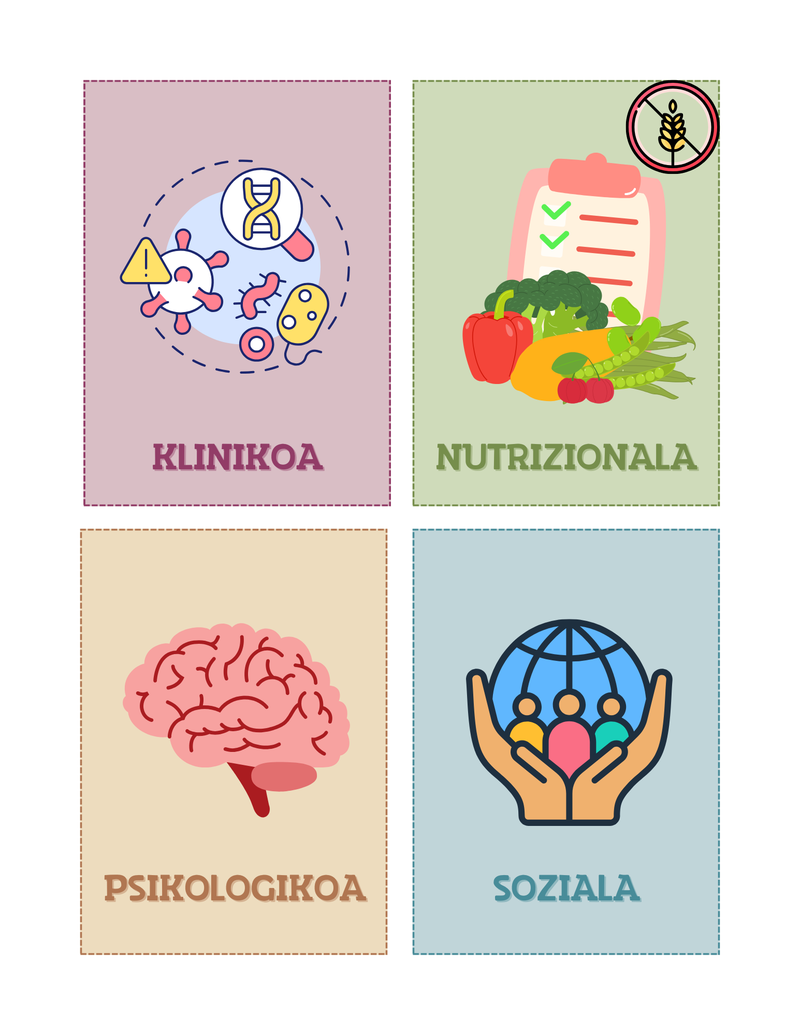
figure 3. The 4 dimensions that the treatment of CS must assume. Image: The authors. Data based on the work of Perez-Junkera and colleagues[13].
Clinical, because it is necessary to control the symptoms, avoid gluten violations and understand that recovery of the intestines requires time. And because it’s not always easy to know if the diet is being followed well: sometimes antibodies go down, but the mucosa is still damaged. Or vice versa. Or the body needs more time to heal than you think.
Nutritional, because GGD is not always a balanced diet, and many patients have nutritional deficiencies, even if they follow the "rules". Because it is not enough to replace gluten with gluten-free gluten. You have to refresh the food.
Psychological, because living with constant alert and fear of eating can cause anxiety, sadness, and isolation.[14] In fact, a diagnosis also affects self-esteem, the relationship with the body, the pleasure of eating.
Social, because living with SS also means learning to communicate, defending yourself in a restaurant or explaining why you can't eat your birthday cake. Because sometimes what hurts the most is not the food you can’t eat, but the look you get when you explain it.
Listen, help, teach
We have been working with people with AD for several years from the time of diagnosis. We asked them, we guided them, we gave them face-to-face and continuous follow-up, and above all we gave them time; time to listen, time to adapt, time to correct without blame.
And over time, we saw positive and measurable changes.
Children who initially barely ate vegetables began to include fresh foods in their diet. Families reduced the consumption of ultra-processed PHGs and recovered traditional recipes. Some learnt to better identify what symptoms might and might not be related to diet. These results showed that, through structured and continuous intervention, adherence to DDA is improved and the diet is transformed. The aim is not only to provide information, but also to help with useful and practical tools[15].
In these accompaniments we found that the most important thing was not to control, but to help. That the key is not to force, but to build trust. A balanced diet is achieved when the patient understands, decides and feels cared for.
The symptoms get better... but the quality of life doesn't improve
Although many symptoms disappeared—pain, fatigue, digestive problems—when measuring quality of life, the results were... mild. They didn't get worse, but neither did they get better. Most participants felt "in a neutral state", neither bad nor good.[16]
How is that possible? Feeling better is not just about the intestine. It's also emotional. Routine. To feel free and without limits. Not having to constantly justify yourself for what you eat. To be able to go to a party without fear. Again natural, to be able to act spontaneously.
And that gave us another clue: maybe improving the body is just the first step. The most complicated thing is not to follow a diet, but to reconcile with the new reality imposed by the disease. And this is not only achieved with food.
What if the challenge is not the diet, but the world around us?
Going out to dinner. Going to camp. Expose your disease to colleagues or loved ones. Feeling observed at a children’s party because you have brought your tuper.[17]
These situations are not exceptional, they are part of the daily life of people with AD and must be treated as part of the treatment.
That’s why one of the most powerful learnings was to understand that education is not just for the patient. We also need to educate the environment: restaurants, schools, families, friends. In fact, doing GGD can be difficult, but feeling like no one understands you is even harder.
We want society to participate. That the insertion does not depend on the effort of the person with AD. There must be safe options in all contexts. Let's talk about celiac disease naturally. The person who has to carry the bread in a bag should not carry the weight of the need to explain.
Gluten removal is a first step that is favored in celiac disease
Today we are convinced of one simple thing: it is not enough to say "do not eat gluten" and give a list of forbidden foods.
You have to help, educate, follow closely. We need to make room for excitement, for fear, for anger. And above all, it must be understood that every person with AD needs a tailor-made treatment that includes all its components: clinical, nutritional, psychological and social[16].
Eating gluten-free does not cure you with magic. But knowing that you are not alone in that process, feeling that someone is with you... That can change lives.
And perhaps, alone perhaps, what started with a resignation at first will be a journey to a state of well-being far beyond what you imagined.
Bibliography
- Husby S, Koletzko S, Korponay-Szabó IR, Mearin ML, Phillips A, Shamir R, et al. [European Society for Pediatric Gastroenterology, Hepatology, and Nutrition guidelines for the diagnosis of coeliac disease]. J Pediatrician Gastroenterol Nutr. 2012; 54(1):136-60.
- Melini V, Melini F. Gluten-Free Diet: Gaps and Needs for a Healthier Diet. The nutrients. 2019; 11(1):170.
- Lindfors K, Ciacci C, Kurppa K, Lundin KEA, Makharia GK, Mearin ML, et al. [Coeliac disease]. Nat Rev Dis Primers. 2019; 5(1):3.
- Satherley RM, Coburn SS, Germone M. The Impact of Celiac Disease on Caregivers’ Well-being: An Integrative Review. J Pediatrician Gastroenterol Nutr. 2020; 70(3):295-303.
- Singh P, Arora A, Strand TA, Leffler DA, Catassi C, Green PH, et al. Global Prevalence of Celiac Disease: Systematic Review and Meta-analysis. Clin Gastroenterol Hepatol 2018; 16(6):823-36.e2.
- Bustamante M, Fernández-Gil MP, Churruca I, Miranda J, Lasa A, Navarro V, et al. Evolution of Gluten Content in Cereal-Based Gluten-Free Products: An Overview from 1998 to 2016. The nutrients. 2017; 9(1):21.
- Mármol-Soler C, Matias S, Miranda J, Larretxi I, Fernández-Gil MDP, Bustamante M, et al. Gluten-Free Products: Do we need to update our knowledge? The foods. 2022; 11(23):3839.
- Babio N, Lladó Bellette N, Besora-Moreno M, Castillejo G, Guillén N, Martínez-Cerezo F, et al. A comparison of the nutritional profile and price of gluten-free products and their gluten-containing counterparts available in the Spanish market. Nutr hosp 2020; 37(4):814-22.
- Perez-Junkera G, Vázquez-Polo M, Eizagirre FJ, Benjumea L, Tutau C, Esteban B, et al. Application of a Platform for Gluten-Free Diet Evaluation and Dietary Advice: From theory to practice. Sensors (Basel). 2022; 22(3):732.
- Fernández Miaja M, Díaz Martín JJ, Jiménez Treviño S, Suárez González M, Bousoño García C. Study of adherence to the gluten-free diet in coeliac patients. An Pediatrician (Engl Ed). 2021; 94(6):377-384.
- Laurikka P, Salmi T, Collin P, Huhtala H, Mäki M, Kaukinen K, et al. [Gastrointestinal symptoms in celiac disease patients on a long-term gluten-free diet]. The nutrients. 2016; 8(7):429.
- Dieterich W, Schuppan D, Schink M, Schwappacher R, Wirtz S, Agaimy A, et al. Influence of low FODMAP and gluten-free diets on disease activity and intestinal microbiota in patients with non-celiac gluten sensitivity. Clinical Nutrition. 2019; 38(2):697-707.
- Perez-Junkera G, Ruiz de Azua L, Vázquez-Polo M, Lasa A, Fernández Gil MP, Txurruka I, et al. [Global approach to follow-up of celiac disease]. The foods. 2024; 13(10):1449.
- Clappison E, Hadjivassiliou M, Zis P. Psychiatric Manifestations of Coeliac Disease, a Systematic Review and Meta-Analysis. The nutrients. 2020; 12(1):142.
- Perez-Junkera G, Simón E, Calvo AE, García Casales Z, Oliver Goicolea P, Serrano-Vela JI, et al. [Importance of an Ongoing Nutritional Counselling Intervention on Eating Habits of Newly Diagnosed Children with Celiac Disease]. The nutrients. 2024; 16(15):2418.
- Perez Junkera G. A balanced and safe gluten-free diet:The impact of nutritional education on dietary balance, symptomatology and quality of life in people with celiac disease University of the Basque Country; 2025.
- Gholmie Y, Lee AR, Satherley RM, Schebendach J, Zybert P, Green PHR, et al. Maladaptive Food Attitudes and Behaviors in Individuals with Celiac Disease and Their Association with Quality of Life. Dig Dis Sci. 2023; 68(7):2899-907.
Buletina
Bidali zure helbide elektronikoa eta jaso asteroko buletina zure sarrera-ontzian