
 Bilatzailea
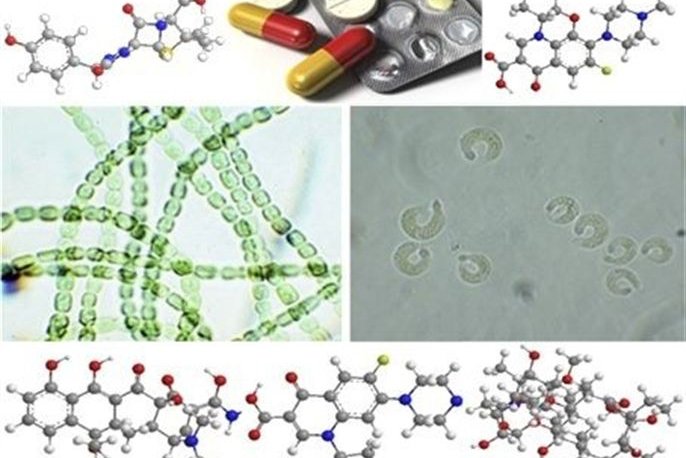
Antibiotics that reach water are at levels of harmfulness for the local ecosystem. This has been deducted by a group of researchers from the Universidad Autónoma de Madrid and the Universidad de Alcalá de Henares in an article published in the journal Water Research. In fact, researchers have analyzed the influence of five antibiotics on two living beings representative of the aquatic environment, cyanobacteria Anabaena and green algae Pseudokirchneriella subcapitata.
Five antibiotics have been analyzed: amoxicillin, erythromycin, tetracycline, norfloxacin and levofloxacin. Experiments have shown that antibiotics, individually, harm organisms. In general, in addition, they have greater influence on cyanobacteria. No wonder that antibiotics are designed to act on bacteria. Thus, erythromycin is very toxic to both living beings, tetracycline influences more on green algae and levofloxacin and norfloxacin in cyanobacteria. Amoxicillin is toxic to cyanobacteria, but not to green algae.
But in addition to this individual impact, combined with each other, they have come to the conclusion that they have an even more negative effect. In fact, the compounds have synergies and are presented even in concentrations lower than those necessary for the toxic effects to occur individually. In natural means it is common for many types of antibiotics to appear mixed in water.
Oihane Lakar Iraizoz
Elhuyar Zientzia Elhuyar Fundazioko Zientziaren Komunikazioa sailean ari da lanean 2006ko urriaz geroztik. Elhuyar Zientzia eta Teknologia aldizkarian ia hilabetero artikuluak argitaratzen ditu, eta Basque Research webguneko arduraduna eta erredaktorea ere bada. Euskal Herrian egiten den ikerketaren berri ematen du Basque Researchek. Biologian lizentziatua da, Leioako EHUn egin zituen ikasketak, eta, Elhuyar Fundazioan baino lehen, Bertiz Jaurerria Parke Naturalean aritu zen lanean, bisitariei harrera egiten eta ingurunea zaintzen.