 Bilatzailea


When BIzia is fertilized in the laboratory
This is Ixone, and this is Eucene; the two sisters are four and two years old, respectively. They're very intense, those who can't stand still, and the lights. To see it, just look at his face. They live in Alava, Okondo. His parents are Lori and Manu.
Two other boys and girls are playing on the beach in Hendaye: the five-year-old Iker and the Naroa who will soon make two. They have come from Hondarribia this cold morning with their parents Alazne and Patxi.
The two families do not know each other, but some of the children have something in common: they have come to this world thanks to assisted reproduction techniques.
THE ACORN ALAZNE: We have an inherited disease in our family called Alport syndrome. And because of this disease, the kidneys stop working. I
knew at first that the disease was there, but I didn’t know how it was transmitted. Then, when I started to receive information, I saw that this technique existed.
IN MANU MENDIGUREN: I had a workplace accident on April 8, 1991, when I was 23 years old. I was working on the mountain. I don't feel anything down my chest.
The work accident left Manu paraplegic, tied to the wheelchair. He spent some time in the hospital until he got a little stronger. Then, in a special rehabilitation center, he learned to use it spontaneously as much as possible. Despite the absence of sensations from his chest, the doors of his life did not close.
IN MANU MENDIGUREN: I met Lortxu after the accident while working at the Amurrio Village. It was the camera. We met and decided to get married and have a family.
GET IT BY SOURCE: It was clear to me that I wanted to have children somehow. So the first thing was to do it in vitro, and if that didn't work, well, adoption or whatever we could.
You want to bring the kids and you can't. It is a problem of many people. Experts say that it happens to just over 20% of couples. A couple is considered sterile after about a year of trying to bring the child. For many couples in this type of situation, gynecologists first put treatments in place to make ovulation stronger. The goal is to strengthen ovulation, know the days on which it is necessary to ovulate, and maintain relationships during those days. This is called corrected coitus.
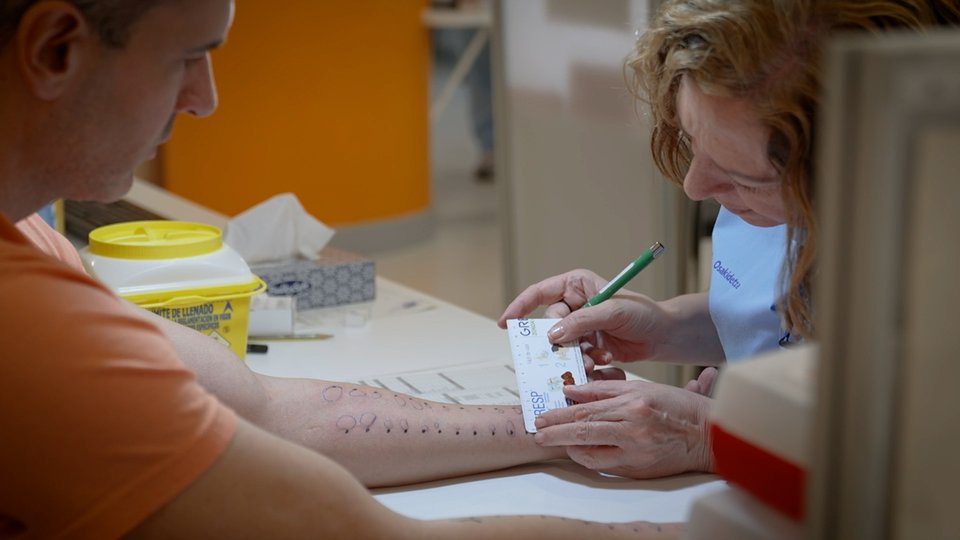
If the corrected coitus fails, couples are forced to resort to assisted reproduction services. First, the man's seed is examined. We look at the number of spermatozoa, the shape of the spermatozoa, and the mobility. In the case of women, it is checked if there is ovulation, if the tubes work well, if there is a cyst, etc. Depending on the diagnosis, one or another assisted reproduction technique will be chosen.
[ASSISTED REPRODUCTION TECHNIQUES]
[ARTIFICIAL INSEMINATION]
It consists in the artificial implantation of the seed in the uterus of the woman. The ovary is stimulated to produce more than one egg in the same cycle. On the other hand, the most suitable spermatozoa are selected in terms of morphology and mobility. Insemination is done in the hospital and does not require anesthesia.
[IN VITRO FERTILIZATION]
In order to be more likely to achieve pregnancy, it is necessary to stimulate the ovaries with hormones and then to extract the oocytes, i.e. the eggs in the maturation path. The extraction is performed in the operating room with the woman under anesthesia. Fertilization is carried out in the laboratory with the semen sample and the eggs extracted. Fertilized oocytes are cultured in vitro prior to implantation into the woman's uterus. Generally, two or three embryos are implanted. In vitro fertilization also allows the use of eggs from donation.
[INTRA-CYTOPLASMIC INJECTION]
In recent years, a new and more accurate technique for in vitro fertilization has been developed. It consists of injecting a single sperm into each oocyte. Even with the use of very low quality sperm, fertilization is ensured. It is also useful in cases where no sperm is present during ejaculation, since sperm can be extracted from the testicle itself. Thus, it can be said that the sterility of the male has been almost completely overcome.
In Manu’s case, the problem was not the quality of the seed, but the difficulty in achieving ejaculation.
ABEL ETXANOJAUREGI; Cruces Hospital: You know, depending on the injury, depending on the height of the spine, they mainly have two types of problems. The first is that they do not easily produce the seed, so they cannot have emissions. 80% of those with a lesion above the vertebra 11 do not have ejaculation. And that's usually the problem, because the seed can't get out. The other major problem is that they can’t get their penis straight. These are the problems: 85% have problems with ejaculation, seed production, and another 80% have an erection.
In the Autonomous Community of the Basque Country, only Las Cruces are treated as such. The treatment is gradual. They go to the hospital's spinal cord injury service. The first option is usually to provide a device that induces stimulation and ejaculation, so that through a vibrator each one gets a spill in his or her own home. This seed is then inserted into a syringe and implanted into the vagina. This possibility of self-insemination rarely goes well, only in 5% of all attempts. It is more common to get the seed in the hospital.
IN MANU MENDIGUREN: They took the semen from me, examined it in the lab, and seeing that it was fine, we decided to go and look for the baby.
MARIA LUISA JAUREGI; Hospital de la Cruces: We collect the seed. This is clinical ferticare. It's a great device, and we use it less than the personal ferticare. The device simply creates vibration, and by applying it to a part of the penis we manage to ignite the reflex movement and extract the semen. The seed can come out or go to the balloon, and then we pick it up with a probe. However, it is equally valid because it does not lose any characteristics when centrifuged in the laboratory.
GET IT BY SOURCE: And we got on the list because it was the only option to do in vitro. With this in the chair, this is usually the biggest problem, usually the motility of the sperm is lower. So, what happens is that this is done in vitro.
Gurutzetan 1998an hasi ziren bizkarrezur-muineko lesioa duten pertsonen ugalkortasun-programarekin. Since then, couples who wanted to live with a spinal cord injury and have a child have been picked up there. Almost half of them have made their dream a reality.
ABEL ETXANOJAUREGI; Cruces Hospital: The technique is to blame, when we started implementing in vitro techniques in normal couples we were 30% successful, now we get 40 and 50.
GET IT BY SOURCE: In the first one it didn’t work, but in the second one it did when Ixone was born, we immediately decided that we wanted to be another. We signed up for a list and after a year we did another in vitro and Eukene was born. And we're very happy with both of them.
In addition to the difficulties of having children, there are many other reasons to resort to assisted reproduction techniques. It is becoming increasingly common in our society for women to want to postpone their maternity age. by the age of 35, however, the quality of the eggs begins to decline, and from that age it becomes increasingly difficult to become pregnant. But today, it is possible to freeze the eggs before this age is exceeded, so that they can be used when needed. Vitrification of oocytes is an innovative technique.
ZALOA LARREATEGUI; IVI Bilbao: The usual freezing was slower and had a major drawback. The egg is a very large 140 micron cell, most of which is made up of water. Because the freezing rate was so slow, ice crystals were formed and the structures were broken.
ZALOA LARREATEGUI; IVI Bilbao: With vitrification, we use higher freezing rates and higher concentrations of cryoprotectants. By immersing directly in liquid nitrogen, we can reduce the temperature from 25°C to -196°C at an ultra-fast rate of 25,000 degrees per minute. This has allowed the oocyte survival rate to be increased from 40% to 98%.
Vitrification began to be used two years ago and is currently used as a routine in most laboratories. It is very useful for creating egg banks from donation, as well as for storing one’s own eggs. It even offers women with cancer an opportunity to have children when they recover. In fact, chemotherapy and certain radiotherapy deprive the ovaries of the ability to produce new eggs.
But the technique has done so even later: at this time it is possible to restart the ovaries after cancer. To do this, a part of the skin of the ovary can be removed and frozen.
MARCOS FERRANDO; IVI Bilbao: The difference between vitrification of the oocytes and freezing of the ovarian cortex is that with the latter the normal hormonal levels of the woman can be recovered. We only have the possibility of in vitro fertilization with vitrified oocytes. But at the end of the oocytes, if a pregnancy has not been achieved, there are no more options. On the other hand, the skin of the ovary offers us two things: on the one hand, the unlimited possibilities of getting pregnant while the skin works. And on the other hand, the lack of hormone levels in a menopausal woman, because that is what happens when you take chemotherapy, the ovary does not work.
ZALOA LARREATEGUI; IVI Bilbao: It is a very innovative technique for women who do not have time to remove their oocytes once they have been diagnosed with cancer. From one day to the next, we would prepare a simple operation by laparoscopy. We would take the surface of the ovary, where the follicles that produce the eggs are located. We'd keep this crust in the lab until it's frozen and reimplanted.
Last August, in Valencia, the first children were born with a combination of reimplanted ovarian cortex and vitrified eggs. It's the first case in the world. In the Autonomous Community of the Basque Country, IVI Bilbao is the first centre to obtain authorisation to use this technique, and it is expected that the first patients will start treatment this month.
To tell the story of Alazne and Patxi, it is necessary to go back five years, since the eldest son, Iker, is five years old. He is a living boy, but he has inherited Alazne's family illness, Alport's syndrome.
THE ACORN ALAZNE: Nobody told us "hey, if you want to have family, be careful" nobody told us anything. So, when Iker was born, we started in doctors from the beginning and it's very hard. It's a suffering.
When they decided to have their second child, it was clear that they had to avoid the disease in some way. That’s why they used advances in fertilization techniques to bring Naroa. [Preimplantation genetic diagnosis of PGD].
MIREN MANDIOLA; Hospital Quirón: In what cases is it used? Especially to eliminate serious genetic diseases from their families.
THE ACORN ALAZNE: I knew there was this disease in the family, but I didn’t know how it was transmitted. In our case, women are the carriers of this disease. Boys suffer and develop, but girls are the ones who transmit this disease. In our case, we do not know where this gene is, this mutation that leads to the disease. This requires genetic research. Since we don’t have this in our case, we were told that it was very difficult, so that the child does not carry the disease, to make sure that it does not, the only option was to choose the girl.
MIREN MANDIOLA; Hospital Quirón: We choose embryonic girls so that no more patients are born in the family. But there are some diseases that were avoided by choosing the first sex and not now, now we can know if the embryo has the disease or not. In fact, much progress has been made in a short time and there are genetic diagnoses of an increasing number of diseases.
To prevent a genetic disease, an in vitro fertilization is basically performed, but embryos are subjected to a genetic analysis to establish only those who do not have the disease in the woman. When the embryos are three days old, one cell is removed and each cell is subjected to a genetic analysis.
The choice of the embryo to be implanted in the mother during a conventional in vitro fertilization usually depends on morphological characteristics. They need to choose the right embryos that will give birth: those that are growing at the right speed, those that have cells of the same size, with no debris from the traits. In contrast, when a genetic diagnosis is made, the result of the study is above the morphological characteristics: embryos that do not have the disease are selected.
MIREN MANDIOLA; Hospital Quirón: In a PGD you can hardly choose the embryos: first, not all fertilized embryos can be biopsied, only those with 6 or 8 cells; those with 3, 4 or 5 are not valid. Those who have undergone biopsy and have been analyzed are those who do not have the disease, but who have continued to grow in the laboratory. Therefore, you have fewer and fewer choices, and those that remain are usually transferred. In the case of Alazne,
two embryos came to the end of the process. It was the fifth day.
THE ACORN ALAZNE: I remember when I was in the operating room and the doctor came and told me, "Well, this is where the two kids came from," and two girls were introduced to me. And then wait fifteen days until the pregnancy test. I did the
test at home and called my doctor to tell him that I had tested positive. We went and he said, "She's a girl." We knew she was, but she's "one." Once you’ve done that, you’re ready to get pregnant!
Alazne had only one child, but she could have twins. Since two or three embryos are usually implanted in the mother, the risk of multiple pregnancy is high during in vitro fertilizations. The pregnancies of twins and especially triplets are at high risk for both the mother and the children. For this reason, one of the biggest challenges is undoubtedly the implantation of a single embryo and the achievement of pregnancy.
MIREN MANDIOLA; Hospital Quirón: We transfer many good-looking embryos, but proportionally, few pregnancies are achieved. That’s why we want to look for something more, something that helps to distinguish between one embryo and another, to say that this embryo is in good health and this embryo is not. For this reason, they are looking for metabolites in the products contained in this droplet in which the embryo is growing, which seems to be related to the good or bad health of the embryos. Metabolites are substances that are
associated with metabolism, which take enzymes, proteins... from the embryo’s feeding environment and expel them as waste. In the solution in which the embryo grows, i.e. in the culture medium, there are more than a thousand metabolites; and, according to the latest studies, they can be an indicator for the differentiation of embryos in good health. Studies based on the analysis of metabolites are in the field of metabolomics.
They are based precisely on metabolomics in Embryomics. Embryomics is located in the nursery of the new Biokabi companies of the Bizkaia Technology Park. They do research here: they study the solutions in which the embryos grow. The goal is to achieve a technique that can replace PGD, one that can be performed without needing to touch the embryo, or at least a tool to help select the best embryos in vitro.
FRANCISCO DOMINGUEZ; Embryomics: What we do at Embryomics is to analyze the global metabolic profiles, that is, various metabolites present in the environment. We take the media in which the embryo has been growing, analyze it and then try to distinguish between normal and non-normal embryos according to the metabolites that appear in each sample.
Samples for research are collected at Embryomics from several IVI clinics. Culture media of embryos that have undergone PGD are solutions, droplets of about 40 microliters. To assess the health of the embryos, the result of the PGD is compared with the composition of the culture medium.
Samples are prepared, analyzed, and the results are collected on the computer. They know by interpretation what the composition of the sample is.
Knowing the composition of hundreds of samples, they unify the results and obtain a graphic expression taking into account the result of the DGP.
FRANCISCO DOMINGUEZ; Embryomics: Each point on the graph corresponds to a global of metabolites, i.e., an environment in which an embryo grew. There are normal embryos in black and those with multiple chromosomal abnormalities in
red. In this graph we have distinguished 100% healthy embryos with chromosomal abnormalities.
From the metabolite point of view, embryos with many abnormalities are clearly distinguished from normal embryos. Embryos with few abnormalities are also distinguished, but less noticeably.
MIREN MANDIOLA; Hospital Quirón: In a few years it will have a net clinical application, the safest, but it is still under investigation. Maybe in the future.
However, this will not replace the diagnosis of a disease. It will tell us if an embryo is healthy in terms of chromosomes, whether it has a high capacity for adhesion or not. And it would be useful for routine cases, it would help to make the selection in vitro or in an ICSI, but not for a DGP.
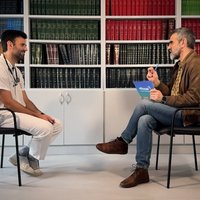
MAIDER EGÜÉS; Elhuyar Foundation: The first successful in vitro fertilization in Spain was performed by Dr. Anna Veiga. This little boy turned 25 last summer and his middle name is actually Anna. Dr. Veiga, hello, and thank you very much for hosting us here in Barcelona. How do you remember that moment?
ANNA VEIGA; CMRB: Victoria’s birth was an emotional moment for the whole team, and it was also the starting point for many things. We were starting with IVF then, and I think Victoria opened the way for more than 15,000 other children to follow. More than three million children in the world have already been born thanks to this technique.
MAIDER EGÜÉS; Elhuyar Foundation: Since then, you’ve had the chance to see Victoria Anna, right?
ANNA VEIGA; CMRB: Oh, yeah, yeah. We maintain a friendship with Victoria and her parents, and we see each other often.
MAIDER EGÜÉS; Elhuyar Foundation: You are currently the director of the Stem Cell Bank, here at the Regenerative Medicine Center of Barcelona. In your opinion, how important will stem cell research be in terms of advances in reproductive techniques?
ANNA VEIGA; CMRB: It may be of some importance, especially when it comes to basic research. That is, stem cells can help us better understand the mechanisms of sperm and oocyte formation. However, we need to be cautious about their clinical applications and their potential impact on reproduction.
MAIDER EGÜÉS; Elhuyar Foundation: A British team of researchers has recently succeeded in producing sperm from embryonic stem cells. What clinical applications could this have in the near future?
ANNA VEIGA; CMRB: As I said before, stem cells may show a lot of things we don’t know about gametes creation. But reforming stem cells to produce eggs and sperm cells... that's still a long way off. In addition, it should be noted that for the time being these tests have been carried out with mice. And that mice that have been born of these spermatozoa often have malformations and epigenetic problems. For this reason, it is necessary to be cautious before saying that the problems of sterility of couples will also be solved by stem cells.
MAIDER EGÜÉS; Elhuyar Foundation: Recently, stem cells have been found in the ovaries of mice. Does this finding change the way women deal with infertility?
ANNA VEIGA; CMRB: It probably doesn’t change the way women deal with infertility, but we had a very clear concept: that women are born with a certain reserve of eggs, which ends when they reach menopause. That is, that our reproductive season has a beginning and an end. If there were stem cells in the ovary - and this has been confirmed in mice, although the results are controversial - this would mean that these stem cells would be able to produce new oocytes even if the woman was an adult.
So this concept that we were so clear about, the beginning and the end of the female reproductive period, is changing us. But, as I say, this is a very controversial issue. There are a couple of groups of scientists defending this possibility in mice and humans, but most researchers working in assisted reproduction deny it. Discussion is open. We'll see what's left of it and what the consequences are. There may be stem cells in the ovary, but their contribution to oocyte formation is probably minimal.
MAIDER EGÜÉS; Elhuyar Foundation: Since the aforementioned in vitro fertilization, much progress has been made in the field of assisted reproduction. How do you see the future in another 25 years?
ANNA VEIGA; CMRB: The technique is highly standardized. More or less, all laboratories work in the same way. They all grow embryos in the same way, they freeze embryos in the same way, they do biopsies... However, we are trying to have good results, but reducing multiple pregnancies, because this is something that concerns us who work in this area. The goal of a reproductive treatment is to give birth to a healthy child, so we must adjust the technique to make it so. However, a multiple pregnancy is always risky, more difficult than a single child. We need to achieve good pregnancy rates without having multiple pregnancies. This is one of our goals.
MAIDER EGÜÉS; Elhuyar Foundation: Thank you very much, Dr. Veiga, for bringing us here in Barcelona. Good luck in the future, and until the next one.
ANNA VEIGA; CMRB: Thank you very much to you.
With the cell mothers still about to see what will happen, but there are arguments for hope. If assisted reproduction techniques and research take the path that they have opened, the barriers to having children will almost completely disappear in the future.
MARCOS FERRANDO; IVI Bilbao: when reproductive techniques began in the 1980s, pregnancy rates were very low, at 6%. Today, we have achieved rates of 50%, but we are not yet at 100%. I believe that the future goal is to make couples who cannot have children become parents in the shortest possible time and with the least amount of treatment. To this end, it is essential to increase pregnancy rates.
THE ACORN ALAZNE: What we knew was that our descendants did not have the disease... It’s hard to know when your child has an illness. That's very hard... You have to make that up to you. And we decided not to pass on that suffering to the second.
ABEL ETXANOJAUREGI; Cruces Hospital: It’s a long matter and you have to do the work, but if you get the seed through the techniques, you have as many options as couples who do not have spinal cord injuries. Always go ahead!! !
GET IT BY SOURCE: Your life is the way you want it, and not because you're disabled you can't do this or that. This can be done by being disabled. If it's possible then, well, if you don't get it through in vitro or insemination, you can make an adoption. There are plenty of opportunities in this life, so you have to do what you want and think: why not? And that's what we did.
IN MANU MENDIGUREN: To begin with, I didn’t expect to get married or have children. I was fine with my friends, I was happy and I was doing well, but I didn't expect to get married and have children. This is very different. I didn’t expect it, and many people didn’t think that a person in a wheelchair would get married and have children.
Buletina
Bidali zure helbide elektronikoa eta jaso asteroko buletina zure sarrera-ontzian