 Bilatzailea


“New mathematical theories must be found to face new challenges”
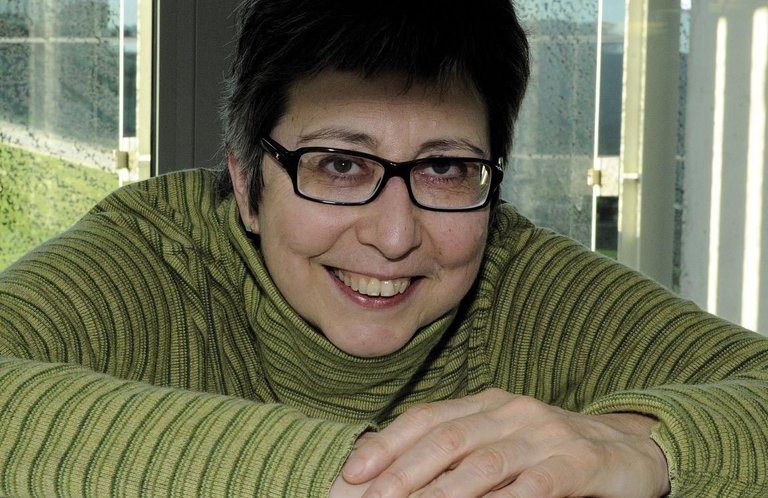
Thank you. Such a charge generates many obligations and of all kinds. ICIAM organizes every four years a large congress with about four thousand participants. In this Congress, five important prizes are awarded and commissions are organized that decide them.
These are the great things that ICIAM does, but we also have to do a daily job, organize assemblies and commissions, work with associations of many peoples members of the council, publish our magazine four times a year, etc. This is my internal work, but then I have to participate in many international commissions and meetings on behalf of our community.
Of course, do well what ICIAM has done so far, but also give more visibility to the organization to make our work more useful.
In recent years I have been very involved in the organization of industrial mathematics groups throughout Europe. Some mathematicians, not enough, but enough, clearly help solve the challenges and problems that industry and society have. Many new technologies necessarily need the work of mathematicians and mathematicians. And we have been organizing that work, drawing up documents, structuring the community, along with some European comrades. I would like to take it internationally, and the presidency of ICIAM will give me that opportunity.
Mathematicians are not all lonely! Many of us work as a team and engage with society and the community. In that I am no exception, there are many others like me.
My main topics are nonlinear differential equations and mathematical physics. These topics are very broad and have great value for solving quantum physics and chemistry problems. Hence, concrete applications can come from there. Most of my work is theoretical, but in some works I have proposed and analyzed algorithms that can be important in practice.
For example, I have proposed and studied the calculation algorithms necessary to study the relations between atoms and molecules of relativistic quantum physics and chemistry.
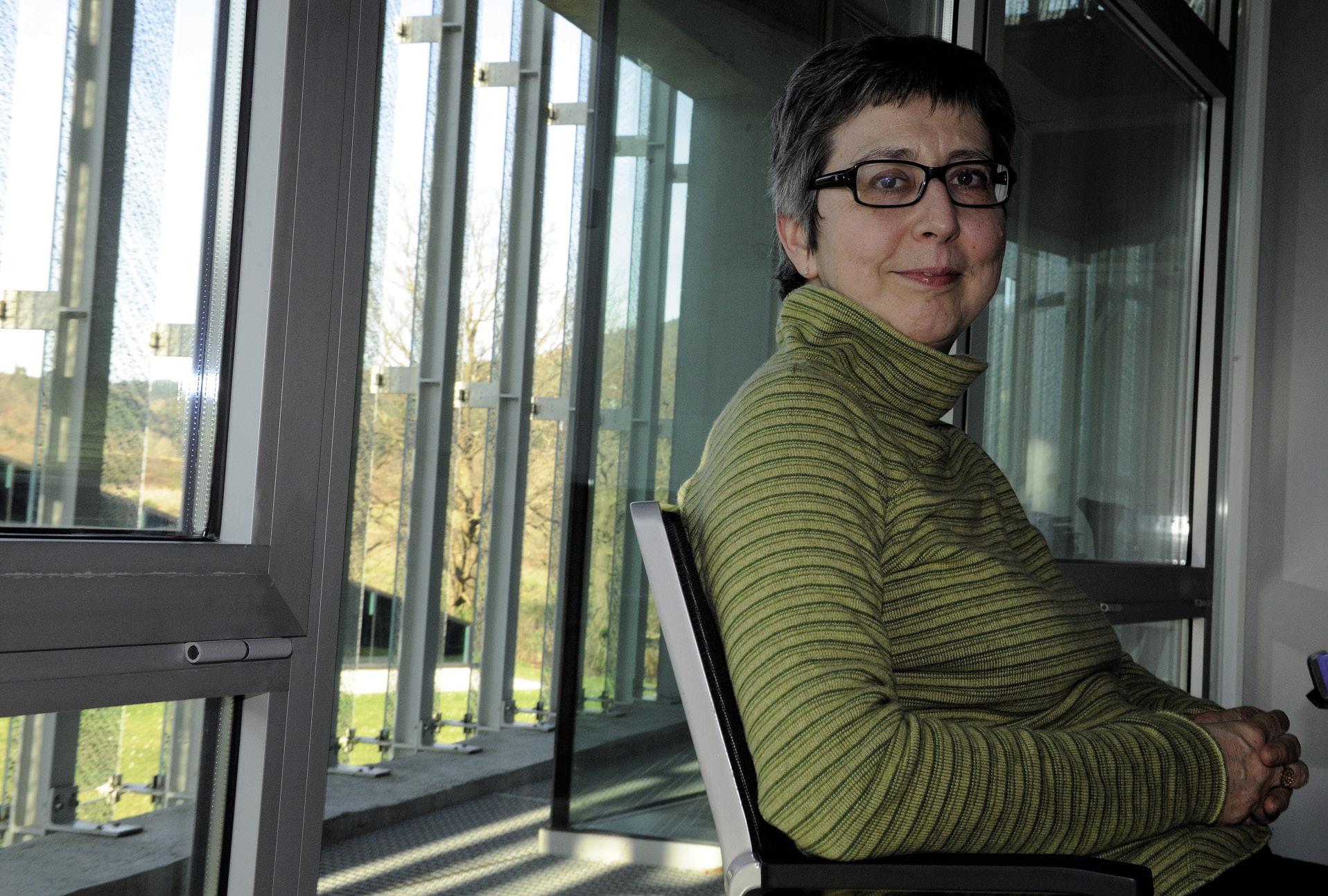
It is important to learn the characteristics of matter, especially in the case of heavy atoms. My papers have not been published in mathematical journals, but in physics and chemistry journals, for their interest in other areas.
The director of my thesis was very interested in applying mathematics and so, since I started working, I have been on that path. Then I have had my personal evolution in the choice of subjects and in the search of companions, but I have always gone that way. I have always liked to talk about the mathematical vision necessary to respond to a specific problem.
Only science can be applied. Science has two branches, basic and applied. And you have to do a theoretical work to make applications. Both go together. It is true that in recent years also at the European level and in some countries the majority of subsidies are granted mainly to applied issues. I think that is an inadequate attitude, because although in a moment what is done theoretically can be applied, it is not always possible.
New theories, new methods to face new challenges. I insist that basic science must be given money to work well. New technologies need theoretical developments and politicians don't always understand it.
When? Greater tolerance and understanding between each other. Nowadays some theoretical mathematicians (many?) think that applied mathematics is easier, that it is secondary. That's not true, but those who think so are hard when they have to say in a commission on applied mathematicians. However, there are applied mathematicians who think that what many theorists do is useless. And this is not always true either. A good part of the research is the freedom of scientists to choose our topics. Therefore, we must respect and accept what others do. And take the vision of others broadly.
I have my work project and I have to face some mathematical problems. I would like to finish with them and move my final results to a more applied scope. I have studied the symmetry properties of the equation solutions I have learned in recent years and, recently, I have obtained very good results. This work has been quite theoretical. Now I would like to apply the methods and ideas we have created with my colleagues to other more concrete problems.
With great joy, of course. It is an honor to enter a prestigious institution like Jakiunde, and of course, being from Euskal Herria, a double pleasure!
Buletina
Bidali zure helbide elektronikoa eta jaso asteroko buletina zure sarrera-ontzian