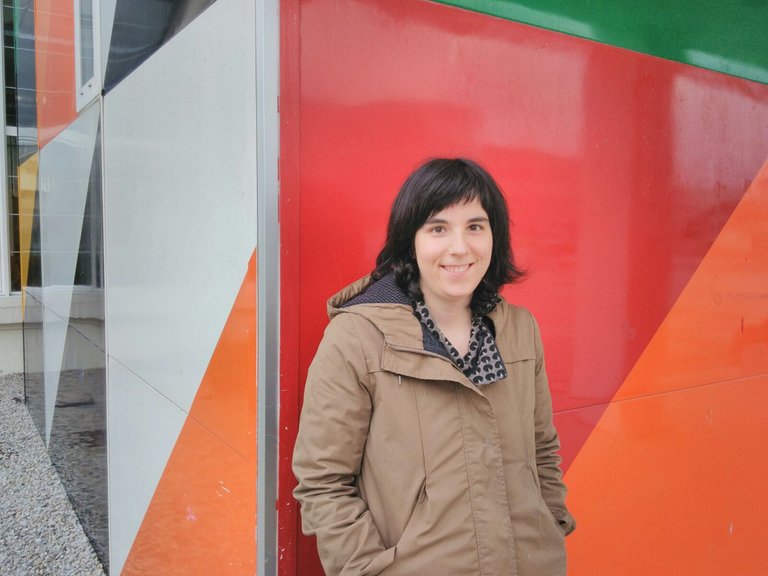
 Bilatzailea


“Pandemic management is not considering mental health”
How did you decide to analyze the influence of this pandemic on emotions?
The truth is that I had abandoned this line of work, now I am more working on issues related to education and feminism. But the days before the closure of the schools, I saw that my students at the university were very nervous, attentive to the mobile, making comments among them about the coronavirus… Then I told my colleagues that it was equally convenient to measure the levels of anxiety, until then we did not know that they were going to close the classes.
We designed a questionnaire, taking into account social representations, emotions, etc. and the same day we began to spread, they cut off the classes. However, as we continue to teach online classes, we sent them to online students and also spread them to society in general through the media, networks and collectives such as retirees. Thus, we have about a thousand people, half young and the other half older.
Why is it important to study emotions?
Because this is not just a health issue that affects patients. On a social and psychological level it is affecting a lot and that will leave its consequences.
What impacts have you detected?
At the moment, we passed the first interrogation in adults and it was at the beginning of confinement. As is normal, they were afraid and very angry with the media, with that bombing, and they were tired.
So, haven't you detected anger with the political leaders?
Normally, the role of politicians or managers is valued quite well at the beginning and, over time, criticism begins. This has occurred in previous pandemics. This time it is curious because they do not appear anywhere. We have used an exercise of free association, and given that the rulers, both local and state, have taken drastic measures. Right now, Sánchez is the only leader of the State, he has assumed enormous power and forced us to stay at home on a personal level… The measures taken by the authorities have a great influence on us and do not appear for good or for evil.
It is curious and they should take it into account. In short, they do not appear as references either. They have given us the responsibility, but they should also assume, that is why they are the authorities. They should appear.
On the other hand, new villains have appeared, which have not appeared in the pests so far, and are those that separate us. For example, in the beginning those who bought too much in supermarkets, now those who took the dog to pass it without need… They have put us to work as a police officer without knowing why there is a person on the street. I think that will have consequences. Because that anger and all responsibility are distributed among us, and that is not healthy. Managers should be the authorities.
It is true that perhaps now is not the moment of criticism; perhaps then, once all this has passed, evaluations and criticisms are made. For example, if it was convenient to do massive tests like in South Korea from the beginning. Then it will be seen and action must be taken for the next.
Citizens, therefore, have not taken the authorities into account when explaining their emotions. And the other way around?
Nothing. All the talks they have given have been very cold, based on numbers and measures, and have not mentioned anything personal. I think they should show greater closeness, because the measures they have taken are really hard. In communication this gap is evident.
Besides fear and anger, the other emotion is fatigue. What are people tired of?
In other plagues people have become tired of what happens in the wolf's tale: they have been told that there is a great danger and then it has not been so much. In Oriango it is more because of the media and social bombardment. Everything is around the crown. Nor has there been more in the media. It's okay to inform people, but you also need other breaths. For example, many older people have television as the only means of information and entertainment, and since the first week they were already tired. And this is going to be long, so it is important that breaths are also given or found.
He has mentioned the elderly. Are there differences between the emotions they manifest?
There is a curious thing. Young people have two sides. On the one hand, they relate the disease to more mature ones, which also occurred in other pests. They don't seem to get contaminated, but they can get the same, and even if they don't, they can help spread it. But they are not aware of it. On the other hand, we have measured very high levels of anticity. In fact, it is rare and our hypothesis is that the bombardment they have received through social networks has been very intense, which has caused them anxiety.
And are there gender differences?
Unclear. Women have shown greater predisposition to emotions. This does not mean that the intensity of emotions is greater than in men, but that they have more facility to express what they feel.
Can you say anything about children?
They are the ones who have most forgotten this subject of the pandemic, and although we have distributed the questionnaires so far among adults, now we begin to investigate. They have not been taken into account at all. A friend told me that Sanchez never mentioned them in his speech, but two or three times the dogs.
So far we have a proposal for parents and children and we ask them to draw a picture. Through this drawing they have to tell the parents how they are living the bulls, what they like, what not, what the coronavirus is for them, what feelings it produces… I, for example, have done it to those at home, and as an exercise it is also beautiful.
What hypothesis do you have, what footprint do you think will leave?
We are seeing that the level of resilience is very high. The measurements are very hard, but people are adapting and adapting. That, however, has its negative side in relation to social networks: it seems that people do many things, that they all have beautiful terraces and that they are very comfortable in this situation. But that means there is no right to say that this is shit. And there's a shit. That is to say, it is very well to be resilient and able to go well, but we must claim that the situation is not good and that there are people who are going very badly. All of us who are well can have a chopera and feel angry. We have the right to be angry.
What consequences will it have? I think it will leave a latent fear; if a plague returns, it will produce a terrible fear thinking that the same will happen. We will have to see this directing the ball.
We will also see whether the measures adopted have been adequate or not. Then there may be acceptance or anger with the measures taken, even with the work done by the media…
In short, it will have a great social impact. Most of the society will be integrated into the home for at least one month. At the time of extraction, its impact on mental health should also be analyzed.
Do you think enough mental health care is being paid?
No, no. I know, nothing is being taken into account. It seems that the Basque Government has announced the launch of a telephone service. But our psychologist friends tell us that these days are full of work, and I haven't seen anything generalized to help people psychologically. The news from China, on the other hand, says that both universities and hospitals put in place a psychological welfare plan aimed at the entire population, phones and media… We would have to show if that is really so, but here they have not.
And elsewhere in Europe, like Italy?
We know nothing. This topic is in the background. As for children, for example, I know that the Norwegian government held a conference aimed at children very acclaimed and remarkable. But I have not known anything about the psychological.
In some places they have permission to go out to exercise, even individually, and that has been related to psychological health, right?
Yes, it is. And children can also go out in many countries. There seems to be a prejudice that parents will not know how to care for children to comply with preventive measures or that children will not do things right. And who guarantees that all dog owners do things correctly?
I think there are big contradictions: at first we were told it was not very serious, but now we are in confinement. And other examples. That generates anger and we have to be careful because it will still last a long time.
Leaving home will be rare. In older people, for example, with so long closed, what consequences will it have? And in those who already have psychic problems? Some live in residences and in some places have gardens and open spaces, but not all. How do you understand closure, how can your mental health get worse? And anyone who, without having psychic problems, has a chopera, because he has had a separation or because he has just been a mother, how will he live this situation? They are not taking care of the mental health of those who are already vulnerable and their consequences will be even more serious.
Previously an article related to this interview was published in the newspaper Berria: "The Forgotten Emotions"
Buletina
Bidali zure helbide elektronikoa eta jaso asteroko buletina zure sarrera-ontzian