 Bilatzailea


[Specific diet of wolves in fecal DNA]
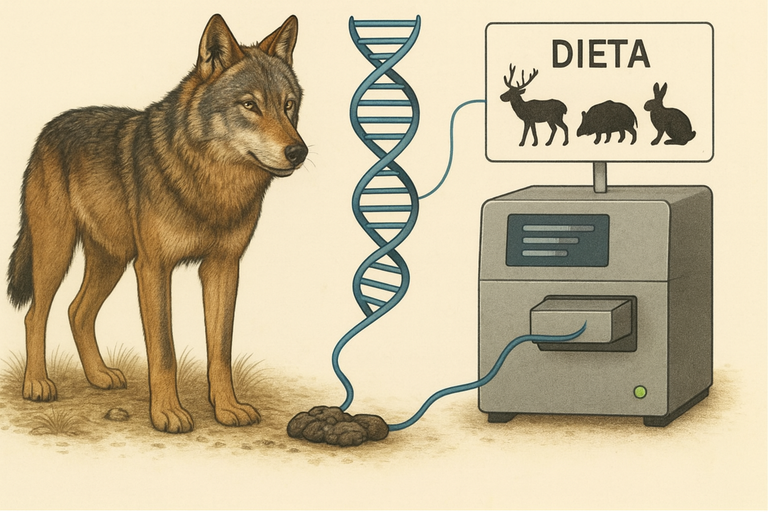
A genetic study of the feces of wolves allows us to know their diet in detail. They have validated a technique that allows researchers from the UPV and the Autonomous University of Madrid, in collaboration with the Sendaviva Natural Park, to identify the species and proportion of DNA ingested in feces.
in the technique called ‘DNA metabarcoding’, DNA fragments (in this case feces) present in a sample are extracted and massively sequenced to then compare them with databases to identify which species these fragments belong to. Each species has a “barcode” that allows it to be identified even when there are no traces of hair, bones or feathers left.
To check the reliability and accuracy of the method in the case of wolves, an experiment has been carried out with wolves from the Sendaviva Natural Park (Navarra). As previous studies were based on feces collected in the natural environment, no information was available on ingestion or proportions. In contrast, with the wolves of Sendaviva, the exact diet was known. for 42 days, the wolves were fed six different diets with mixtures of different proportions of the meats of the nine vertebrates (deer, wild boar, chicken, rabbit).
“The relative abundance of genetic sequences accurately reflects the true composition of the diet.”
Analyses have shown that the relative abundance of genetic sequences accurately reflects the true composition of the diet. The model accounted for 81.5% of the dietary variation. In addition, the study has shown that each stool sample reflects a diet in the last 1.5 to 1.8 days.
As explained by the researchers, the validation of this technique is an important advance in the management of wolf conservation. It could be useful, for example, to assess more precisely the impacts on extensive livestock and to design more effective strategies.
Buletina
Bidali zure helbide elektronikoa eta jaso asteroko buletina zure sarrera-ontzian