
 Bilatzailea


Pain originates in the brain
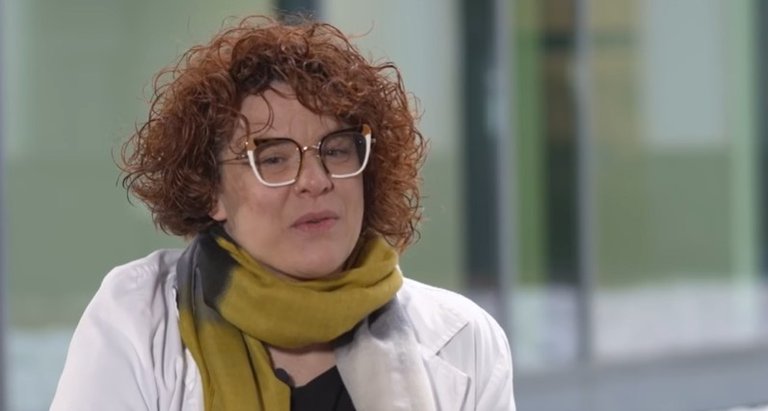
Izaskun Hernández tells us about the pain. To combat persistent pain, a different approach to the traditional pharmacological strategy has recently been added. The brain is the place where pain occurs. When the body receives a painful stimulus, the brain interprets the signal along with emotions and other areas related to memory. All our knowledge of pain has turned us upside down.
We call it “pain” in a general way, but not all pains are the same, right?
The pain is very personal, each person feels his pain. It has to do with your injury and your personal situation. We cannot say that someone does not have pain, or that the pain of one is less than that of the other, because each one has his own perception.
What types of pain are there? Is it possible to make a classification?
We usually talk about two pains: "acute" and "chronic". Pain is classified according to its duration: if it lasts less than three or six months, it is called acute pain. And more than that, chronic.
Chronic or persistent? Traditionally called chronic, there is a conceptual change, right?
That’s right, today we are using another term: permanent. Words are very important because words themselves can cause pain. with the word “chronic” one can think that it will be forever, so it is stigmatizing.
You just mentioned that each person feels the pain differently, that the same pain is felt differently by two people. Why? Why?
Each one has his situation, his life and his memories. Therefore, the same stimulus will have a different effect for two people, it will never be the same.
Is there an objective way to measure pain? “You have so much pain.”
Yeah, he's trying to measure it, but it's not easy. There are scales on which you can tell how much pain you have. There are some scales to quantify: from zero to ten, how much pain do you have?” But in the end, it is measured whether or not it affects you in your daily life. In fact, this is the most important thing: how it affects the person. What he can and can't do.
In the personal perception of pain, an extreme situation can be people who do not feel pain, right? I don't know if that's an advantage or a risk.
It's very dangerous. Not feeling the pain is very dangerous. The pain protects us. It has an indispensable function. We need it. In a few diseases they do not feel pain: if they have a wound, they do not notice it and it can become infected.
But in certain situations, the absence of pain is also a way to protect the person. For example, when we’re full of adrenaline, we don’t feel any pain. At the first moment, perhaps the priority is to escape from danger in a fire or an accident. With this example it is very clear that injury and pain are different things. You may have an injury and no pain, or no injury but pain. The two may be separated.
So the pain is felt by the brain?
The pain is not felt in the brain, it originates in the brain. Feel, we feel it in another part of our body.
Do the mutilated limbs hurt?
No, no. No. An amputated limb cannot send pain signals, but the area of the brain that corresponds to that missing limb remains active, which is why 80% of those who have suffered an amputation experience intense pain or itching.
this is what is known as "phantom horn syndrome" and its name is very well placed, because the brain is the one that makes a misinterpretation of a signal that does not exist. This sensation can be very violent and, due to the absence of the truncated limb, pharmacological treatments do not affect it, nor does it affect the nerves of the stump. Neural plasticity needs to be addressed to address the problem.
In short, no, the severed limbs do not hurt. In these cases, the brain can be said to be wrong.
Now let’s talk about treatments to eliminate pain. When and how should we use anti-inflammatories?
They have not been used well so far. I think they have been used too much. In persistent pains, for example, they are not recommended, it makes no sense to take them. In the acute, it makes sense, but it can’t last as long. And then there are other treatments: opioids, botox, infiltrations, surgery
When choosing treatment, are the side effects taken into account?
There are always side effects, with all medicines, and it is important to adapt them to each person. For example, if you have had surgery, you may not be given a medicine that causes vomiting. It would be very dangerous to vomit. You'll have to use something else to control the pain.
But sometimes you don't know where the pain comes from, do you? What do you do in these cases?
Today we always know where the pain comes from. It always comes from the same place, the brain. Sometimes it has a physical basis. If pain appears and we observe that there is something on the knee, it is justified. And sometimes not. We know where it comes from, but the base is not there.
Will it not hurt in the future? What is the trend of new treatments?
The pain will always be, because the pain, as we have said, is useful. We have been misunderstanding the pain for a long time, which has caused a lot of damage. Now we will have to do a lot of pedagogy to correct all this and encourage patients to do different things, even if they have a perception of pain.
Buletina
Bidali zure helbide elektronikoa eta jaso asteroko buletina zure sarrera-ontzian