 Bilatzailea

[Measurement of soil health in the hands of the population]
Lurzain (www.lurzain.eus) is a web application based on soil health cards, a proposal to diagnose the health status of your soil in a simple way.
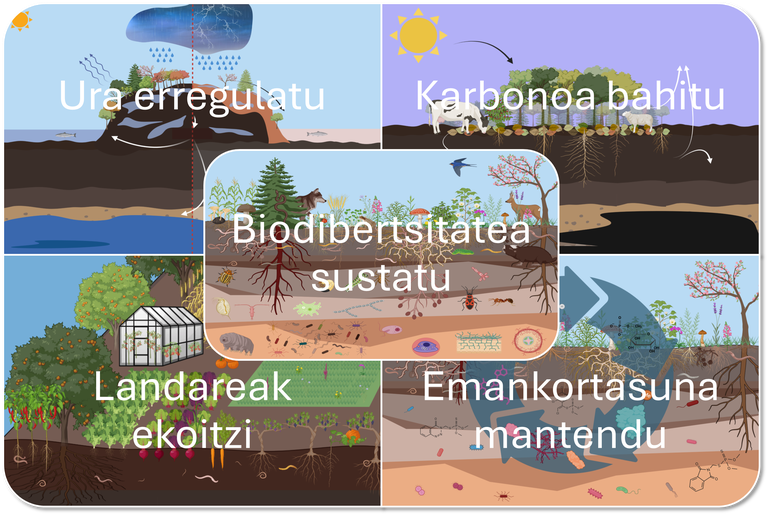
The soil that we have at our feet fulfills important ecosystem functions and services, essential for life on this planet. Healthy soils are our best ally for food safety, as they provide us with about 95% of the food we consume. It is also the most biologically diverse compartment. It is inhabited by a wide range of organisms whose functional value includes soil fertility, water regulation and carbon sequestration, among others.
The soil supports the growth of numerous plants, animals and microorganisms. One gram of soil may contain up to 60,000 bacterial and archaic cells, one trillion viruses, tens of thousands of protists and 200 metres of fungal hyphae. All these living beings are involved in the regulation of the process of storage and release of nutrients from the soil. In these biogeochemical processes, food can be converted into useful forms for plants, kept in the soil, or lost in air or water.
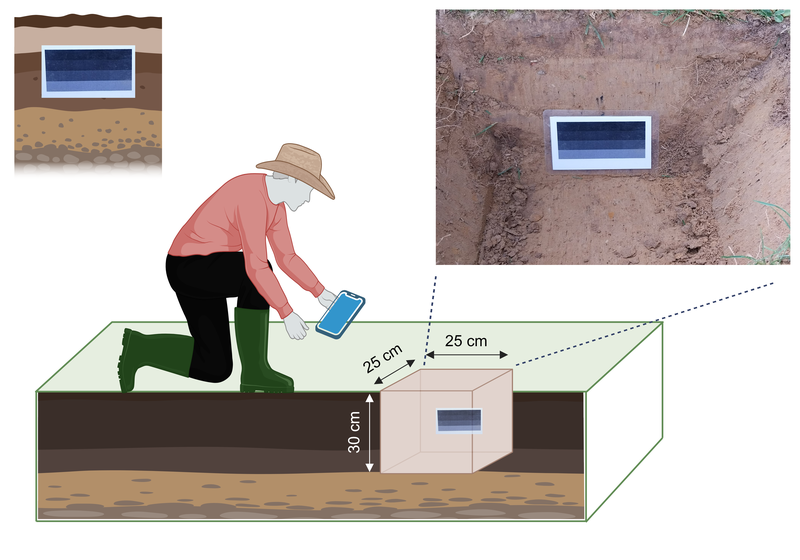
One of the proposed measures is to photograph a soil profile. One model provides estimates of organic matter content, texture, and pH. ED. : Used Mikel Anza/ BioRender.com.
On the other hand, the soil can regulate the drainage and storage of water. Some of the water is used by plants and soil animals, while another part recharges groundwater. In addition, healthy soils offer one of the highest carbon deposits, three times larger than vegetation and twice as high as that found in the atmosphere. When managed sustainably, soils can play an important role in mitigating climate change by sequestering carbon and reducing greenhouse gas emissions to the atmosphere.
Unfortunately, according to the European Soil Observatory, at least 60% of soils suffer from a source of degradation (such as loss of organic carbon, loss of biodiversity or erosion) and are unhealthy. The functions performed by soils have not been sufficiently recognized and valued to be prominent in discussions on climate, biodiversity and the environment. And the first step to properly manage this resource is to know it well.
Participatory science with soils
To know the health of the soils and the functions they perform, different parameters can be measured. Many of these parameters require a specialized laboratory and require money and time to study them. As an alternative, and although less precise, there are parameters that can be measured on the ground and without sophisticated instrumentation. In addition, another characteristic of soils is that they are very heterogeneous in space. Therefore, when making the diagnosis, the more points to analyze, the better. And to analyze many points in a cheap way, participatory science and citizen science can have great potential.
Citizen science is a participatory research approach that actively involves the public in scientific research to generate new knowledge and understanding. In recent years, the number of citizen science projects, including those focused on soils, has grown rapidly. These collaborative projects can play a key role in protecting and improving soil health. However, to take advantage of this potential, it is essential to strengthen networks for the exchange of knowledge and to promote communication and long-term commitment with citizens.
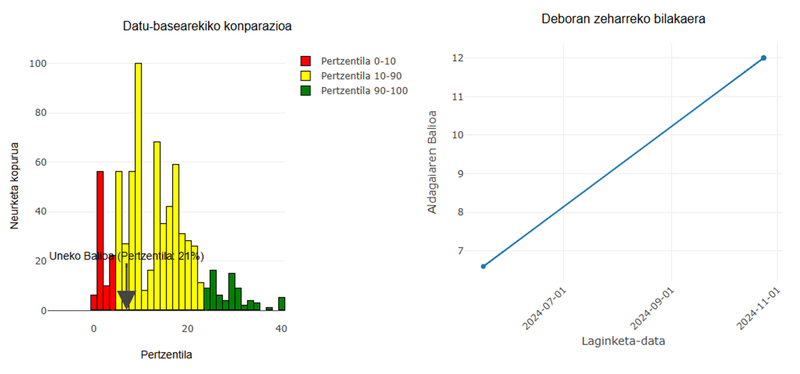
Example of evaluations collected in LURZAIN. The entered value is compared to the database and the ARG evolution over time is plotted. : GROTTO
There is a growing interest in citizen science applied to soils, partly because of its increasing importance on the political agenda. An example of this is the European Union’s 2030 Soil Strategy, which contributes to the objectives of the European Green Deal and proposes concrete actions to increase citizen participation in soil management. In addition, citizen involvement is one of the key pillars of the European Union’s “Soil Pact for Europe” mission. The initiatives developed so far have been aimed, among other things, at raising awareness and integrating soil health into public policies.
What are soil health cards and Lurzain?
Lurzain is a web application that uses participatory science to evaluate soil health. The objective of the Land Stewards is to provide every interested party with a tool that allows them to easily assess the health status of their land, whether it is a professional farmer, a retiree with a garden or a group of students who want to know how the land is located in the courtyard of their school.
This work is based on the soil health cards with which NEIKER, the Basque Institute for Agricultural Research and Development, has been working for more than a decade. The experience acquired during these years has served to improve the proposal of 12 measurements made in Lurzaine. Among the measures, it is proposed, for example, to extract a block of soil and count the number of worms, or to measure the time it takes for the soil to absorb a certain amount of water. In addition, in collaboration with the James Hutton Institute in Scotland, it has been possible to add an innovative measurement that uses a mobile phone to take a photo and a model of neural networks to estimate different properties of the soil (organic matter, texture, pH...). All these measurements can be performed without the need for specialized laboratories, with simple instructions.
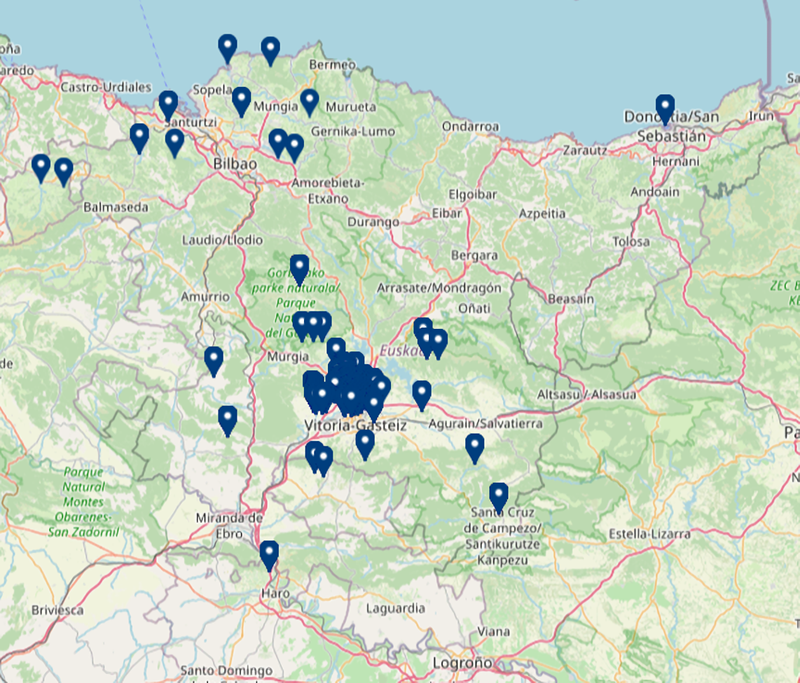
location in LURZAIN of the evaluations made until 2024. ED. : GROTTO
The web application facilitates the introduction of measurement values, as well as the obtaining of a diagnosis that compares the results obtained with the rest of the values contained in a database. In addition to knowing the current situation, it will be possible to assess the impact that any change in these soils (e.g. an agricultural practice) can have on their health if measurements are repeated year after year. Finally, in the event of poor diagnoses, Lurzaine indicates in a very generic way the possible causes and possible solutions.
Soil Conservation Program of Vitoria-Gasteiz
The Center for Environmental Studies of Vitoria-Gasteiz launched in 2018 the citizen science team of the Soil Conservation Program. Since then, several participants have passed through the group, hundreds of measurements have been made and essential collaboration has been offered in the construction of the Earthworks.
Each measurement made is reflected in the map of the web application and the idea is that little by little the entire map is filled with measurement points. In this way, the application will become more and more powerful. On the one hand, individual users will receive a more accurate diagnosis. On the other hand, we will have more data on the soils of the Autonomous Community of the Basque Country, from which we will obtain greater knowledge. Moreover, this data could be shared with similar initiatives at European level, such as the European Soil Observatory.
Initiatives such as Lurzain also aim to make society aware of the importance of soils. So, you know, you also get your hands dirty with the soil, measure the health of your soil, and help us increase our knowledge of one of our most valuable resources: soil.
Bibliography
[1] European Soil Observatory: https://esdac.jrc.ec.europa.eu/esdacviewer/euso-dashboard/
[2] European Commission, Joint Research Centre, Peiro, A., Mimmo, T., Sanz, F., Panagos, P Jones, A. and Breure, T. 2024. “A review of existing tools for citizen science research on soil health”, Publications Office of the European Union, Luxembourg, 2024, https://data.europa.eu/doi/10.2760/170858, JRC136889.
Acknowledgements
To the microbial ecology group of Neiker soils (www.soilmicrobialecology.com). Lurzaine has received funding from the LIFE Urban Klima 2050 project.
Buletina
Bidali zure helbide elektronikoa eta jaso asteroko buletina zure sarrera-ontzian