
 Bilatzailea


The collapse of a star and the black hole
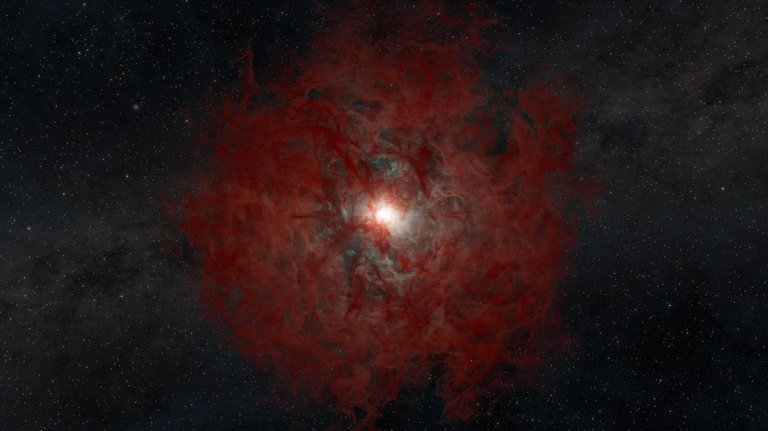
Analyzing long-term observations from NASA’s NEOWISE mission, investigators track a star’s death and find that, when it died, instead of creating a supernova explosion, it collapsed. Therefore, they conclude that, since a black hole was formed after the collapse, the black holes are more numerous than previously thought.
Supernovae are very visible, so they have been observed for a very long time and are quite well known.
“Researchers believe that it may be common to create black holes through this type of process.”
However, astronomers suspected that other stars did not explode. Their detection, however, was much more difficult because they were not so bright.
Among the thousands and thousands of stars in a galaxy, it is not easy to detect the death of a single one.
Infrared light
This time, they used data from NEOWISE. This telescope is specifically designed to search for asteroids and comets and detects infrared light. By analyzing the data collected through it, the researchers found an unusual star in the Andromeda Galaxy. It was called M31-2014 DS1 and from 2014 it was observed that the infrared brightness it emitted for two years increased. Then it weakened and became almost invisible in optical light in 2022.
Its remains could only be detected by infrared light. This is how they realized that the star, instead of exploding, had collapsed into a black hole.
Researchers believe that it may be common to create black holes through this type of process. Therefore, it is very likely that the calculation of the number of black holes has fallen short. The study was published in Science .
Buletina
Bidali zure helbide elektronikoa eta jaso asteroko buletina zure sarrera-ontzian